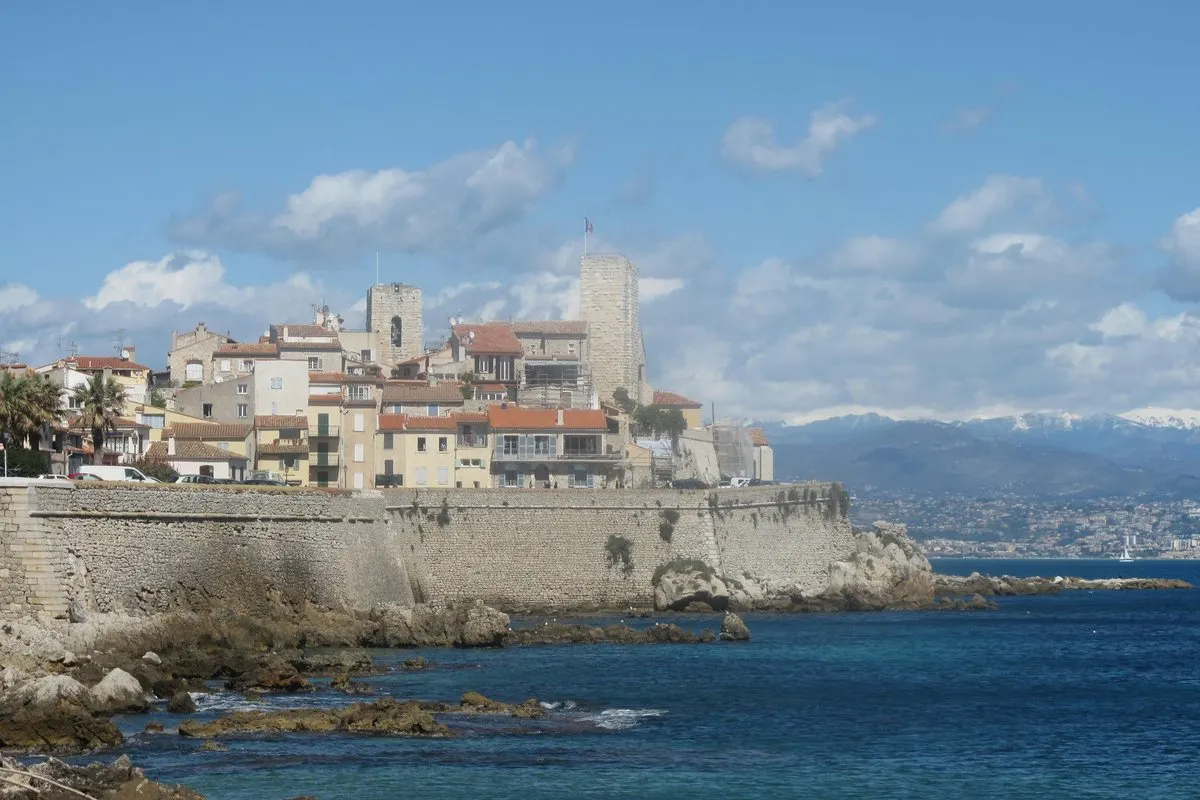
The Greeks called it Antipolis, the city opposite. Since then, old Antibes has been burned by pirates, besieged by Austrians and conquered by artists. A historical walk through one of the Riviera's oldest town centres.
In this story · 5 sections
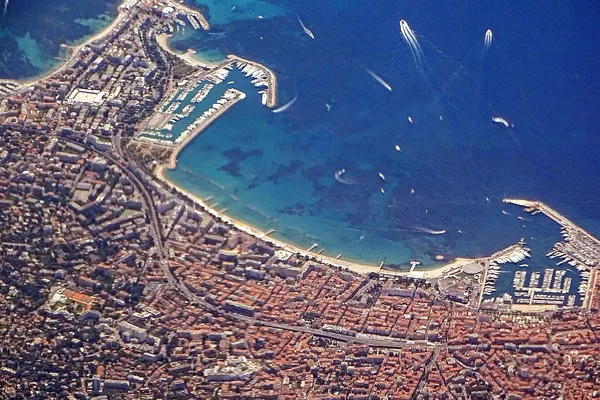
From the Promenade Amiral de Grasse, the walkway along old Antibes' sea wall, you look straight across the Baie des Anges towards Nice and, on a clear winter's day, the snow-capped Alps behind. It is the same view that gave the town its name. When Greek colonists from Massalia, present-day Marseille, settled at the foot of the rock, they called the place Antipolis – "the town opposite" – because it lay across the mouth of the Var from Nikaia, Nice.
This is not a guide to the market, the bakeries and the coastal path, but to the history beneath your feet as you walk through Vieil Antibes. Facts about the municipality can be found on VERA PI's page about Antibes.
7 places
© OpenStreetMap contributors · OpenFreeMap
- 01Musée Picasso – Château GrimaldiMuseum · Vieil Antibes
- 02Cathédrale Notre-Dame-de-l’Immaculée-ConceptionChurch · Vieil Antibes
- 03Bastion Saint-AndréMuseum · Vieil Antibes
- 04Promenade Amiral de GrasseWalk · Vieil Antibes
- 05Chapelle Saint-BernardinChapel · Vieil Antibes
- 06Nomade on the Bastion Saint-JaumeArt · Port Vauban
- 07Fort CarréSight · Port Vauban
- c. 300 BC
- Greeks from Massalia found Antipolis
- 1124
- Saracen pirates burn the cathedral
- 1385
- The Grimaldi brothers become lords of Antibes
- 1746–1747
- Austro-Savoyard siege, 350 houses destroyed
- 1926
- The town buys the Château Grimaldi
- 1946
- Picasso works at the castle for six months
Antipolis – the Greek trading post
Traces of settlement from the early Iron Age have been found where the castle and the cathedral stand today, and beneath the Chapelle du Saint-Esprit there are remains of a local community with contacts across the whole Mediterranean. Amphorae and shipwrecks on the seabed off Antibes bear witness to trade with the Etruscans, but above all with the Greek world. Current research suggests that Antipolis itself was founded relatively late, at the end of the 4th century BC, as a trading post in Marseille's network along the coast. The Greek geographer Strabo mentions the town. No one knows exactly where it stood, but everything suggests it was built at the foot of the rock – in what is today the old town.
Most of what can be seen of ancient Antibes today is in the Bastion Saint-André, a 17th-century fortress at the far end of the Promenade Amiral de Grasse. It houses the town's archaeological museum, with sculptures, amphorae and objects from local excavations and shipwrecks in the harbour.
Pirates, bishops and Grimaldis
The Middle Ages were turbulent. Saracen pirates ravaged the coast, and in 1124 they burned down the cathedral. The raids continued, and in 1244 the bishops of Antibes moved to Grasse to escape them – and stayed there for five centuries. In 1385, lordship over Antibes passed to the brothers Marc and Luc Grimaldi, of the same Genoese family that rules Monaco, and the castle on the rock is named after them.
When Provence became part of the French crown in 1481, Antibes suddenly became a border town, France's outermost outpost against the Savoyard County of Nice. The town was plundered in 1536 by the Genoese admiral Andrea Doria, and in December 1746 it was besieged by an Austro-Savoyard army. When the siege was lifted on 1 February 1747, the cannons had flattened 350 houses and destroyed the cathedral once again.
The cathedral and the lanes
The Cathedral of Notre-Dame-de-l'Immaculée-Conception, right next to the castle, was first built by Bishop Armentarius in the 5th century. The façade you see today dates from the rebuilding after the siege, and inside there is a Baroque altarpiece and a life-size wooden sculpture of the dead Christ. The church is known for its acoustics, and every January it hosts a festival of sacred music.
Then head into the lanes around Rue du Safranier, where the stone houses are draped in flowers and the quirky Commune libre du Safranier holds its neighbourhood festivals. The chapel of Saint-Bernardin is nearby too. In the cellars of the old town, among the Roman foundations, there is even a small museum devoted to absinthe.
Picasso at the Château Grimaldi
By the time of the First World War, the railway had reached Antibes and most of the fortifications had been demolished to make way for new residential districts. In 1926 the town bought the old Château Grimaldi and restored it as a museum. Twenty years later, in 1946, Pablo Picasso moved in. For six months he worked in the castle's rooms overlooking the sea.
Today the Musée Picasso holds one of the world's foremost Picasso collections: 24 paintings, 44 drawings, 32 lithographs, eleven oils on paper, 80 ceramic works, two sculptures and five tapestries. The terrace, with sculptures facing the sea, is one of the Riviera's most beautiful museum settings. Antibes kept attracting artists: Nicolas de Staël had his last studio here and died in the town in 1955.
Port Vauban, Nomade and Fort Carré
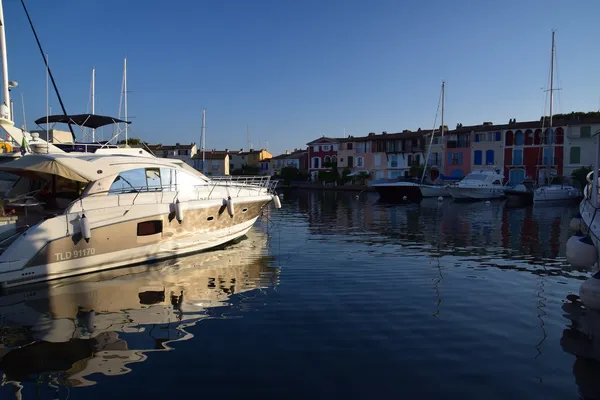
North of the old town lies the harbour that was once the heart of Greek Antipolis. Port Vauban is today regarded as Europe's largest marina, with more than 2,000 berths and room for boats over a hundred metres long. On the Bastion Saint-Jaume at the harbour entrance sits Jaume Plensa's Nomade, an enormous seated figure made of white letters, gazing out to sea.
On the other side of the harbour stands Fort Carré, the star-shaped fortress that guarded the border with Nice. From its walls you can see the whole old town, the harbour and the coast towards Monaco. If you want to continue south to the peninsula of Cap d'Antibes, read about the Hôtel du Cap-Eden-Roc. You can find more destinations along the coast at metromode.co.
Musée Picasso – Château Grimaldi
Picasso's studio in 1946
The castle where Picasso worked in 1946, today home to one of the world's foremost Picasso collections, with a terrace overlooking the sea.
Place Mariéjol, Antibes
Cathédrale Notre-Dame-de-l’Immaculée-Conception
The cathedral rebuilt time and again
Founded in the 5th century, burned in 1124 and destroyed in 1747. Known for its acoustics.
Bastion Saint-André
The archaeological museum
A 17th-century fortress with finds from Greek and Roman Antibes, including amphorae from shipwrecks.
Promenade Amiral de Grasse
The walk along the sea wall
The walk along the town wall with views of Nice and the Alps.
Chapelle Saint-Bernardin
The chapel in the lanes
Chapel in the old town's lanes.
Rue du Docteur François Delmas, Antibes
Nomade on the Bastion Saint-Jaume
Jaume Plensa's sculpture at the harbour
A huge seated figure made of letters, gazing out to sea.
Fort Carré
The star-shaped border fortress
The fortress across Port Vauban, overlooking the old town and the coast.