A prefabricated palace for a French-born king, a nine-tonne vase that took 3,500 working days to carve and a biodynamic garden where Stockholm comes for coffee and bread. Rosendal is Djurgården at its most civilised.
In this story · 5 sections
In the green heart of Djurgården stands a low palace in soft pink and cream with a lantern on its roof and a giant red granite vase on the lawn in front. This is Rosendal, the summer pleasure palace of Charles XIV John, the French marshal who became king of Sweden – and just to the west lies Rosendals Trädgård, the garden where Stockholmers come for coffee, bread and an hour among the vegetable beds. Together they make one of the most rewarding half-days in the city.
2 places
© OpenStreetMap contributors · OpenFreeMap
Rosendal at a glance- Location
- Djurgården, within the Royal National City Park
- Palace
- 1823–1826, Fredrik Blom, for Charles XIV John
- Museum
- Since 1913, open in summer
- Rosendal Vase
- Garberg granite, 2.67 m high, around 9 tonnes
- Garden
- Biodynamic, run by a foundation since 1982
- Orangery
- 1848, Georg Theodor Chiewitz (now private homes)
A palace in kit form
The site was originally a royal gamekeeper's house, given by Gustav III to the courtier Georg Johan De Besche, who built a timber house here in the 1790s. After several owners it was bought by Crown Prince Karl Johan for 16,000 riksdaler. When the old house burned down in 1819, he had a new royal villa built. The foundations were laid in 1823, the exterior was finished in 1825, and in 1826 the king could move into the ground floor, though work on the upper floor continued into 1827.
The architect was Fredrik Blom, who designed the palace as a prefabricated timber house of 17 rooms on two floors, built in ready-made sections that were carried to Djurgården and assembled on site – a technique he had already used for the king's pavilion on Ladugårdsgärdet – with the façade strengthened in rendered brick. Rosendal is the only palace Charles XIV John built for himself, and it is a fine example of the austere Swedish Empire style known as Karl Johan style. The king did not use it as a family home but for entertaining, often in connection with military exercises on Ladugårdsgärdet across the water; for the summer manoeuvres a pontoon bridge, also designed by Blom, was laid across Djurgårdsbrunnsviken.
Rooms in colour
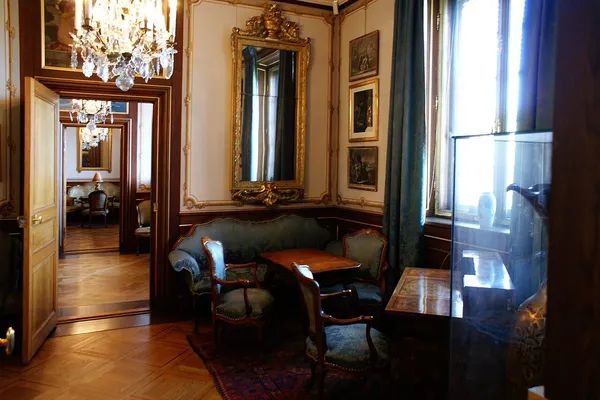
Inside, every room was given a colour, in keeping with the taste of the time: the king's drawing room became the Red Salon, the crown prince's antechamber the Blue and Yellow Cabinets. The court painter Per Emanuel Limnell painted the decorations, Swedish furniture by Lorentz Wilhelm Lundelius stood on boldly patterned woollen carpets from Tournai, and walls were hung with brightly coloured Swedish silks. The most splendid room is the domed salon under the roof lantern, where Limnell painted the four seasons and a French chandelier with swans hangs in the centre. A dining wing added in 1827 was dressed as a tent, its walls and ceiling hung with fabric.
After the king's death in 1844 later generations altered the house, but on Prince Eugen's initiative the interiors were recreated before the palace opened as a museum in 1913. It shows the taste of the 1820s and 1830s, and its highlights include the library, where Charles XIV John's books survive untouched, and his bedchamber, moved here from the Royal Palace in 1913. The palace has been open to visitors in summer since then and a listed state monument since 1935.
The Rosendal Vase
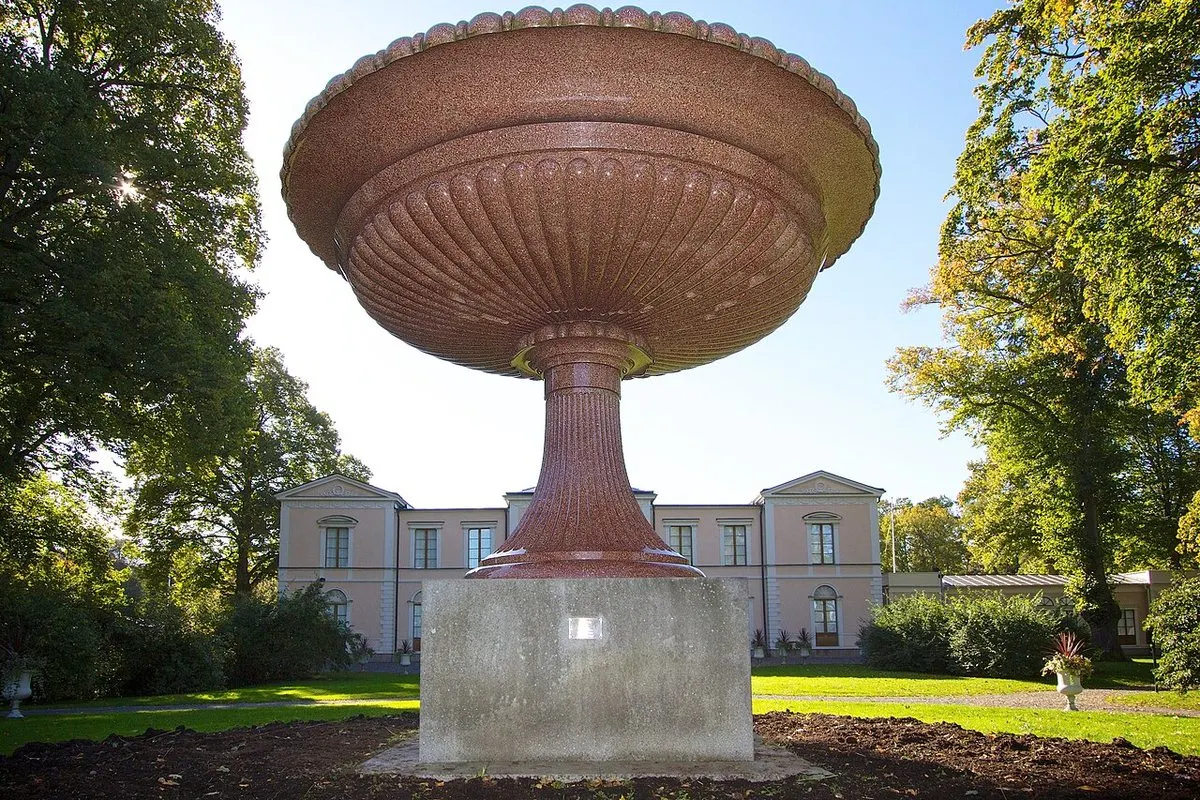
In the spring of 1823 the king ordered a magnificent vase from the porphyry works at Älvdalen, to stand outside the north front. It was carved from Garberg granite – not porphyry, as is often claimed – and it measures 2.67 metres high and 3.59 metres across and weighs around nine tonnes without its plinth. At times 40 men worked on it, and it took 3,500 working days before it was finished in the autumn of 1825. A year later it was set up where it stands today.
Rosendals Trädgård
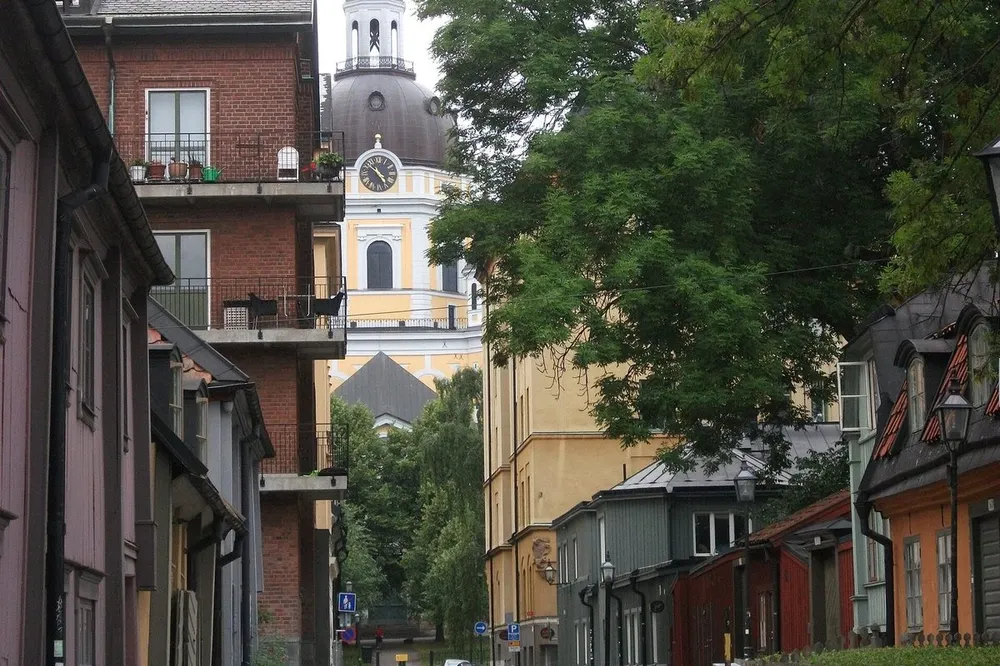
West of the palace lies Rosendals Trädgård, part of the Royal National City Park. Its story begins in 1861, when the Swedish Horticultural Society opened greenhouses and a school of gardening here; some 700 gardeners trained at Rosendal before the school closed in 1911. The great cast-iron and glass greenhouse, the Victoria Regia house, was demolished in the 1910s, but the director's villa survives at Rosendalsterrassen 9.
Since 1982 the garden has been run by a foundation dedicated to biodynamic cultivation and the art of landscape. There is a café, a bakery, a plant shop and a bread shop, as well as courses, and their income supports the garden. The pink Rosendal Orangery, built in 1848 to designs by Georg Theodor Chiewitz with a round central section and two single-storey wings, has been converted into private homes.
Planning your visit
Come for the palace on a summer tour, then walk to the garden for lunch or coffee among the beds; the garden is worth the walk in its own right. Check the palace's opening dates before you go. Read about the area in VERA PI's guide to Rosendalsvägen and Rosendalsterrassen, explore Djurgården with VERA PI, follow our plan for a day on Djurgården and point your phone at the palace with Metro Mode Camera.
Rosendal Palace
Charles XIV John's Empire pleasure palace
Fredrik Blom's prefabricated palace of 1823–1826 with Karl Johan-style interiors and the great granite vase.
Rosendalsvägen, Stockholm
Insider tipOpen in summer – check dates.
Rosendals Trädgård
Biodynamic garden with café and bakery
A garden since 1861, with a café, bakery and plant shop among the beds.
Rosendalsterrassen, Stockholm
Insider tipCome for coffee among the beds.