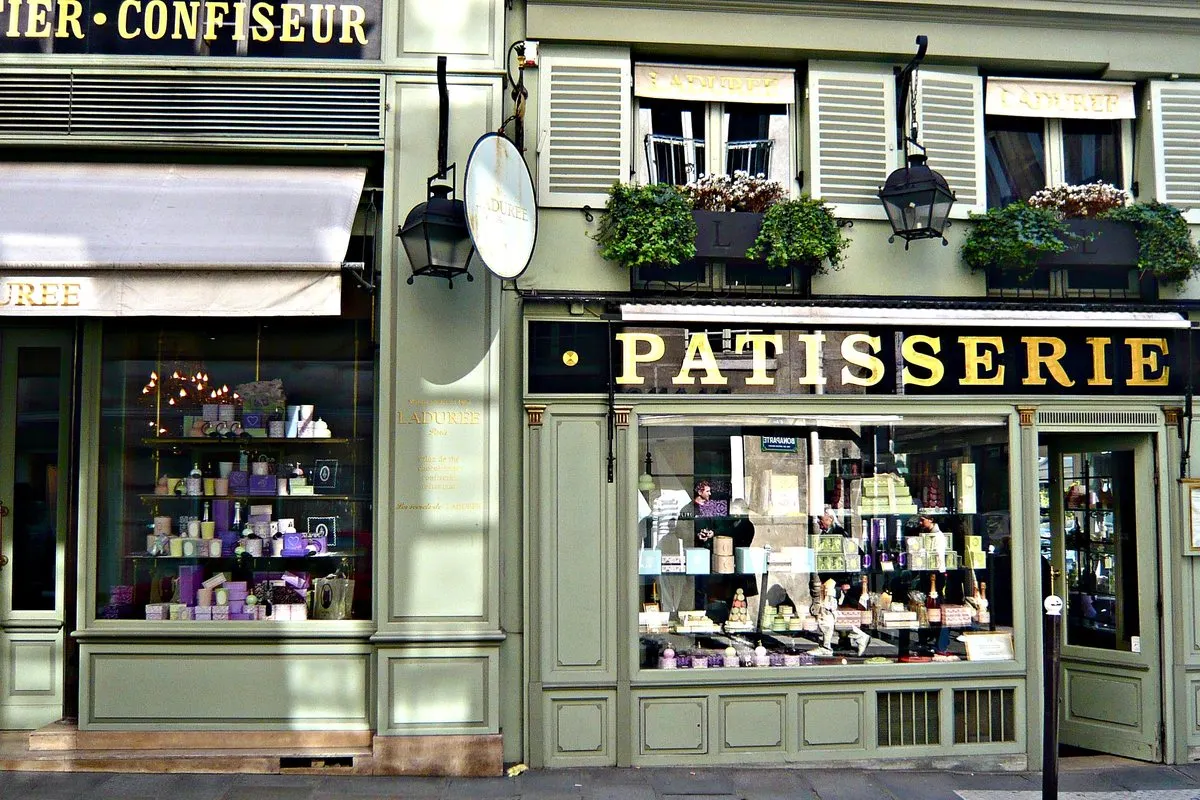
The oldest pastry shop in Paris, the house that perfected the macaron and the chef once called the Picasso of pastry. A short, considered tour of the pâtisseries that define the city, and what to order at each.
In this story · 4 sections
In Paris, pâtisserie is not a treat so much as a civic institution. Neighbourhoods are judged by their pastry shops, and a well-made éclair or millefeuille is discussed with the seriousness other cities reserve for wine. Four addresses tell the story of Parisian pastry from the eighteenth century to today, and they make a fine excuse for a long walk across the city.
Stohrer
Pâtisserie · 2nd arrondissement
© OpenStreetMap contributors · OpenFreeMap
- Address
- 51 rue Montorgueil, 75002 Paris
- Stohrer (1730)
- Rum baba, puits d'amour
- Ladurée (1862)
- Macarons, Saint-Honoré
- Pierre Hermé (Paris 2001)
- Ispahan, seasonal macarons
- Angelina (1903)
- Hot chocolate, Mont-Blanc
- Best time
- Mornings, on weekdays
Founded in 1730 by Nicolas Stohrer, pastry chef to the King of Poland, and credited with the rum baba.
01Stohrer: the oldest pâtisserie in Paris
Begin on rue Montorgueil, the market street of the 2nd arrondissement. Nicolas Stohrer was pastry chef to Stanisław Leszczyński, the exiled King of Poland, and came to France in 1725 when the king's daughter married Louis XV. Five years later, in 1730, he opened his own shop on this street, where it has remained ever since. It is credited as the oldest pâtisserie in the city.
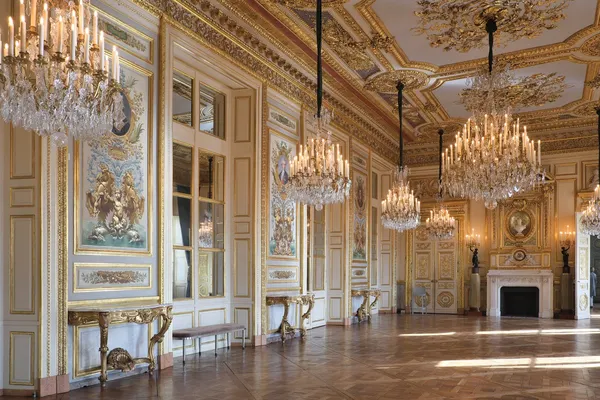
The interior was decorated in 1860 with painted panels commissioned from a pupil of Paul Baudry, the painter of the Opéra Garnier's foyer, and Elizabeth II paid a visit during her state visit of 2004. Order the rum baba: it is said to have been created here, and Stohrer still makes it with a generous soaking. The puits d'amour, a puff-pastry case filled with caramelised custard, is the other classic.
02Ladurée: tea rooms and the double macaron
Louis Ernest Ladurée, a miller, opened a bakery on rue Royale in 1862. After a fire in 1871 it was rebuilt as a pastry shop, and the painter Jules Chéret decorated the ceiling with plump cherubs dressed as pastry cooks, still the house emblem. The pale green of the façade became a signature too.
Insider tipTakeaway only; eat your baba on the move along rue Montorgueil.
Ladurée's fame rests on the macaron as we know it. Around 1930 Pierre Desfontaines, a cousin of the family, had the idea of joining two meringue shells with a ganache filling. Today the house has branches around the world, but the rue Royale tea room remains the one to visit for the atmosphere, and the shop on rue Bonaparte in Saint-Germain is a calmer alternative. Order a box of macarons to take away, or sit down for the Saint-Honoré with tea.
03Pierre Hermé: the modern master
Walk a little further along rue Bonaparte to number 72, where Pierre Hermé opened his first Paris boutique in 2001. Born into four generations of Alsatian bakers, Hermé began his apprenticeship with Gaston Lenôtre at fourteen, was called “the Picasso of pastry” by Vogue and was named the World's Best Pastry Chef by The World's 50 Best Restaurants in 2016.
His approach is that of a perfumer: unexpected combinations, balanced with precision. The signature is the Ispahan, which brings together rose, lychee and raspberry, offered as a macaron, a croissant and a full cake. The macarons here are less sweet and more intensely flavoured than the classic Parisian style, and the seasonal collections are worth asking about.
04Angelina: hot chocolate on rue de Rivoli
End the tour under the arcades of rue de Rivoli, opposite the Tuileries, at Angelina, a Belle Époque tea room opened in 1903. Its thick hot chocolate, served with whipped cream, and the Mont-Blanc of chestnut cream and meringue have drawn Parisians for generations. Expect a queue at weekends; a weekday afternoon is easier.
For more addresses on these streets, see our guides to the 6th arrondissement and the 2nd.