In this story · 5 sections
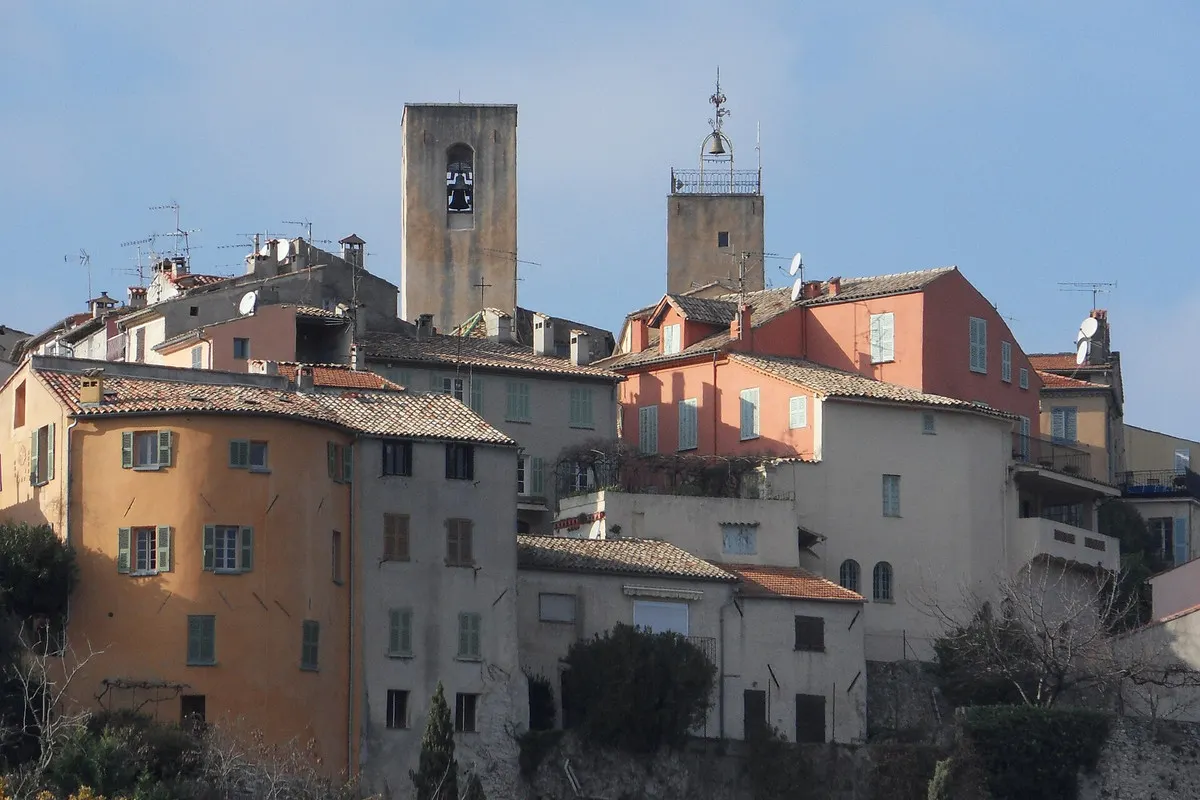
Biot sits between Cannes and Nice, bordering Antibes, and on the map it looks like just another busy commune of the coast. Around a third of the Sophia Antipolis technology park lies within its borders, and the population has grown from 3,000 to 10,511 in 2023. Yet the perched village at its heart has survived almost intact: a knot of ochre and rose houses on a ridge, with a church bell tower rising out of the roofs.
It is a place of makers. For centuries Biot's clay fed the potters; since the 1950s its furnaces have blown glass. Come in the morning to see the glassblowers at work, then climb into the village for lunch under the arcades.
4 places
© OpenStreetMap contributors · OpenFreeMap
Templars, plague and a Ligurian rebirth
Biot's territory passed to Roman Antipolis after 154 BC, and excavations in what is now Sophia Antipolis uncovered a third-century farm with presses and great storage jars for oil or wine. In the 12th century the church and castrum of Biot appear among the possessions of the bishop of Antibes. The Knights Templar then bought the best land and founded a house that became one of the order's most important in the region, until their arrest in 1308 and the transfer of their property to the Knights Hospitaller.
By the 15th century the village was largely deserted. In 1470 King René of Provence granted around fifty families from the Oneglia valley, near today's Imperia, the right to settle, with free use of the land and no taxes for 25 years. They rebuilt Biot quickly, and the village you walk through today is largely theirs. It suffered again later: in 1707 Austro-Sardinian troops occupied, looted and destroyed it.
The jars that crossed the Mediterranean
Biot's soil is rich in clay, sand, manganese and the volcanic stone used for kilns. From the early 16th century that made it the most important centre for oil jars in the Mediterranean, and until the mid-18th century Biot jars were shipped widely through the ports of Antibes and Marseille. A few workshops still make jars, pottery and ornamental stoneware today.
Verre bullé: the glass with bubbles
Biot's modern fame is its handmade bubble glass, verre bullé, first produced here in 1956. The tiny air bubbles trapped in the glass catch the light and give the pieces their soft, watery look. The Verrerie de Biot, below the village, is where most visitors see the craft. The workshops have had hard years: the 2015 floods badly damaged the glassworks, and the surge in electricity prices in 2023 put the furnaces of Biot under real strain. Buying a piece is a way of keeping them lit.
Musée national Fernand Léger
Shortly before his death in 1955, Fernand Léger bought a property near Biot, the Mas Saint-André, intending to place polychrome ceramic sculptures in its garden. His widow Nadia Léger and his assistant Georges Bauquier built a museum there instead. Designed by the architect Andreï Svetchine, it opened on 13 May 1960, its south façade covered by a vast mosaic based on Léger's studies for a stadium in Hanover.
In 1967 the founders gave the museum and 348 works to the French state, and André Malraux inaugurated it as a national museum on 4 February 1969. It holds the largest collection of Léger's work in the world: paintings, drawings, ceramics, bronzes and tapestries, from early neo-impressionist attempts through his tubular Cubism to the figures of the 1940s. Look for Le 14 Juillet (1914), Le Grand Remorqueur (1923) and La Joconde aux clés (1930).
At a glance
| Stop | What to see | Allow |
|---|---|---|
| Verrerie de Biot | Glassblowers and bubble glass | 1 hour |
| Old village | Place des Arcades, the church, the lanes | 2 hours with lunch |
| Musée Fernand Léger | The world's largest Léger collection | 1.5 hours |
In the village
The Place des Arcades is the village's living room, a long arcaded square for coffee or lunch. A few steps away, the church of Sainte-Marie-Madeleine was built around 1155 and partly destroyed in 1367. It was once covered with murals that the bishop of Grasse had erased in 1699 for indecency; its treasure today is the Rosary altarpiece attributed to Louis Bréa. Since 2009 the village has also staged a summer festival, Biot et les Templiers, with a medieval market and craft demonstrations.
Musée national Fernand Léger
The artist's largest collection, in his own garden
Opened in 1960 and national since 1969, behind a monumental mosaic façade.
Chemin du Val de Pome, 06410 Biot
Insider tipAllow time for the garden and the temporary exhibitions.
Verrerie de Biot
Where Biot's bubble glass is made
The glassworks below the village, home of verre bullé since the 1950s.
Chemin du Bassin des Combes, 06410 Biot
Insider tipGo in the morning to see the glassblowers.
Place des Arcades
The arcaded square in the old village
The natural place for coffee or lunch under the arches.
Place des Arcades, 06410 Biot
Insider tipNext door to the church.
Église Sainte-Marie-Madeleine
The 12th-century church with a Bréa altarpiece
Built around 1155, with the Rosary altarpiece attributed to Louis Bréa.
1 place de l'Église, 06410 Biot
Insider tipStep inside on the way down from the arcades.
Neighbourhood and property data for Biot and nearby Vallauris is on VERA PI, and more Riviera stories are on metromode.co.