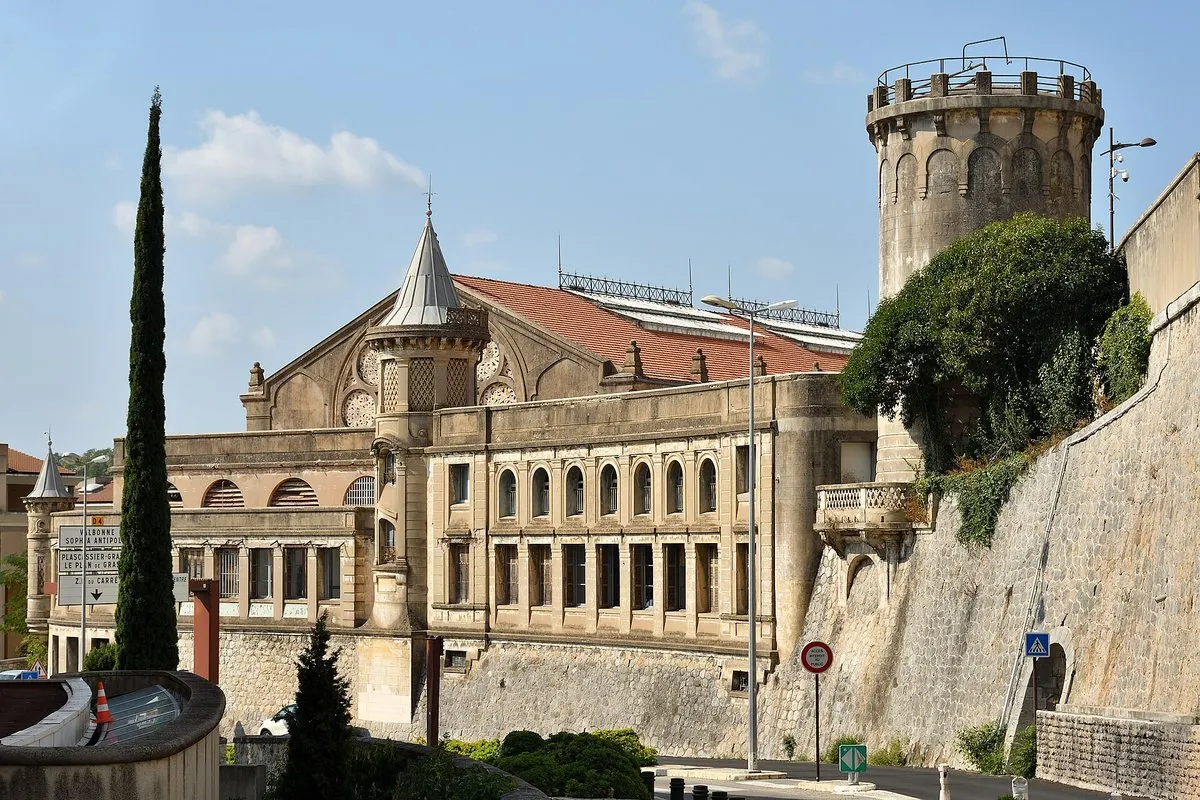
Tanners first, then glovers, then perfumers: Grasse has lived by scent for five centuries, and its know-how is now on UNESCO's list. A day among the museum, the factories, a Fragonard in the cathedral and the fields of rose and jasmine.
In this story · 7 sections
Inland from Cannes, the air changes. Grasse climbs a hillside above the plain, its old town a knot of tall ochre houses, and for five centuries it has lived by what it could coax out of flowers. Chanel still grows its rose de mai on the surrounding land, the old family perfume houses still open their doors, and in 2018 UNESCO recognised the town's know-how as part of the intangible heritage of humanity. It makes for one of the Riviera's most rewarding days away from the sea.
4 places
- 01Musée International de la ParfumerieMuseum · Grasse
- 02Fragonard – Usine historiquePerfume house · Grasse
- 03Cathédrale Notre-Dame-du-PuyChurch · Grasse
- 04Jardins du Musée International de la ParfumerieGarden · Mouans-Sartoux
- 1 September–30 June
- Daily 10.00–18.00
- July and August
- Daily 10.00–19.00
- Adults / students
- €6 / €3; free for under-18s
From tanners to perfumers
Grasse began with leather. By the fifteenth century it had a tanning industry of European reputation, its hides known for a greenish tint from soaking in myrtle, according to the history published by the house of Fragonard. Perfumed gloves were then the fashion, not least because they masked the smell of tanned skin, and Grasse's tanners began scenting their leather. By about 1560 the mild climate supported great fields of jasmine; rose de mai, tuberose and lavender followed.
In 1614 Louis XIII created the guild of Maîtres Gantiers Parfumeurs, master glovers and perfumers, and in 1724 Grasse received statutes of its own. Gradually perfume overtook leather. In the nineteenth century industrial production replaced the workshops, and large family firms emerged, some of which are still in business. The story that Catherine de' Medici brought Florentine techniques to the town is a legend: there is no document recording her visit.
A heritage of humanity
On 28 November 2018, at a meeting in Port Louis, Mauritius, UNESCO's intergovernmental committee inscribed the perfume know-how of the Pays de Grasse on its representative list. The inscription covers three skills: growing perfume plants, knowing natural raw materials and transforming them, and the art of composing perfume. The French culture ministry notes that these practices date back at least to the sixteenth century and are still passed on mostly through long apprenticeships inside the perfume houses.
The Musée International de la Parfumerie
Begin at the museum. Created in 1989 and renovated in 2008, it calls itself the first public institution devoted to the world heritage of scents, aromas and perfumes, and its collection runs to some 50,000 objects from five continents: raw materials, stills, flacons, textiles, advertising and archaeological finds. The architect Frédéric Jung joined a fourteenth-century rampart to the Hôtel de Pontèves to create 3,500 square metres of galleries, gardens and terraces on Boulevard du Jeu de Ballon.
Source: Côte d'Azur France tourist board. Closed on the first Monday of January, February, March, October, November and December; free on the first Sunday of the month from October to April.
Inside the perfume houses
Three historic houses open their doors. Galimard was founded in 1747 by Jean de Galimard, who supplied balms and perfumes to the court of Louis XIV; it offers factory tours and private workshops in which you compose a scent of your own. Molinard, founded in 1849, was a favourite of Queen Victoria and is known for Habanita. Fragonard, the youngest, dates from 1926.
Fragonard's historic factory occupies a nineteenth-century building in the old town, at 20 Boulevard Fragonard. The guided visit through the laboratories, workshops and packing rooms is free, runs daily from 9.00, and is offered in many languages, Swedish among them. Groups of more than fifteen must book.
A Fragonard in the cathedral
The painter Jean-Honoré Fragonard was a son of Grasse, and one of his rare religious works hangs in the cathedral of Notre-Dame-du-Puy: The Washing of the Feet, from 1754. The cathedral is thought to date from the middle of the thirteenth century, after the bishopric moved here in 1244, and shows Ligurian and Lombard influence. It also holds three paintings attributed to Rubens or his school – The Crowning with Thorns, Saint Helena and the Exaltation of the Holy Cross, and The Raising of the Cross – a fifteenth-century reliquary of Saint Honoratus and organs by Frédéric Jungk from 1855. During the Revolution it served as a grain store, and a fire in 1795 cracked some of its pillars. Entry is free; it is closed on Sundays except for mass.
The gardens at Mouans-Sartoux
To see where it all begins, head for Mouans-Sartoux, where the museum keeps its conservatory of perfume plants on the edge of town. The two-hectare Jardins du Musée International de la Parfumerie are laid out around an old canal and an irrigation basin, with field crops of rose centifolia, jasmine, tuberose, lavender, geranium, broom and orange blossom, and landscaped beds arranged by scent family: citrus, floral, woody, spicy, fruity and musky. They are open daily from 1 March to 11 November 2026, 9.00–18.00, and a railway station lies within 500 metres.
When to go
Grasse has held its Fête du Jasmin every year since 1946, over a weekend at the turn of July and August, when a flower parade passes through the centre at night and the town's firemen spray the crowd with jasmine water. Outside the festival, any season works: the museum and the cathedral are open all year. Grasse pairs well with a night on the coast at Cannes; for ideas, see our Riviera guides on metromode.co and our Monaco guide.
Musée International de la Parfumerie
The world history of scent
Created in 1989 and renovated in 2008; some 50,000 objects from five continents.
2 Boulevard du Jeu de Ballon, 06130 Grasse
Insider tipClosed on the first Monday of some months.
Fragonard – Usine historique
Free guided factory visits
Laboratories, workshops and packing rooms in a nineteenth-century building.
20 Boulevard Fragonard, 06130 Grasse
Insider tipGroups of more than 15 book ahead.
Cathédrale Notre-Dame-du-Puy
Fragonard and Rubens
Thirteenth-century cathedral with Fragonard's The Washing of the Feet (1754).
Jardins du Musée International de la Parfumerie
The perfume plants in the field
Two hectares of rose centifolia, jasmine, tuberose and more, arranged by scent family.
979 chemin des Gourettes, 06370 Mouans-Sartoux