Gstaad is famous for its winters, but the Saanenland was made for July and August: a classical festival founded by Yehudi Menuhin, 15th-century frescoes in village churches and a suspension bridge strung between two summits at almost 3,000 metres.
In this story · 4 sections
Gstaad sits at 1,050 metres in the Bernese Oberland, part of the municipality of Saanen, and is best known as a winter address. Yet the town grew up as a crossroads, where trails forked towards the Valais and Vaud, and in July and August it shows another side. The hotels open their terraces, the car-free promenade fills with strollers, and the valley's churches fill with music. For more mountain towns, see our Alps destinations.
2 places
The Gstaad Menuhin Festival
In 1957 the violinist Yehudi Menuhin settled in Gstaad with his family, and a local tourism director asked him to “enhance the summer season with some concerts”. The result was the Gstaad Menuhin Festival, whose early guests included Benjamin Britten and Peter Pears. Today it runs to more than 50 concerts over seven weeks. Gstaad is the hub, but many performances take place elsewhere in the valley and the wider Bernese Oberland – including the church at Saanen, where Julia Fischer once opened the season with a recital. Over the years the soloists have included András Schiff, Cecilia Bartoli and Sol Gabetta.
Saanen and its frescoed church
Saanen, the older settlement and the seat of the municipality, lies just down the valley. Its church of St. Mauritius was built in 1228 and enlarged in 1444–47, and its wall paintings date from the second half of the 15th century. The church and the Alte Kastlanei are listed as Swiss heritage sites of national significance, and the whole village is in the Inventory of Swiss Heritage Sites. In Gstaad itself, the small St. Nicholas chapel was built in 1402 and also keeps murals from the later 15th century.
Glacier 3000 and the Peak Walk
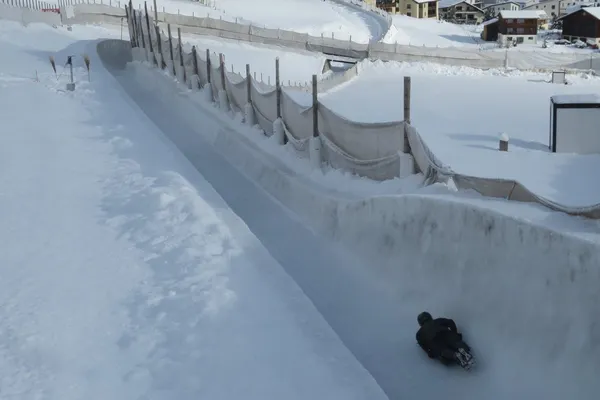
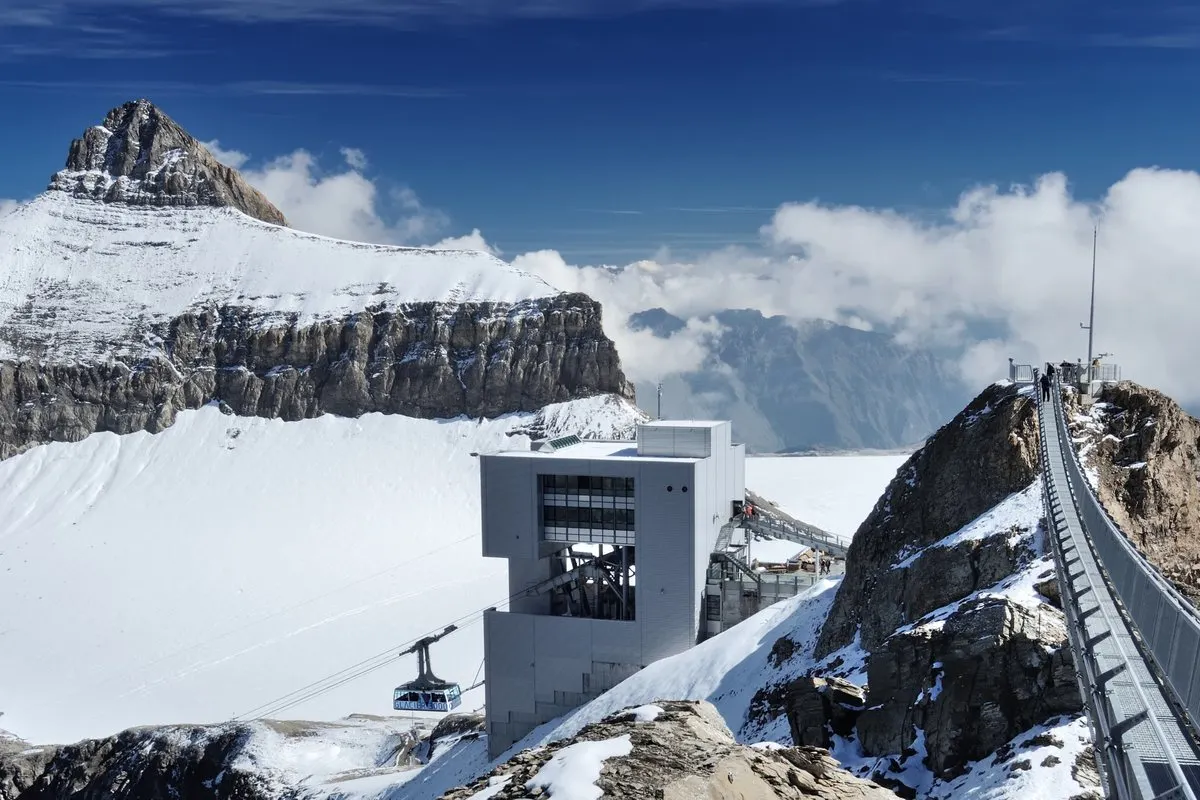
The great excursion is Glacier 3000, which starts from the Col du Pillon, 1,546 metres up. A cable car first opened here in 1964 and was rebuilt in 1999; it climbs via Cabane to the Scex Rouge at around 2,970 metres, on the edge of the Tsanfleuron glacier. The draw at the top is the Peak Walk by Tissot, completed in 2014: a suspension footbridge 107 metres long and 80 centimetres wide, slung between a viewpoint and the Scex Rouge summit. On a clear day the panorama runs to the Matterhorn and Mont Blanc. In summer there is also an Alpine Coaster, a toboggan run on the glacier.
Without a car, take the train to Aigle and the ASD line to Les Diablerets, then continue to the Col du Pillon. Check fares, opening times and the weather with the operator before you go.
The promenade and the long afternoon
Back in town, the Promenade is closed to cars and lined with wooden chalets, galleries and boutiques, from Hermès and Cartier to Brunello Cucinelli and Moncler. The Gstaad Palace, the town's first luxury hotel, opened in 1913. The summer calendar adds the Swiss Open tennis tournament and the Hublot Polo Gold Cup; in September comes the Gstaad Promenade Party. Gstaad's own invention, Fondueland, lets you rent a fondue backpack from a local dairy and eat out in the meadows, where oversized caquelon pots stand in the landscape.
For more travel reading, browse Metro Mode Travel and our city and resort guides; across the border, VERA PI follows property prices in Megève and the rest of the French Alps.
Peak Walk by Tissot
A footbridge between two summits
107-metre suspension bridge between a viewpoint and the Scex Rouge summit, reached by cable car from the Col du Pillon.
Insider tipCheck the weather and opening times.
Church of St. Mauritius, Saanen
1228, with late-medieval murals
A listed village church, enlarged in 1444–47, and a Menuhin Festival venue.