Lech am Arlberg is known for royals and powder, but its most memorable hour may be spent sitting still. Above Oberlech, a buried oval room by James Turrell frames the sky at dawn and dusk; below, a 22-kilometre ski circuit and a 14th-century church tell the rest of the village's story.
In this story · 3 sections
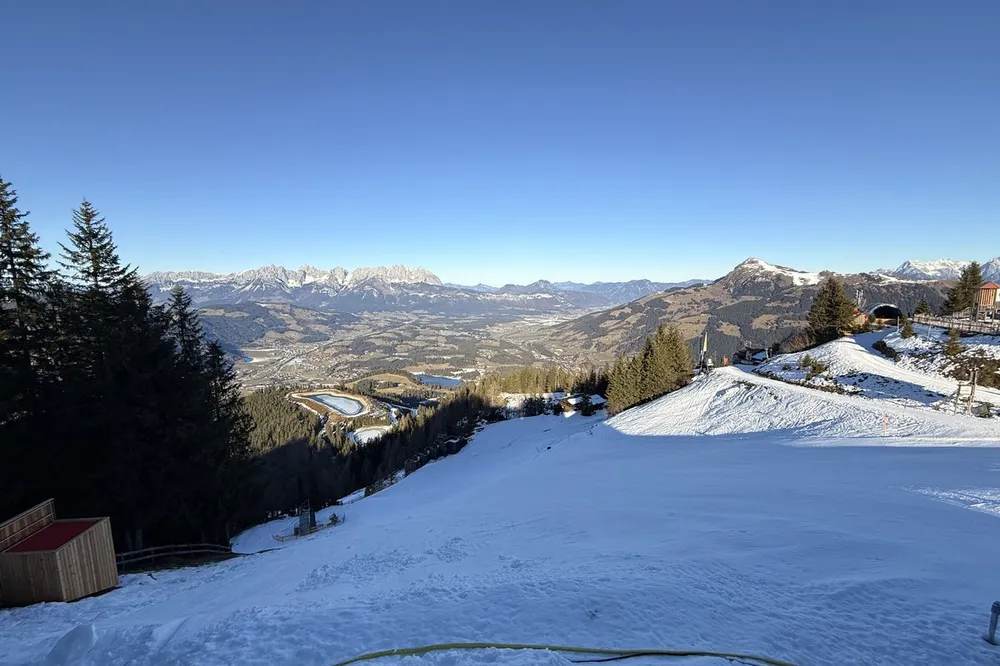
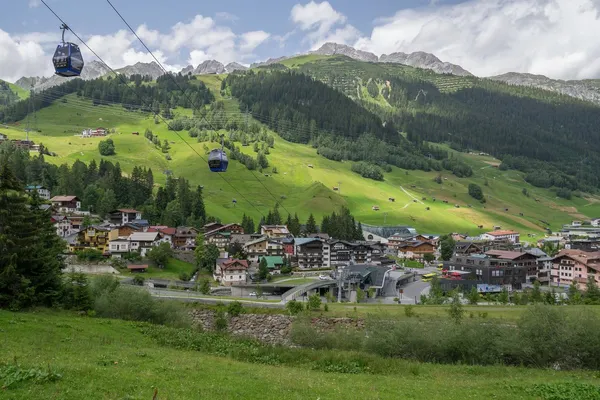
Lech am Arlberg sits at 1,444 metres in Vorarlberg, Austria's westernmost state, and has spent a century building a reputation for deep snow and discreet glamour. It limits its beds – Lech and Zürs together cap capacity at 10,000 – and the hamlet of Oberlech above it has been car-free since 1997. Its quieter pleasures are worth seeking out, and the best of them involves looking up. For more mountain villages, see our Alps destinations.
2 places
James Turrell's Skyspace
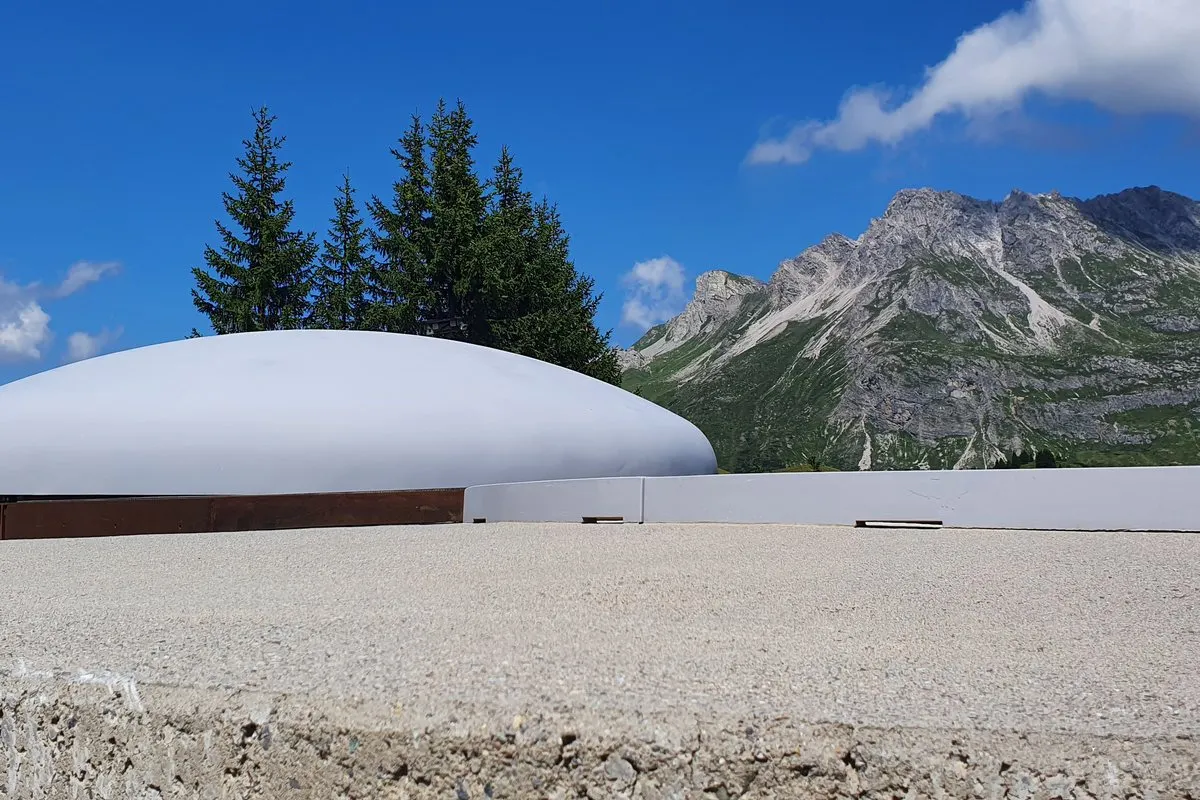
The American light artist James Turrell has built skyspaces around the world: rooms proportioned to frame a patch of sky through an opening in the ceiling. Lech's was conceived in 2014 for this particular site and opened to the public in September 2018. It lies at 1,780 metres on the Tannegg alp, a few minutes' walk from Oberlech, above the top station of the Schlosskopfbahn.
Most of it is underground. A 15-metre tunnel leads into the oval Sensing Room, 6 by 9 metres and 5.2 metres high, with a bench around the wall for some 30 people. The oval opening in the roof has a movable dome, and three light installations shift the colours of the walls as the sky changes. The bookable programmes begin 50 minutes before sunrise or at sunset. The project was realised with Vorarlberg firms – lighting by Zumtobel, architecture by Baumschlager Eberle – and cost around €1.5 million.
The White Ring
Lech's other landmark is a loop. Der Weiße Ring, the White Ring, is a circuit of runs and lifts that ties together Lech, Zürs, Zug and Oberlech: 22 kilometres of piste and 5,500 metres of descent. The ski pioneer Sepp Bildstein was its initiator, and the first lift on the circuit was built in 1940. In 2006, for the ski area's 50th anniversary, it became a race; Guinness lists it as the world's longest ski race, and around 1,000 racers take part each year. Markus Weiskopf has held the course record of 44:10.75 since 2010. For everyone else, it is simply a beautiful day's skiing.
A Walser village and its church
Lech was settled in the first half of the 13th century by Walser migrants from the Valais, and for centuries it was known simply as Tannberg. The village's stated altitude refers to the old church on its hill: St Nicholas, built in the Gothic style around 1390. Its 33-metre tower ends in an onion dome, the interior is Rococo of 1791 with some earlier frescoes, and its oldest bell dates from the early 16th century.
Until the late 19th century the valley lived from dairy farming. The Arlberg Railway brought the first tourists, the road between Lech and Zürs opened in 1897, Lech's first ski school followed in 1925 and its first lift in 1939. Today the Ski Arlberg area spans both sides of the provincial border. In summer the Green Ring, a three-day walking tour with 35 art installations about local life, offers a literary counterpart to the White Ring.
For more winter reading, browse Metro Mode Travel and our destination guides; for the French Alps, VERA PI's Courchevel property data offers a useful comparison.
Skyspace Lech
James Turrell, 2018
A largely underground oval room with a movable dome, on the Tannegg alp above the Schlosskopfbahn.
Insider tipSunrise and sunset programmes are bookable.
Pfarrkirche St. Nikolaus
Gothic, around 1390
The old parish church on its hill, with a 33-metre onion-domed tower and a Rococo interior.