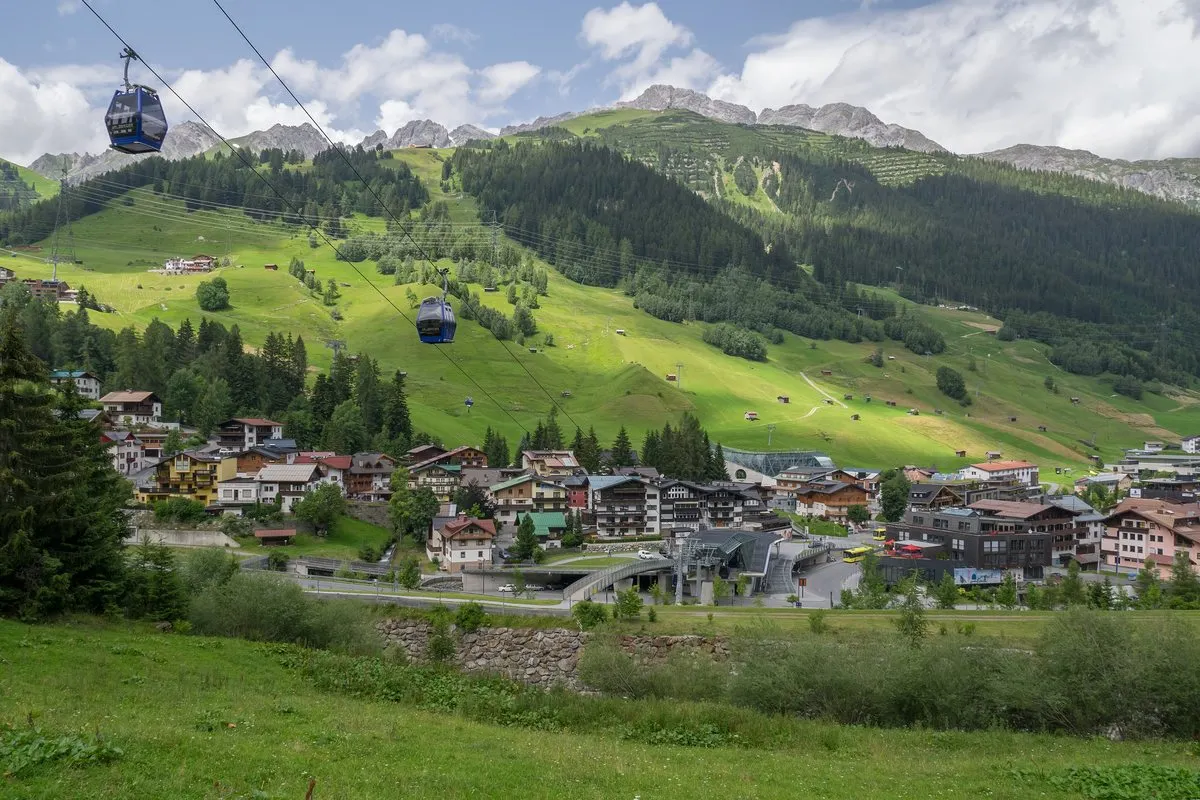
In 1907 a young ski instructor from Stuben arrived at the Hotel Post in St. Anton. The method he developed there – the Arlberg technique – is still the foundation of ski teaching, and the village around it grew into one of the great resorts of the Alps.
In this story · 3 sections
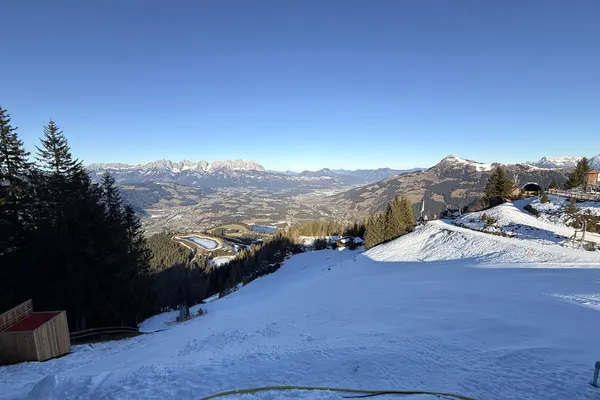
St. Anton am Arlberg lies at 1,284 metres in the upper Stanzer valley in Tyrol, on the Rosanna river and the border with Vorarlberg, about 100 kilometres west of Innsbruck. Few places can claim so much of the history of skiing. The Arlberg region is often called the birthplace of modern Alpine skiing, and the man most responsible for that reputation taught here. For more mountain destinations, see our Alps guides.
2 places
The railway and the ski club
The Arlberg railway and its tunnel were built between 1880 and 1884; Emperor Franz Joseph himself walked about a kilometre into the workings in 1881. The station was named St. Anton from the outset, although the municipality was officially called Stanzertal until 1927, and the trains brought the first tourists. On 3 January 1901 the Ski Club Arlberg was founded in the hospice at St. Christoph – itself first built in the 14th century by a shepherd, Heinrich Findelkind, as a refuge for travellers on the pass – and the first races soon followed.
Hannes Schneider and the Arlberg technique
Hannes Schneider was born in Stuben am Arlberg in 1890, the son of a farmer who also kept the pass open in winter. He learnt to ski after watching the pioneer Viktor Sohm, and in 1907, instead of becoming a cheesemaker as his parents hoped, he accepted an offer from Karl Schuler of the Hotel Post to teach skiing in St. Anton. There he worked out the method that became known as the Arlberg technique, the foundation on which Alpine ski instruction is still built. He founded the St. Anton ski school in 1922, helped organise the first Arlberg-Kandahar race in 1928 and starred in Arnold Fanck's ski films, including The White Ecstasy, shot on the Arlberg in 1930–31.
An outspoken critic of the Nazis, Schneider was stripped of his school and imprisoned after the Anschluss in 1938. The following year the American banker Harvey Dow Gibson secured his release and brought him to Cranmore Mountain in North Conway, New Hampshire, where he ran the ski school until his death in 1955. His instructors carried the Arlberg method across the United States, from Sun Valley to Mount Rainier.
Cable cars and champions
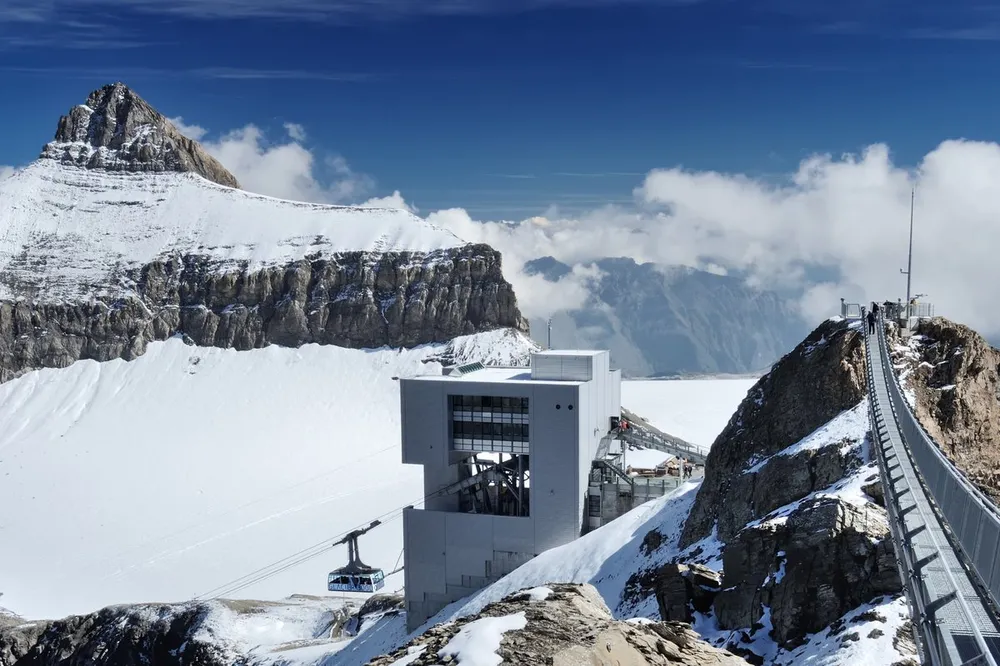
The Galzig cable car of 1937, championed by the tourism director Rudolf Gomperz, began the building of lifts that continued after the war with the Valluga, Gampen and Kapall lines and, in the 1960s and 70s, the Rendlbahn. Today lifts climb to the summit of the Valluga at 2,811 metres, a vertical of around 1,500 metres above the village, and St. Anton is part of the Ski Arlberg area shared with Lech, Zürs, Stuben and St. Christoph. The world champion Karl Schranz is from St. Anton, and in 2001 the village hosted the Alpine World Ski Championships, watched by more than 350,000 spectators.
For those championships the railway was moved to the southern edge of the village, south of the Rosanna; the old station building is listed, and the freed land became a park. Since the Arlberg road tunnel opened in 1978, much of the village street has been pedestrianised. The village's Ski and Heritage Museum, in the Trier villa, tells the story in full.
For more winter reading, browse Metro Mode Travel and our destination guides; if the French Alps appeal, VERA PI tracks property prices in Morzine and other resorts.
Ski- und Heimatmuseum St. Anton
The story of Arlberg skiing
The village museum, in the Trier villa.