Harrods began as a one-room grocer in Brompton in 1849. Today its terracotta palace on Brompton Road is the largest department store in Europe, with more than 330 departments. Here is the story of Harrods – and the Knightsbridge streets around it.
In this story · 4 sections
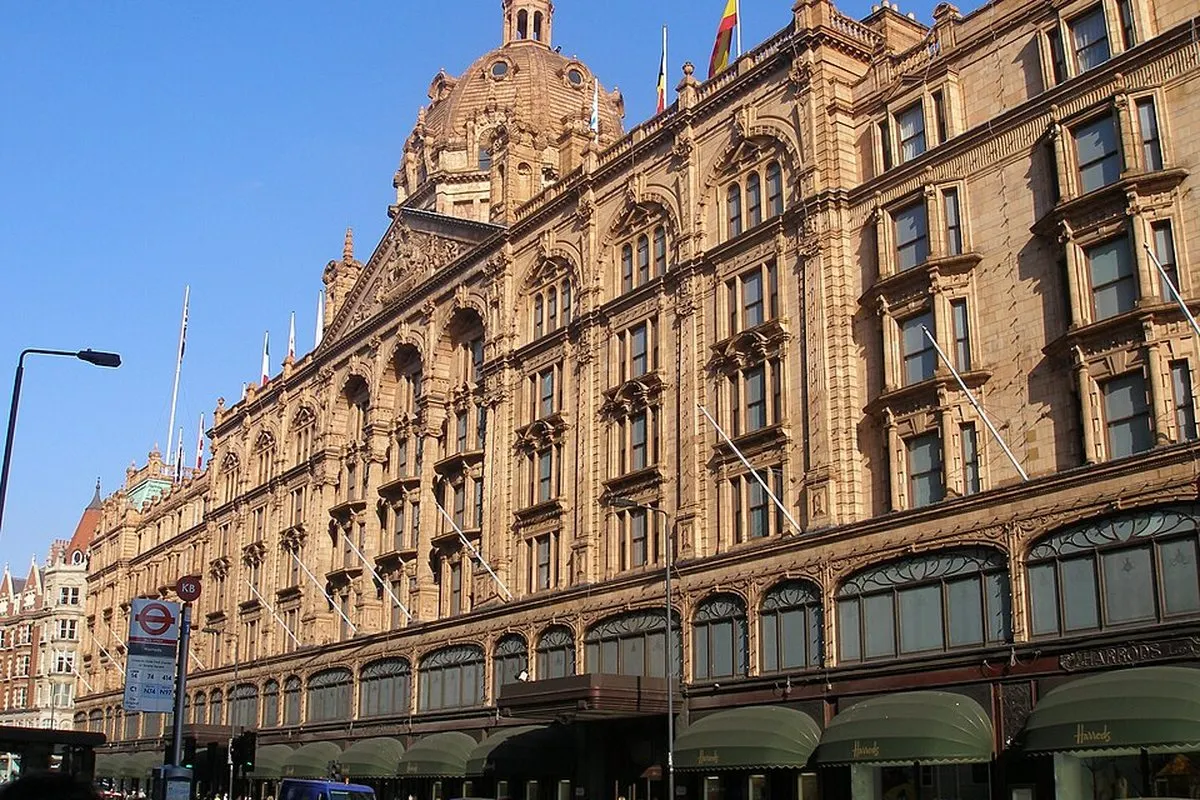
Harrods, on Brompton Road in Knightsbridge, is London's most famous department store and, by selling space, the largest in Europe. Its terracotta façade stretches along a whole block, and inside are more than 330 departments, food halls and 23 restaurants. According to Wikipedia, the store attracted 15 million visitors in 2023. Around it lies Knightsbridge, one of London's two international retail centres alongside the West End.
Harrods
Department store · Knightsbridge
© OpenStreetMap contributors · OpenFreeMap
- Address
- 87–135 Brompton Road, London SW1X
- Building
- 1905, C. W. Stephens
- Listed
- Grade II*
- Founded on the site
- 1849
- Present building
- 1905
- Departments
- More than 330
- Restaurants
- 23
- Visitors (2023)
- 15 million
More than 330 departments, food halls and 23 restaurants.
01From a one-room grocer to Brompton Road
Charles Henry Harrod started out as a draper and grocer in Southwark and the East End, with a special interest in tea. In 1849, hoping to benefit from the Great Exhibition in nearby Hyde Park two years later, he took over a small shop in Brompton on the site of today's store. It began with a single room, two assistants and a messenger boy. His son, Charles Digby Harrod, built it into a thriving business selling medicines, perfumes, stationery, fruit and vegetables, and by 1881 Harrods employed a hundred people.
When a fire destroyed the store in the 1880s, Charles Digby Harrod still delivered every Christmas order. A new building rose on the same site, and the present store, designed by C. W. Stephens, opened in 1905. On 16 November 1898 Harrods unveiled England's first “moving staircase” – a woven leather conveyor with a mahogany balustrade. Nervous customers were offered brandy at the top.
02Customers from Oscar Wilde to A. A. Milne
Harrods extended credit to customers including Oscar Wilde, Lillie Langtry, Ellen Terry, Charlie Chaplin, Noël Coward, Sigmund Freud and members of the royal family. Beatrix Potter shopped here from the age of 17, and The Tale of Peter Rabbit was soon on sale with a Peter Rabbit soft toy. In 1921 A. A. Milne bought a teddy bear here for his son Christopher Robin – the bear that became Winnie-the-Pooh. In 1969 two Australians bought a lion cub, Christian, from the store; he was later released in Kenya.
Insider tipThere is a dress code – no beachwear or flip-flops.
03The store today – food halls, departments and a dress code
The store occupies a two-hectare site, and its motto is Omnia Omnibus Ubique – “all things for all people, everywhere”. The Food Halls, the jewellery departments and the seasonal Christmas department are the best known. Services range from personal shopping to a tailor, a watch repair service and bespoke fragrances. Harrods has had a dress code since 1989: beachwear, flip-flops, cycling shorts, bare feet and dirty or unkempt clothing are not allowed. The building was Grade II* listed in 1969, and since 2010 the store has been owned by the Qatar Investment Authority.
04Knightsbridge around Harrods
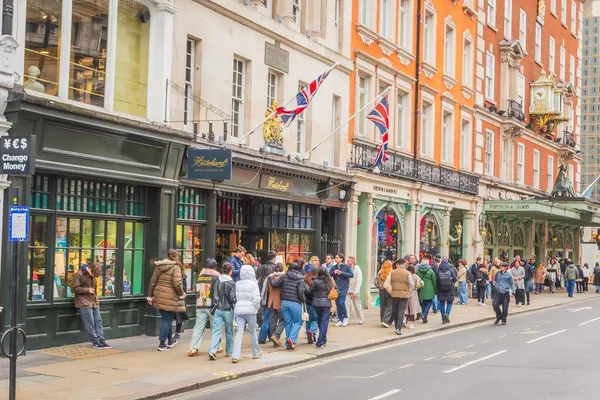
Knightsbridge lies south of Hyde Park, between Exhibition Road and Sloane Street. Its name comes from Old English and means “bridge of the young men”, after a crossing of the River Westbourne, which now runs underground. Today the district is known for Harrods and Harvey Nichols, for restaurants and salons, and for some of the highest property prices in the world. Knightsbridge Underground station on the Piccadilly line is a short walk from the store.
Explore the area in VERA PI's street files for Brompton Road, Hans Crescent and Knightsbridge, see all of Kensington and Chelsea, or start with VERA PI's London guide.