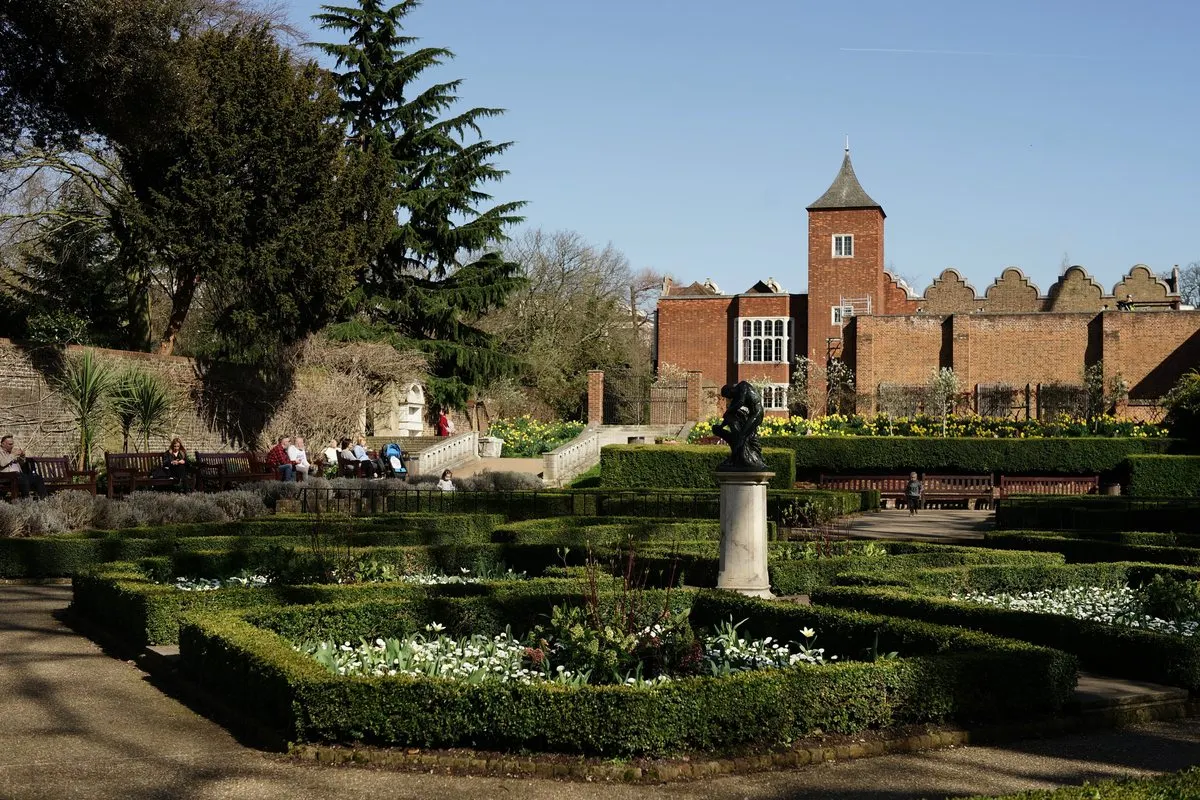
Holland Park grew up around a Jacobean mansion that was a Whig salon in the 19th century and was firebombed in the Blitz. Today its ruins frame an open-air opera, peacocks roam a Japanese garden, and the streets around it are among the most expensive in Britain.
In this story · 4 sections
Holland Park is both a park and a district on the western edge of central London, in the Royal Borough of Kensington and Chelsea, between Notting Hill and South Kensington. The streets around it – Addison Road, Holland Villas Road and Ilchester Place among them – are some of the most expensive in Britain, lined with large Victorian houses. At its heart lies a 56-acre park with semi-wild woodland in the north, formal gardens in the middle and sports fields in the south.
Holland Park
Park · Kensington
© OpenStreetMap contributors · OpenFreeMap
- Address
- Holland Park, London W8
- Holland House
- 1605
- Kyoto Garden
- 1991
- 1605
- Built for Sir Walter Cope
- 1768
- Bought by Henry Fox
- 1940
- Largely destroyed in the Blitz
- 1952
- Sold to London County Council
- 1991
- Kyoto Garden opens
56 acres around the ruins of Holland House, with Opera Holland Park in summer.
01Holland House – from Cope Castle to Whig salon
The park takes its name from Holland House, originally Cope Castle, an early Jacobean country house built in 1605 for the diplomat Sir Walter Cope to designs commissioned from John Thorpe. Its estate once stretched from today's Holland Park Avenue almost to the Fulham Road. Cope entertained James I and his queen here, and his daughter Isabel married Henry Rich, who was made Earl of Holland and renamed the house. Rich was beheaded in 1649 for his Royalist activities, and the house became an army headquarters regularly visited by Oliver Cromwell.
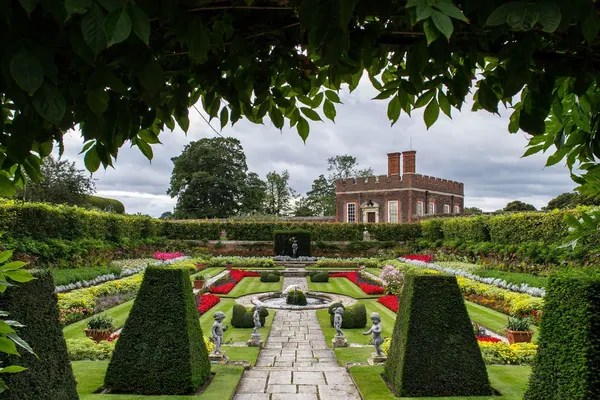
In 1746 the house was let to the Whig politician Henry Fox, later Baron Holland, who bought the estate in 1768. Under the Fox family Holland House became a celebrated gathering place for Whigs in the 19th century. German firebombing in 1940 destroyed most of it, leaving the east wing, parts of the ground floor and south façade, outbuildings and the formal gardens. The ruin was Grade I listed in 1949 and sold to London County Council in 1952; it now belongs to the Royal Borough of Kensington and Chelsea.
02The Kyoto Garden, peacocks and Opera Holland Park
The park has two Japanese gardens, the Kyoto Garden from 1991 and the Fukushima Memorial Garden from 2012, and peacocks wander the lawns. There is a café, the Belvedere restaurant attached to the orangery, a giant chess set, tennis courts and a cricket pitch. In summer the remains of Holland House form the backdrop to the open-air Holland Park Theatre, home of Opera Holland Park. To the south, the former Commonwealth Institute building is now the Design Museum.
03Victorian villas and the Holland Park Circle
The district was rural until the 19th century, when the owners of Holland House sold the outer grounds for development. Much of it was built between 1860 and 1880 by the master builders William and Francis Radford, who put up more than 200 houses. In the late 19th century artists and collectors known as the Holland Park Circle, including Frederic Leighton and Val Prinsep, lived around Melbury Road and Holland Park Road; Leighton House is now a museum. Lansdowne House on Lansdowne Road, built in 1902–04 with artists' studios, later housed London's first independent recording studio, founded in 1958.
04How to spend a morning in Holland Park
Enter from Holland Park Avenue and walk south through the woodland to the Kyoto Garden, then on to the ruins of Holland House and the formal gardens. Leave by Kensington High Street for the Design Museum, or walk east along Holland Park Road to Leighton House. Explore the streets in VERA PI's street files for Holland Park, Holland Park Avenue and Holland Park Road, see all of Kensington and Chelsea, or start with VERA PI's London guide.