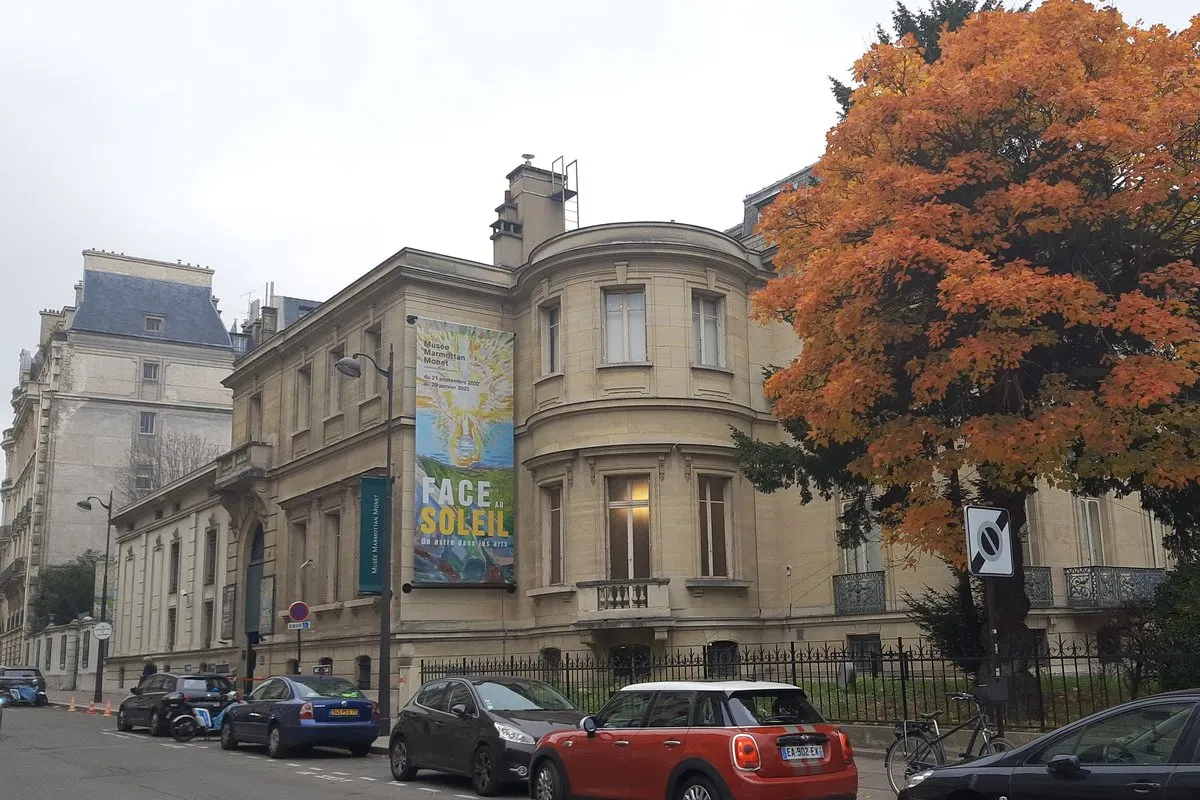
In a former hunting lodge on the edge of the Bois de Boulogne hangs the painting that gave Impressionism its name. The Musée Marmottan Monet holds the world's largest collection of Monet, and it is still one of the calmest museums in Paris.
In this story · 5 sections
Most visitors to Paris see their Monets at the Musée d'Orsay or the Orangerie. The more devoted make the trip to the 16th arrondissement, to a handsome mansion beside the Jardin du Ranelagh, where the Musée Marmottan Monet keeps more than three hundred works by the painter, including the small harbour scene that gave a movement its name.
Musée Marmottan Monet
Museum · 16th arrondissement
© OpenStreetMap contributors · OpenFreeMap
- Address
- 2 rue Louis-Boilly, 75016 Paris
- Opened
- 1934
- Owner
- Académie des Beaux-Arts
- Highlight
- Impression, Sunrise (1872)
- Collection
- 300+ Monet works; Berthe Morisot; Napoleonic art
- Area
- 16th arrondissement, by the Jardin du Ranelagh
A former hunting lodge with more than 300 works by Monet, including Impression, Sunrise, and the largest public collection of Berthe Morisot.
01From hunting lodge to museum
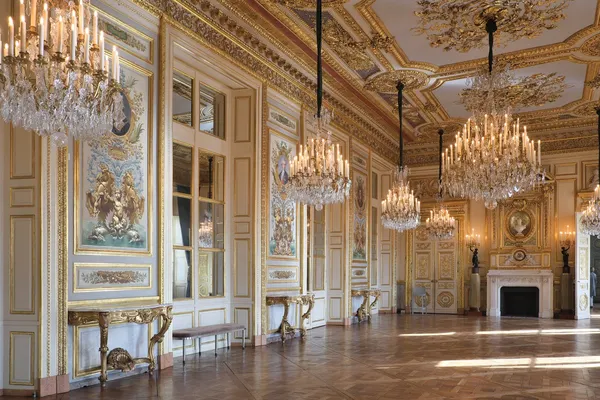
The building began as a hunting lodge for the Duke of Valmy on the edge of the Bois de Boulogne. In 1882 it was bought by Jules Marmottan, whose son Paul, an art historian, transformed it into an hôtel particulier filled with Renaissance pieces and art and furniture of the Napoleonic era. In 1932 Paul Marmottan left the house and its collections to the Académie des Beaux-Arts, and the museum opened in 1934.
For three decades it was a connoisseur's house museum. Then, in 1957, Victorine Donop de Monchy gave it the Impressionist paintings that had belonged to her father, Dr Georges de Bellio, physician to Manet, Monet, Pissarro, Sisley and Renoir and one of the movement's earliest supporters. Among them was Impression, Sunrise. In 1966 Michel Monet, the painter's second son and only heir, bequeathed his father's own collection, and the Marmottan became the world's great Monet museum.
02Impression, Sunrise
Monet painted the view of the port of Le Havre in 1872: an orange sun over grey-blue water, cranes and masts dissolving in the morning haze. Shown at the first group exhibition of the independent painters in 1874, it prompted a critic to mock the whole group as "Impressionists", and the name stuck. In person the canvas is smaller and more delicate than reproductions suggest; give it time.
Insider tipClosed on Mondays. Book ahead for popular temporary exhibitions.
It has a dramatic history. On 27 October 1985, five armed men entered the museum in daylight and stole nine paintings, including Impression, Sunrise. The works were recovered in a villa in Corsica in December 1990 and returned to the walls.
03The water lilies room
The heart of the collection lies on the lower level, in a large open gallery inspired by the Orangerie's water lilies rooms. Here hang the paintings Monet kept at Giverny until his death: water lilies, the Japanese bridge, wisteria, willows and the rose arches of his garden. Many are late works, painted as his eyesight failed, and they move towards something close to abstraction. The room lets you see them up close and from a distance, which is how they were meant to be seen.
04Berthe Morisot, and the rest of the house
The museum also holds the largest public collection of Berthe Morisot, the Impressionist painter whose work has been reassessed in recent years, together with paintings by Renoir, Degas, Pissarro and Gauguin. Upstairs, the Napoleonic salons of the Marmottan family and the Wildenstein collection of illuminated medieval manuscripts are a quiet contrast. The museum stages well-researched temporary exhibitions too, often built around Monet's circle.
05Making an afternoon of it
The museum stands on rue Louis-Boilly beside the Jardin du Ranelagh, a pleasant lawn for a pause. From there, rue du Ranelagh leads into the residential heart of Passy, and the Bois de Boulogne is a short walk west. See our guide to the 16th arrondissement for more.