Founded in 1787, rebuilt in 1895 and reinvented by Tore Wretman in 1961, Stockholm's grandest dining room closes at the end of December 2026 for a renovation lasting several years. This is the moment to book.
In this story · 6 sections
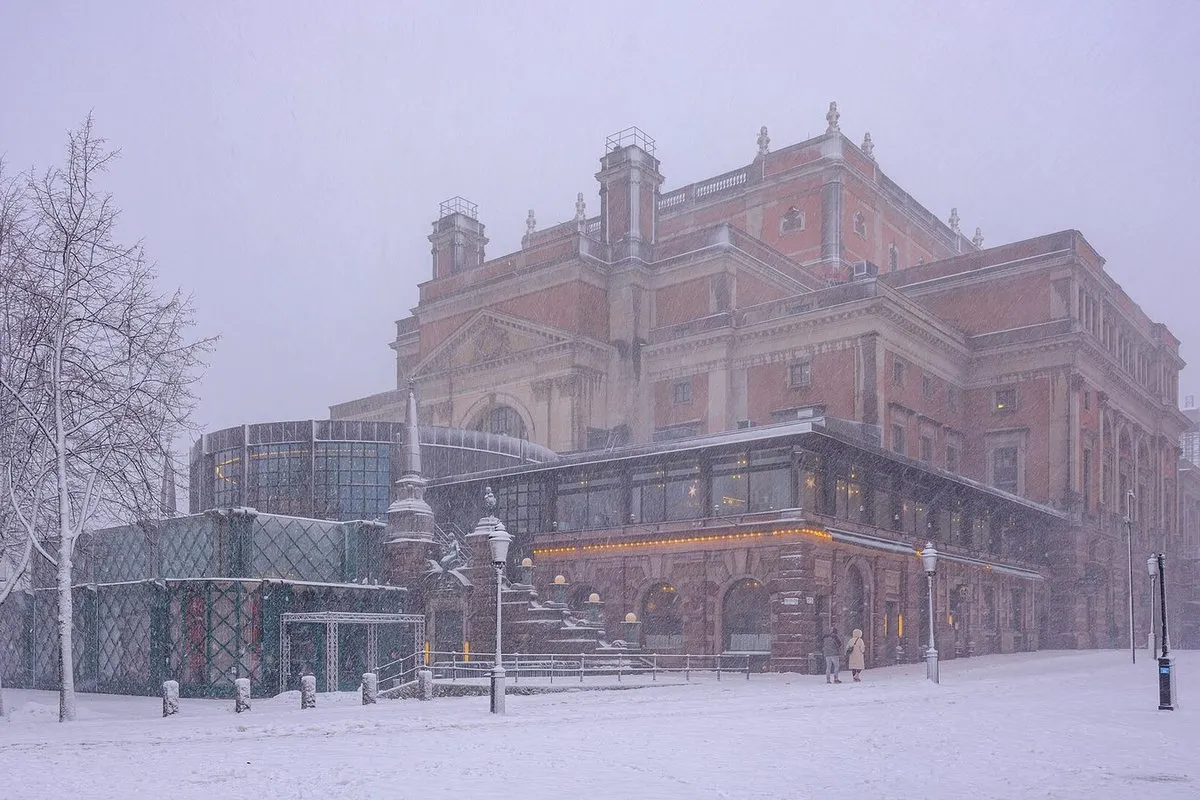
Operakällaren occupies the waterfront side of the Royal Swedish Opera on Karl XII:s torg, looking across Strömmen to the Royal Palace, with Kungsträdgården and St James's Church as neighbours. It has been a restaurant since 1787, and for much of the twentieth century it was among the most celebrated dining rooms in Sweden. Its future now has a date attached. According to the restaurant, Operakällaren will close at the end of December 2026 for a renovation lasting several years – which makes this winter the last chance for some time to dine in its gilded rooms.
Operakällaren
Restaurant · Norrmalm
© OpenStreetMap contributors · OpenFreeMap
- Address
- Karl XII:s torg 3, Stockholm
- Address
- Karl XII:s torg 3, Stockholm
- Founded
- 1787; in the present opera house since 1895
- Opening
- Dinner, Wednesday to Saturday
- Autumn à la carte
- 2,400 kronor; chef's choice 3,300 kronor
- Christmas buffet
- 1,795 kronor, 19 November–24 December
- Renovation
- Closes end of December 2026 for several years
Gilded dining room and glazed veranda in the Royal Opera House, facing the palace.
01From cellar to restaurant
Operakällaren opened in 1787 in the opera house that Gustav III had built. For decades the food was little more than an accompaniment to the drink, served in a plainly furnished room. "Opris", as regulars called it, enjoyed a golden age in the 1830s and 1840s as the haunt of actors, artists, writers and politicians. The popular opera singer Karl Stenborg was allowed to put his own schnapps on the menu, a brännvin flavoured with sugar, bitter orange peel, anise and fennel – and the house still pours a Stenborgare today.
Towards the end of the 1870s the then proprietor, Bengt Carlsson, turned it into a true restaurant. There were cloths on the tables and panelling on the walls, the ladies of Stockholm were welcome and coffee was served as a novelty. As Strindberg put it: "The cellar died and the restaurant was born." The carved panelling in the dining room's buffet room survives from that time.
02The scandal of 1895
When the old opera house was demolished – it was run down, and the operas of Wagner and Verdi needed more room – the "new" Operakällaren opened on 4 April 1895 in the newly built Royal Opera. The painter Oscar Björck caused a scandal by decorating the great dining room with a Bacchic procession of naked bathing women. After furious protests from moralists, opposed in turn by August Strindberg and Viktor Rydberg among others, King Oscar II intervened and asked the artist to let the reeds grow – which he did, under protest. The ceilings of what is now Café Opera were painted by Vicke Andrén, and the Operabaren opened in 1905 in a Jugendstil interior of unprecedented splendour, with Anders Zorn and Albert Engström among the regulars.
Insider tipCloses end of December 2026 for renovation.
03Tore Wretman's Operakällaren
By the 1950s the restaurant was run down and losing money. Tore Wretman, then Stockholm's leading restaurateur and already the owner of Riche and Stallmästaregården, took on the challenge. The rebuilding, by the architects Peter Celsing and Nils Tesch, took six years and gave the house a modern kitchen, a wine cellar for regulars, a new banqueting floor in the formerly open terrace – and Bakfickan, a small counter restaurant inspired by places Wretman had seen in New York. The reopening on 21 September 1961 was a party for around a thousand guests. Werner Vögeli, who had been second chef at the Grand Hôtel, became head chef.
According to the restaurant, the wine cellar of 1961, Nobiskällaren, was Sweden's first temperature-controlled wine cellar, and legend has it that Wretman sprayed wine on its walls and ceiling for six months to give it its patina. Alessandro Catenacci took over the Wretman restaurants in December 1987, and Operakällaren is today part of Nobis.
04The dining room
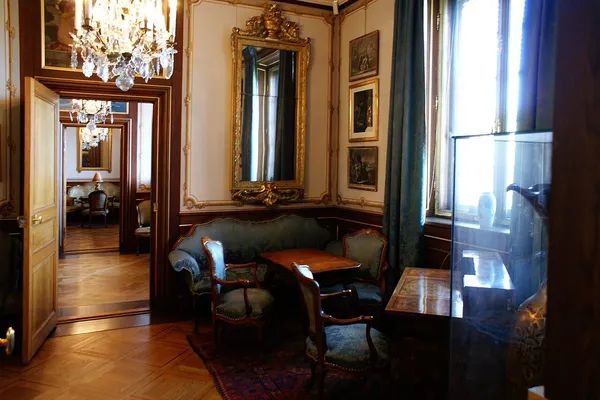
The dining room keeps its original interior of wall paintings, gilded oak panelling, coffered ceilings and chandeliers; in 2005 the architects Claesson Koivisto Rune modernised it with large mirrors, new furniture and lighting. The glazed veranda, connected to the dining room, looks out over the water to the palace. Operakällaren held a Michelin star from 1998 to 2010 and regained one in 2014, according to Wikipedia, and it is a member of Les Grandes Tables du Monde.
Today the kitchen is led by Emanuel Tärnqvist, the restaurant's executive chef, who describes the aim as carrying the legacy of Wretman – and the vision of Daniel Höglander, which the restaurant says it is continuing – into a more modern and inclusive era. The menus follow the seasons. The autumn à la carte, served from Wednesday to Saturday, costs 2,400 kronor and includes snacks, starter, main course, dessert and mignardises, and a chef's choice menu is available for 3,300 kronor. The kitchen cannot accommodate vegetarian or vegan menus or milk-protein allergies.
05Christmas and private rooms
From 19 November to 24 December the restaurant serves a classic Swedish Christmas buffet, with lobster, bleak roe and stockfish served at the table, priced at 1,795 kronor. The Steinwall Room, named after Georg and Gustaf Steinwall, who reopened Operakällaren in 1895, seats up to 18 around an oval table. Bakfickan, with Celsing's original interior and tiles by Olle Nyman, has been kept intact since it opened in 1962.
06Practical details
Operakällaren is at Karl XII:s torg 3 and is open for dinner from Wednesday to Saturday. Book well ahead for the final weeks. Read about the neighbourhood in VERA PI's guide to Gustav Adolfs torg and Norrmalm, plan the evening with Metro Mode's Stockholm map, and if you are here in December, read our guide to Stockholm in winter. Point your phone at the opera house with Metro Mode Camera.