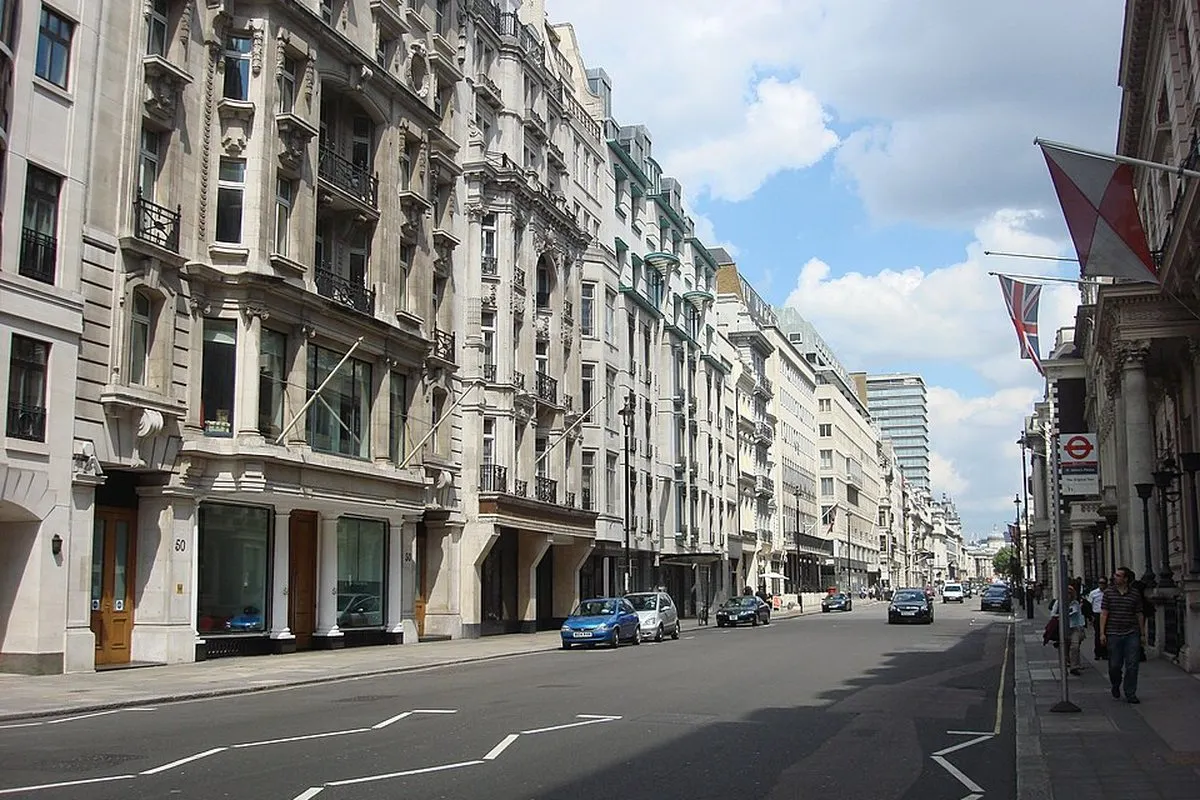
Pall Mall takes its name from a 17th-century ball game and has been lined with gentlemen's clubs since the 19th century. With White's, Brooks's and Boodle's nearby, St James's is still known as Clubland. Here is the history behind the street's grand façades and the clubs behind them.
In this story · 5 sections
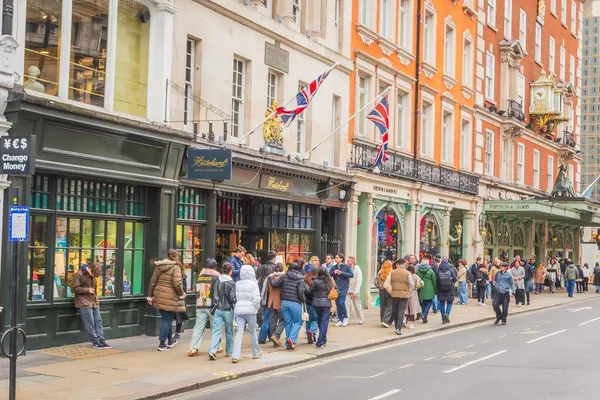
Pall Mall runs for around 600 metres through St James's in the City of Westminster, from St James's Street to Waterloo Place and on towards Trafalgar Square. It has been a street of fine houses since the reign of Charles II, of luxury shops since the 18th century and of gentlemen's clubs since the 19th. Together with St James's Street, it is the heart of what Londoners still call Clubland.
Pall Mall
Street · St James's
© OpenStreetMap contributors · OpenFreeMap
- Address
- Pall Mall, London SW1Y
- Laid out
- 1661
- Length
- About 600 metres
- 1661
- Pall Mall opens
- 1693
- White's founded
- 1819
- Travellers Club founded
- 1827–1832
- Carlton House Terrace built
- 1908
- Royal Automobile Club moves to Pall Mall
Home of the Reform, the Athenaeum, the Travellers and the Royal Automobile Club.
01A street named after a ball game
Pall-mall was a ball game similar to croquet, introduced to England by James I; the name comes from the Italian pallamaglio, “ball-mallet”. After the Restoration, Charles II had a court built in St James's Park, and on 2 April 1661 Samuel Pepys recorded seeing the Duke of York playing “Pelemele” for the first time. Dust from coaches on the old road spoilt the game, so a new street was laid out on the site of an older court and opened in September 1661. It was officially named Catherine Street after Catherine of Braganza, but everyone called it Pall Mall.
In the 1660s the Earl of St Albans laid out St James's Square, Jermyn Street and the surrounding streets on land granted by the Crown, conveniently placed between the palaces of Whitehall and St James's. The aristocracy moved in, and in the 19th century the district became the focus of their clubs.
02White's, Brooks's and Boodle's – the first clubs
The oldest gentlemen's club in London is White's, founded in 1693. According to Wikipedia, the first clubs – White's, Brooks's and Boodle's – were aristocratic and provided an environment for gambling, which was illegal outside members-only establishments. There are perhaps some 25 traditional London gentlemen's clubs of particular note, from the Arts Club to White's, and in 1990 the Carlton Club, the traditional meeting place of Conservative Party members, was struck by an IRA bomb.
03The Reform, the Athenaeum and the Travellers
On Pall Mall itself the Reform, the Athenaeum and the Travellers have survived into the 21st century. The Reform Club's building was designed by Charles Barry, and the club asks potential members to attest that they would have supported the 1832 Reform Act. The Athenaeum took its name from the Athenaeum in Rome, a university founded by the Emperor Hadrian. The Travellers Club, founded in 1819, has always restricted membership to people who have travelled at least 500 miles from London in a direct line. Other clubs on the street include the Oxford and Cambridge Club and the Royal Automobile Club, whose headquarters have been on Pall Mall since 1908; the former United Service Club is now occupied by the Institute of Directors.
04Carlton House Terrace and the Mall
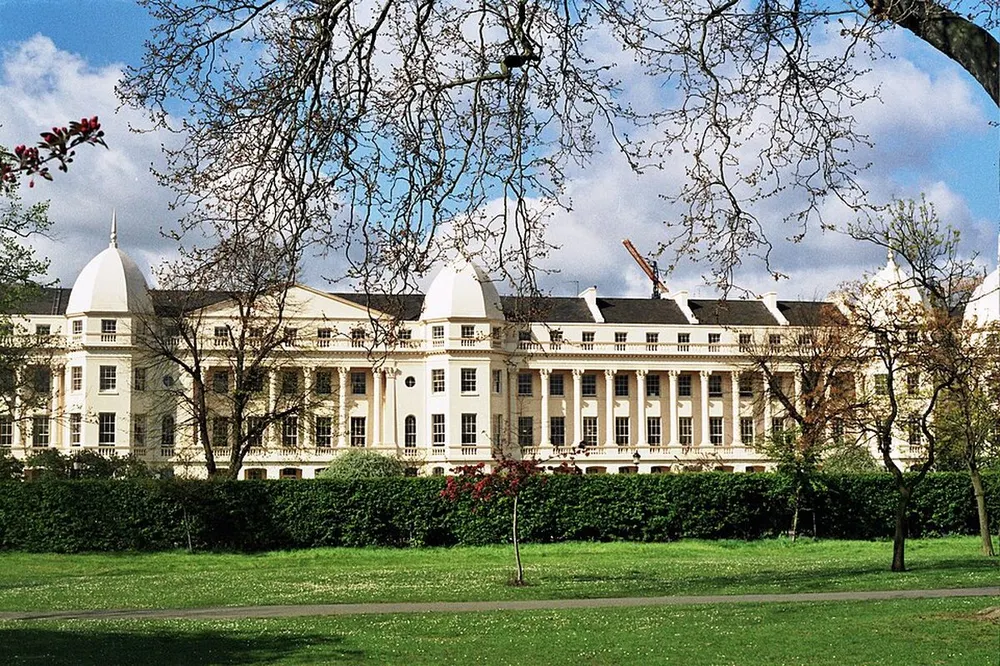
At the eastern end of Pall Mall stood Carlton House, the Prince Regent's palace. John Nash built Carlton House Terrace on its site between 1827 and 1832, a pair of grand stuccoed terraces overlooking St James's Park. The War Office was based on Pall Mall in the second half of the 19th century.
05How to walk through Clubland
The clubs are private, so this is a walk to admire from the pavement. Start at the top of St James's Street, walk down past the old club façades to St James's Palace, turn east along Pall Mall past the Reform, the Travellers and the Athenaeum to Waterloo Place, and finish at Carlton House Terrace above the Mall. Explore the streets in VERA PI's street files for Pall Mall, Jermyn Street and Piccadilly, see all of Westminster, or start with VERA PI's London guide.