In this story · 5 sections
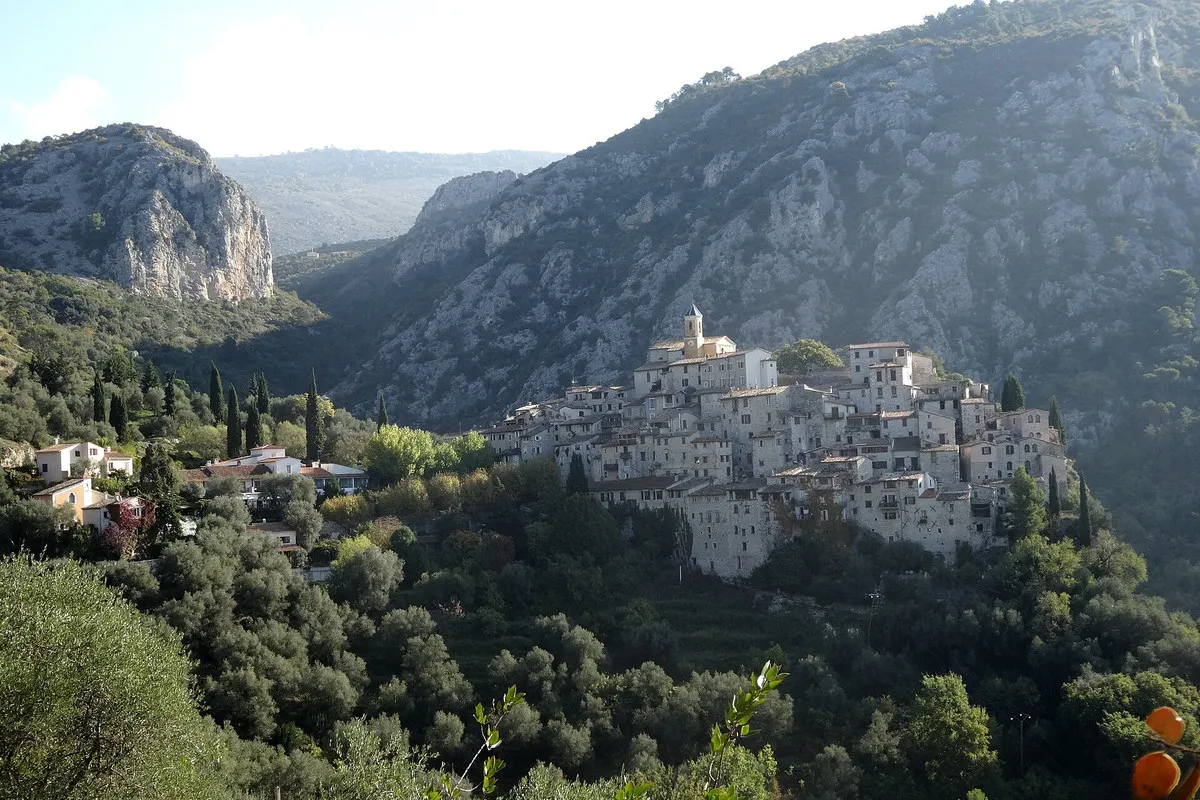
Peillon sits on a rocky spur above a steep ravine in the valley of the Paillon de l'Escarène, inland from Nice. Seen from the road, it is a single sculpted mass of stone houses rising to a church tower, the mountains of the hinterland rearing behind. Up close it is better still: there are almost no streets, only cobbled stairways winding between flowering houses, linked by arches thrown across the lanes.
The commune is bigger than the village. It counts six hamlets, and the town hall, post office and railway station are all down at Sainte-Thècle, which became the administrative seat in 1948. Peillon-village itself is left to its residents and to visitors willing to climb.
3 places
© OpenStreetMap contributors · OpenFreeMap
- 01Chapelle des Pénitents Blancssee · Peillon-village
- 02Auberge de la Madoneeat · Peillon-village
- 03Gare de Peillon-Sainte-Thèclesee · Sainte-Thècle
- Romanesque chapel (now the choir)
- 12th century
- Canavesio frescoes, White Penitents' chapel
- Late 15th century
- Church of the Transfiguration
- 18th century
- Village fountain listed
- 1941
Peille and Peillon
The name comes from a pre-Latin root, *pel-ia, meaning a height, with a Provençal diminutive; the same root gave its name to neighbouring Peille, 12 kilometres away. Peillon is first recorded in 1150, when its parish belonged to the abbey of Saint-Pons in Nice; in 1154 the Pope transferred it to the canons of Saint-Ruf of Valence. Peille and Peillon formed a single community until 1235. In 1701 the village had 410 inhabitants; in 2023 the whole commune had 1,408.
Canavesio's frescoes
The reason to make the journey is the Chapelle Notre-Dame-des-Douleurs of the White Penitents, at the edge of the village. Its walls are covered in frescoes by Jean Canavesio, the Piedmontese painter whose cycles decorate chapels across the mountains of the County of Nice, dated to the end of the 15th century. The chapel has been classified as a historic monument since 2000.
The church on the keep
At the top of the village, the parish church of the Transfiguration was built in the 18th century on the site of the castle keep. It absorbed an older Romanesque chapel of the 12th century, which stood north of the keep: today's choir lies within that chapel, and its half-domed apse can still be seen to the right of the high altar. Inside, look for the chapel of the Madonna of the Rosary.
Fountains, mills and a railway museum
The fountain at the entrance to the village was listed as a historic monument in 1941. Down in the Les Moulins quarter stands the old oil and flour mill, and the former school houses a fresco by the local painter Charles Rocher de Gérigné. At Sainte-Thècle, the Flaminius Raiberti museum is devoted to the railway heritage of the valley.
Lunch at the gate
At the foot of the village, beside the Penitents' chapel, the Auberge de la Madone is the classic table for a long lunch after the climb. Book ahead at weekends; a village this small fills up quickly.
Chapelle des Pénitents Blancs
Canavesio's late-15th-century frescoes
The chapel of Notre-Dame-des-Douleurs, classified as a historic monument in 2000.
Route du Vieux Village, 06440 Peillon
Insider tipCheck access before you go; the chapel is not always open.
Auberge de la Madone
The village inn at the foot of Peillon
The restaurant at the entrance to the village, next to the chapel.
3 route du Vieux Village, 06440 Peillon
Insider tipReserve, especially for weekend lunch.
Gare de Peillon-Sainte-Thècle
The commune's railway station
Down in the hamlet of Sainte-Thècle, beside the town hall.
Avenue de la Gare, 06440 Peillon
Insider tipThe village is a steep climb from the station.
Neighbourhood and property data for Peillon is on VERA PI, and more hidden corners of the Riviera are on metromode.co.