In this story · 4 sections
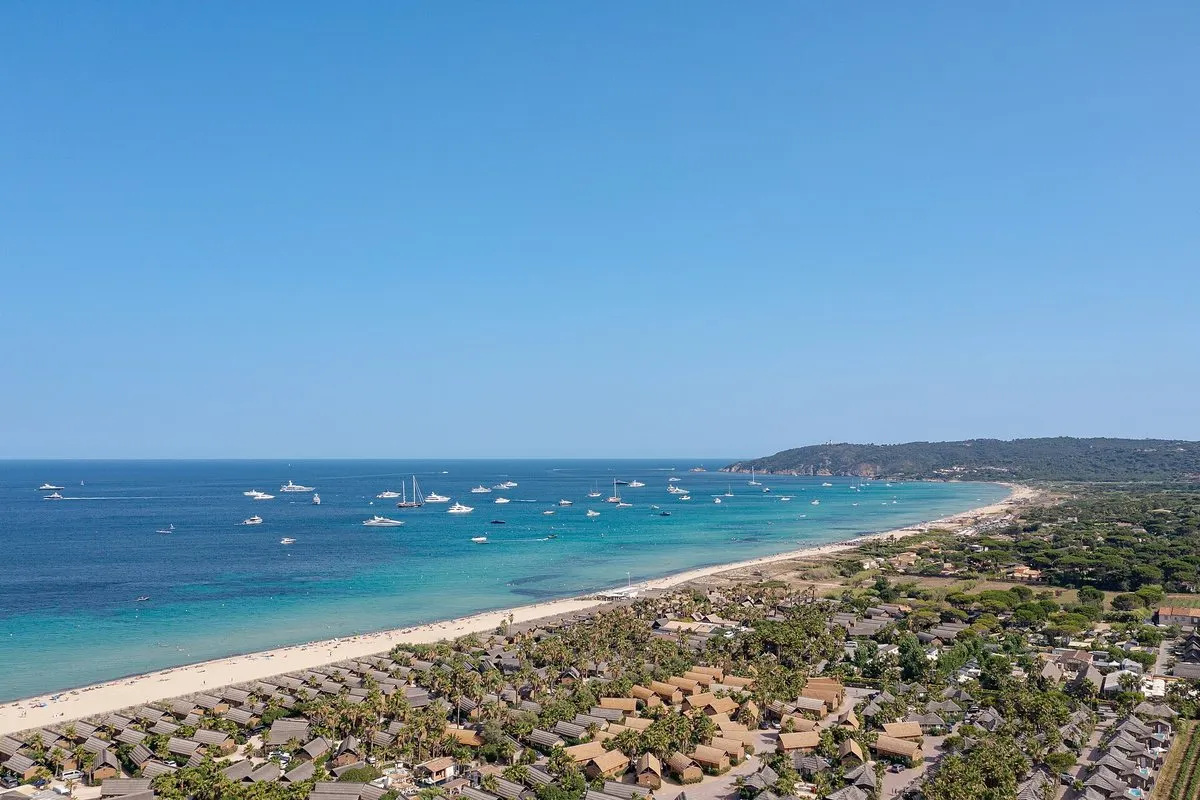
Anyone who has walked along the Croisette or the bay of Pampelonne in July has seen them: neat rows of sunbeds, matching parasols, a restaurant, a host with a list. They are called private beaches, and the name is misleading. In France, the beach itself cannot be owned. What you pay for at a beach club is a sunbed, a service and perhaps lunch on a strip of public land that the club has rented. Understanding the rules makes for a better day – and explains why free beach is never far away.
01France: the beach belongs to everyone
French beaches are part of the public maritime domain, which, as a ruling of the Council of State established in 1858, cannot be owned. The Littoral Law of 1986 enshrined free public access to the beach, while allowing operators to rent parts of it under strict conditions, and a beach decree of 2006 supplemented it. The estate agency Michael Zingraf, in a guide to the rules, sums up the consequence plainly: private beaches cannot exist in France.
What exists instead are concessions. They are granted by the prefecture, run for up to twelve years and can be renewed. A club may operate for six months a year, or eight in certain resorts, and permanent structures are not allowed: installations must be dismantled at the end of each season. On a natural beach, at least 80 per cent of the length of the shore and of the area at mid-tide must be left free of installations; on an artificial beach, at least 50 per cent.
02The strip you can always walk
Perhaps the most useful rule for visitors is the passage strip. A band of three to five metres along the water's edge must stay open to pedestrians, and barriers or fences across it are prohibited – including in front of private villas by the sea. In practice, this means you can walk along French beaches at the waterline, past the clubs and the grand houses alike. Prefects may grant rare exceptions, but the principle is free passage.
03Italy: the stabilimento and the 2027 deadline
Italy's beach culture is built around the stabilimento balneare, the beach establishment with its umbrellas, sunbeds and bar. These too are concessions on public land, but for years Italian governments renewed them without open competition. The European Commission pursued a dispute with Italy over the practice for almost two decades, citing transparency and competition. In 2024 Italy approved new rules requiring concessions to be put out to tender by June 2027; existing licences remain valid until September 2027, with a possible extension to March 2028 for objective reasons, and outgoing operators are to be compensated by the new holders.
For travellers, little changes in the short term. But the tenders may bring new operators to some of Italy's best-known beaches in the summers that follow.
At a glance
| France | Italy | |
|---|---|---|
| Who owns the beach | Public maritime domain | Public land under concession |
| Concession | Up to 12 years, renewable | To be tendered by June 2027 |
| Key rule | 80% of natural beaches free of installations | Current licences valid to September 2027 |
04How to use a beach club well
Book ahead in high season, particularly for the front row and for lunch, and ask whether the sunbed and the table are booked separately. Bring a cover-up for the walk back into town – several Riviera towns, including Nice, Cannes and Saint-Tropez, ban swimwear in the streets. And remember that on the French side, the law guarantees that most of the beach stays free. For the coast's best addresses, see our Riviera guides on verapi.fr, Monaco on vpios.com/monaco, our guide to Antibes after summer and our travel section.