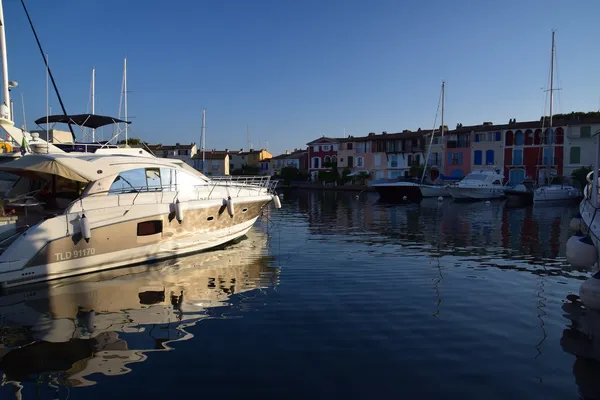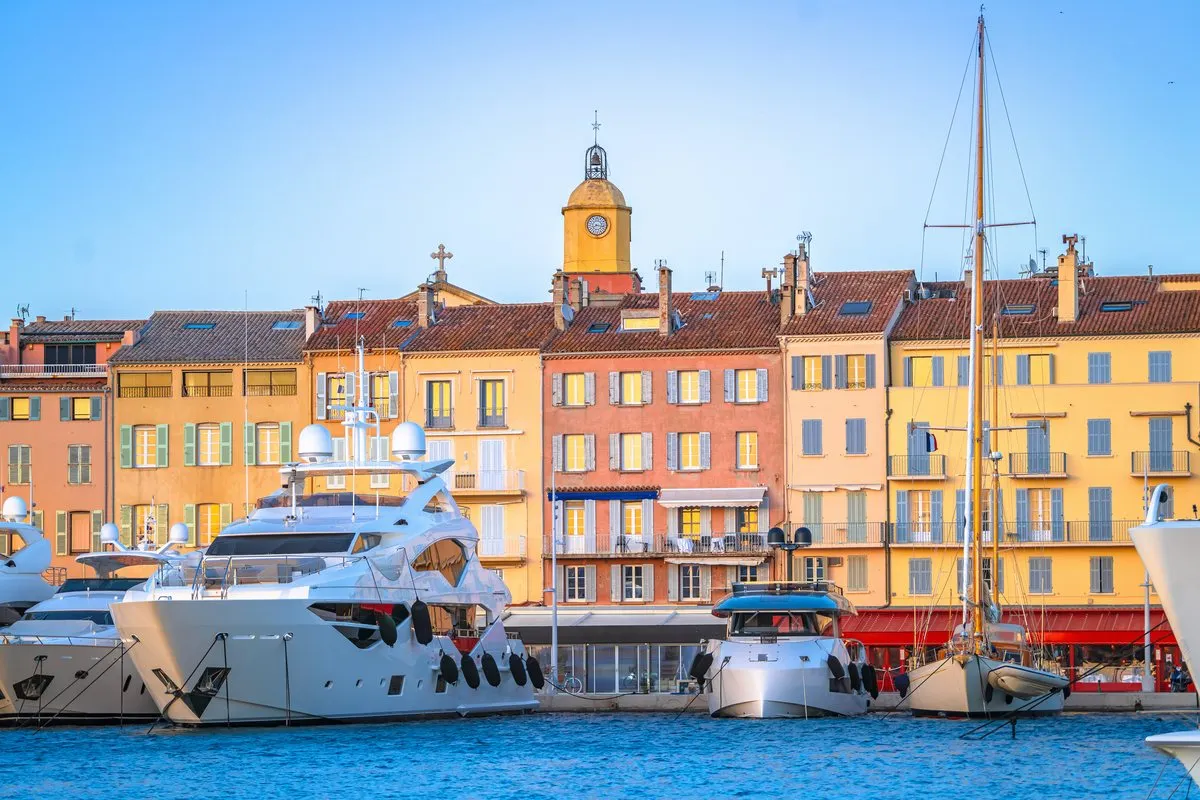
In August, Saint-Tropez is one of the world's most talked-about summer resorts. In November, it's a fishing village with 3,500 inhabitants, a market beneath the plane trees, and one of France's finest small art museums. We prefer November.
In this story · 5 sections
On a Tuesday morning in November, Place des Lices smells of roasted coffee, ripe clementines and wet gravel. Beneath the plane trees stand stalls selling vegetables, fish, sausages and flowers, and those doing the shopping are, for the most part, people who live here. It is hard to reconcile this image with the Saint-Tropez that fills the gossip pages every summer. But it is the same town — only with its 3,500 permanent residents instead of the summer crowds.
Saint-Tropez was a military stronghold and fishing village right up until the early 1900s. It's that town that returns when the season is over, and it's that one we want to show you. Facts about the municipality can be found on VERA PI's page about Saint-Tropez.
5 places
© OpenStreetMap contributors · OpenFreeMap
- 01Place des LicesMarket · Centre
- 02Musée de l’AnnonciadeMuseum · Harbour
- 03Église Notre-Dame-de-l’AssomptionChurch · Old town
- 04Citadelle de Saint-TropezMuseum and sight · Citadel
- 05Cimetière marinSight · Citadel
- 1470
- Genoese settlers repopulate the town
- 1615
- The samurai Hasekura Tsunenaga puts into port
- 1892
- Paul Signac discovers the fishing village
- 1944
- The first town on the coast to be liberated (15 August)
- 1955
- Musée de l'Annonciade opens (7 August)
A town with an unusual history
The town took its name from the early Christian martyr Torpes. According to legend, he was beheaded in Pisa during the time of Nero and placed in a rotting boat together with a cockerel and a dog – and the boat drifted ashore right here. After centuries of pirate raids the town lay deserted, and on 14 February 1470 the Genoese Raphaël de Garezzio landed to repopulate it. In return, the inhabitants were promised tax exemption, a promise that was kept right up until 1672.
Saint-Tropez has several unexpected historical firsts. In September 1615, a Japanese delegation led by the samurai Hasekura Tsunenaga, on its way to Rome, was forced to put into port here due to the weather – perhaps the first contact between the French and the Japanese. And on 15 August 1944, Saint-Tropez became the first town on the coast to be liberated during the Allied landings in Provence.
Place des Lices and the market
The market on Place des Lices is held every Tuesday and Saturday between 8am and 1pm, all year round, according to the Saint-Tropez tourist office. Here you can buy seasonal fruit and vegetables, fish and seafood, charcuterie and meat, as well as clothing, crafts, furniture and plants. The fishmongers have their own hall. On the other days, the square is full of pétanque players.
Grab a coffee by the square afterwards and a slice of tarte tropézienne, the cream-filled cake that a Polish pastry chef invented when he opened his shop in the town in the mid-1950s, and which Brigitte Bardot made famous.
Musée de l’Annonciade – the light that lured the painters
Saint-Tropez played a genuine role in the history of modern art. In 1892, Paul Signac discovered the small fishing village and invited his fellow painters. Matisse, Bonnard and Marquet followed, and both Pointillism and Fauvism received important impulses here.
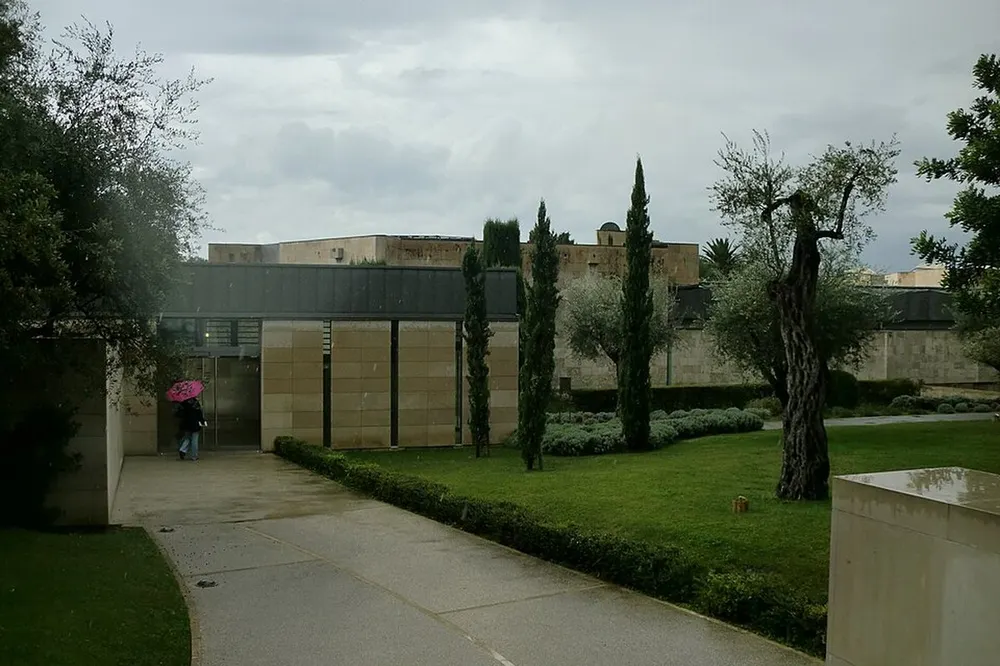
That collection is on display today at the Musée de l’Annonciade by the harbour. The museum is housed in the chapel of Notre-Dame de l’Annonciade, built around 1510 by the brotherhood of the white penitents. A first museum opened here in 1922, and following a rebuilding by the architect Louis Süe, the present museum was inaugurated on 7 August 1955 with the collection of Georges Grammont. The collection focuses on the Nabis, the Pointillists and the Fauvists from the period 1890 to 1950. It is a small museum, but one of the finest of its kind in France – and outside the season you often have the rooms almost to yourself.
La Ponche, the church and the citadel
From the harbour you walk into La Ponche, the old fishermen's quarter, with its narrow lanes and its small beach between the houses. Above lies the Église Notre-Dame-de-l'Assomption, whose bell tower in yellow and terracotta can be seen from the entire harbour.
At the very top, with a view over the whole bay, stands the citadel. It was built in the early 17th century, before Vauban's time, and its keep has been listed as a historic monument since 1921. Today it houses the town's maritime history museum, which tells the story of Saint-Tropez as a seafaring town: in the 18th century the town's shipyards built tartanes and three-masters, and there was even a school of navigation. Below the citadel, by the sea, lies the Cimetière marin, the sailors' cemetery.
Festivals outside peak season
Two events are worth planning a trip around. In mid-May, Les Bravades is celebrated, one of Provence's oldest traditions, held for more than 450 years, in memory of the town's patron saint and the militia that defended the town against pirates. And at the end of September, the regatta Les Voiles de Saint-Tropez is held in the bay, with boats up to 50 metres long.
South of the town lies Pampelonne beach, in the neighbouring municipality of Ramatuelle, and on the ridge above, the village of Gassin. Book a table at La Vague d'Or if it is open, and find more destinations along the coast at metromode.co.
Place des Lices
The market beneath the plane trees
The square with the town's market on Tuesday and Saturday mornings, and boules the rest of the week.
Musée de l’Annonciade
Signac, Matisse and Bonnard in a chapel
Art museum in the chapel from around 1510, with Nabis, Pointillists and Fauvists.
Place Georges Grammont, Saint-Tropez
Église Notre-Dame-de-l’Assomption
The bell tower above the harbour
The church with the yellow and terracotta-coloured tower that can be seen from the entire harbour.
Citadelle de Saint-Tropez
The fortress and the maritime history museum
Citadel dating from the early 1600s, overlooking the bay, with a museum on the town's maritime history.
Cimetière marin
The cemetery by the sea
The town's cemetery by the water below the citadel.