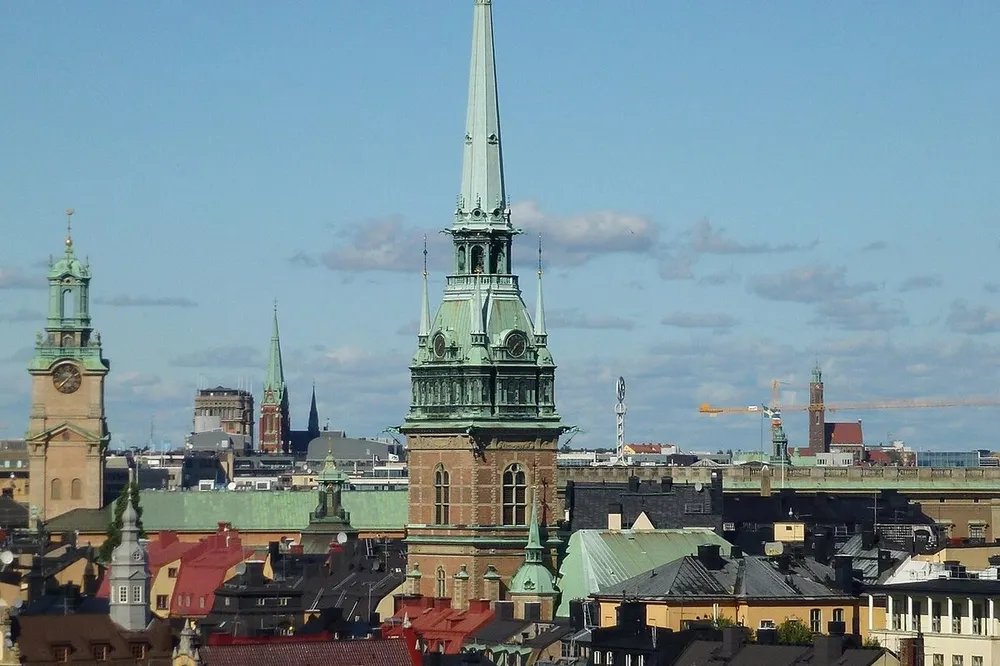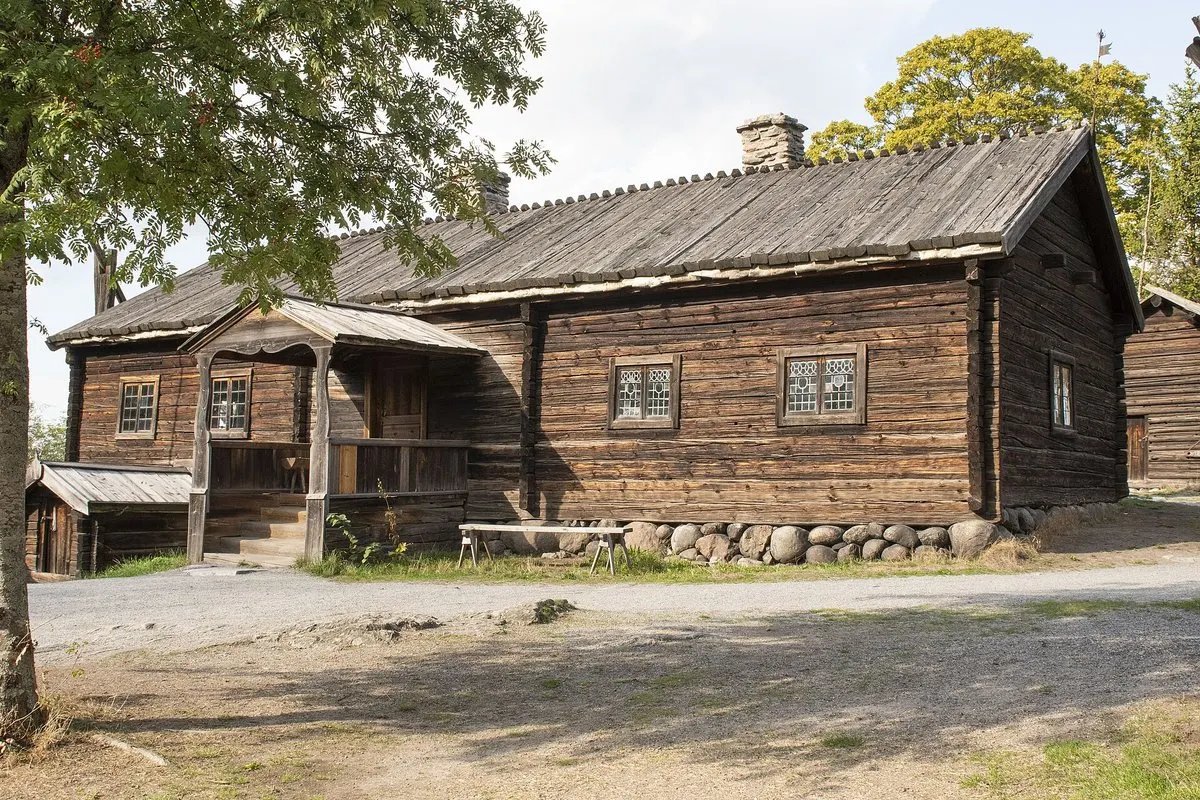
Some 140 buildings carried here from across Scandinavia, a fourteenth-century storehouse, a nineteenth-century town quarter, bears, bison and a funicular from 1897. Skansen, opened by Artur Hazelius in 1891, is Sweden in miniature on a hill above the water.
In this story · 7 sections
On the heights of Djurgården, above the ferries and the amusement park, lies a whole country in miniature. Skansen is an open-air museum and zoo founded by Artur Hazelius and opened on 11 October 1891, and today around 140 buildings from across Scandinavia stand on its 30 hectares – farmsteads, cottages, manor houses, a church, a town quarter with working craftsmen – alongside bears, elk, wolverines and European bison. It lies within the Royal National City Park, and it has inspired open-air museums from Lublin in Poland to Szentendre in Hungary, many of which simply took its name.
Skansen
Museum · Djurgården
© OpenStreetMap contributors · OpenFreeMap
- Address
- Djurgården, Stockholm
- Location
- Djurgården, within the Royal National City Park
- Opened
- 11 October 1891, by Artur Hazelius
- Area
- 30 hectares
- Buildings
- Around 140, from across Scandinavia
- Oldest buildings
- Fourteenth century (Vastveitloftet, Moragården)
- Funicular
- Around 200 metres, since 1897
- Christmas market
- Every Advent since 1903
Around 140 historic buildings, a nineteenth-century town quarter and Nordic animals on 30 hectares.
01Hazelius and a vanishing Sweden
Artur Hazelius came back from a journey to Dalarna worried that the old rural culture of Sweden was disappearing as industrialisation advanced. In the summer of 1872 he made a collecting trip and returned with objects, folklore and literature, and the collection – first shown on Drottninggatan in Stockholm as the Scandinavian-Ethnographic Collection – grew so quickly that in 1880 he founded the Nordic Museum to house it.
His next step was to acquire land where entire buildings could be preserved. That became Skansen. The first site covered some 29,500 square metres on the Skansen hill around Bollnästorget; in 1892 the area around the Bredablick tower was added, making it more than six times larger, and later purchases brought it to its present 30 hectares. The name comes from a small fort, a skans, that Charles XIV John had built here for his son, the future Oscar I, to play in. Skansen and the Nordic Museum were one institution until 1963, when Skansen became an independent foundation, and more than 30,000 objects at Skansen still belong to the museum on permanent deposit.
02Farmsteads from north to south
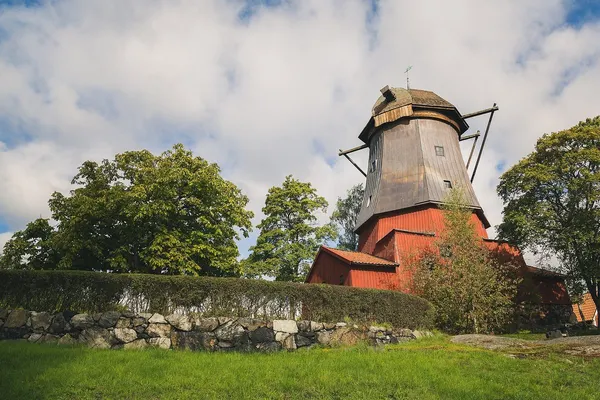
Skansen holds almost 40 rural buildings from most Swedish provinces, arranged so that farms from the south of Sweden stand in the south of the park and those from the north in the north, each surrounded by the vegetation of its home landscape. The very first building, bought in 1885, was Moragården from Dalarna; one of its storehouses has been dated to the first half of the fourteenth century. Vastveitloftet, a storehouse from Telemark in Norway built in the early 1300s, is among the oldest houses on the site.
Insider tipTake the funicular from Hazeliusporten.
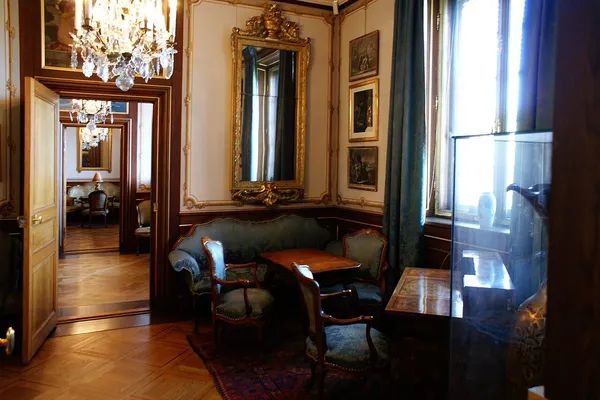
Other highlights include Delsbogården from about 1850, Bergsmansgården from the eighteenth century and Skogaholm Manor, built around 1690 in Närke and inaugurated at Skansen in 1931 in the presence of Crown Prince Gustaf Adolf. Seglora Church, consecrated in 1730 in Västergötland, is now an ecumenical church with regular services and one of the most popular wedding churches in the country – couples can arrive by horse and carriage.
03The town quarter
Skansen's town quarter recreates a medium-sized Swedish town of the nineteenth century, with a pharmacy, shops, workshops and homes, and in several buildings historic crafts are still practised. Around Hyttorget you find the bakery, a pottery, the Stockholm glassworks of 1936 and the inn Stora Gungan, a tavern of 1801 that once stood in Gamla Enskede. A street leads past a printer's, a bookbinder and a goldsmith down to an ironmonger's of the 1880s with a 1930s Konsum dairy shop.
Look out for Apoteket Kronan, whose fittings come partly from Carl Wilhelm Scheele's pharmacy in Köping, and Petissan, a café in a seventeenth-century house that was once a students' café near the old Royal Institute of Technology. Hazelius himself was born in 1833 in the Hazelius House, built in 1720 as part of a merchant's estate in today's Vasastan and moved here in 1926. Nearby, Swedenborg's summerhouse comes from the garden of the scientist Emanuel Swedenborg on Södermalm.
04Bears, bison and the Nordic wild
The zoo concentrates on Nordic wild animals and Swedish rural breeds. The bear hill, first built in the 1930s and reopened in 1998, keeps brown bears, and lynx, wolverines, elk, wild boar and otters can also be seen. The European bison is a Skansen emblem: two of the 54 bison identified as surviving worldwide in the 1920s lived here, and Skansen animals became founders of today's breeding lines. Skansen also works with Stockholm University's Arctic fox project. The rural breeds – among them the Fjällnära cow and the Gute sheep – are endangered and part of national gene banks, and at Lill-Skansen, the children's zoo since 1955, the youngest visitors meet smaller animals year-round.
05Bredablick, the funicular and Galejan
Bredablick, a 31-metre brick tower built in 1876, gives the park its best viewpoint. The Skansen funicular, around 200 metres long, has carried visitors up from Hazeliusporten to Bollnästorget since 1897, when it was built for the great Stockholm Exhibition. Down by Galejan, a small fairground lives on from the old Stockholm Tivoli, its rides largely unchanged since the 1940s, and the Galejan dance floor of 1937 has inspired dance floors across the country.
06Skansen through the year
Skansen is where Sweden marks its calendar. Walpurgis Night has been celebrated here since 1894, with student song and a bonfire, and national day, midsummer and Lucia are all observed. It was in the Bollnäs cottage, in 1893, that Lucia was revived as a tradition worth keeping. The Christmas market, first held in 1903, returns around the dance floor and along the market street every Advent weekend. Every New Year's Eve, Swedish television broadcasts the reading of Tennyson's "Ring Out, Wild Bells" at midnight, a tradition dating back to 1895, and in summer the weekly sing-along "Allsång på Skansen" fills the Solliden stage.
07Planning your visit
Allow at least half a day – the park is hilly, so use the funicular or the Skansen train, which runs from Bollnästorget. Check opening times and events before you go. Read about the setting in VERA PI's guides to Djurgårdsslätten, Hazeliusbacken and Djurgården, combine the visit with our plan for a day on Djurgården, find your way with Metro Mode's Stockholm map, and point your phone at the farmhouses with Metro Mode Camera.