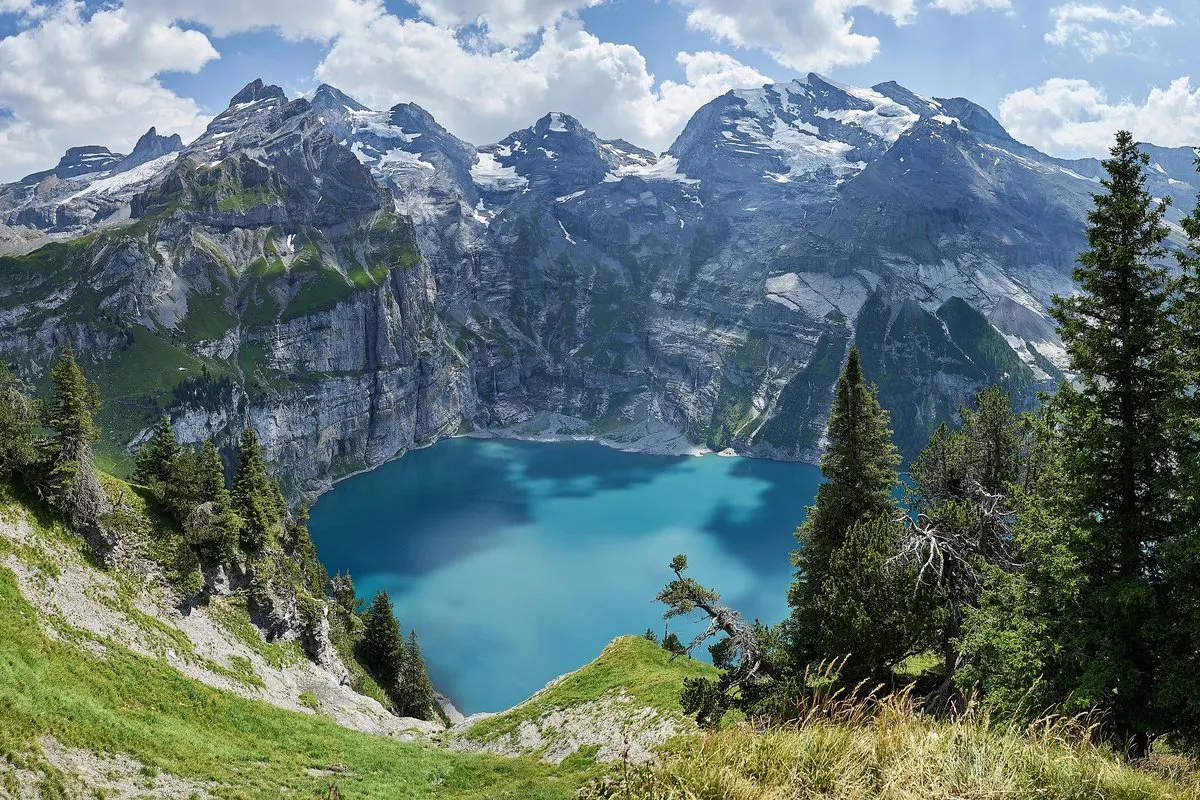
When the snow has melted, the Alps become a landscape of clear lakes, green alpine pastures and trails that run through three countries. Five lakes and two trails, from Annecy to Kandersteg, with the facts.
In this story · 5 sections
The Alps in summer are a different journey from the Alps in winter. The ski resorts fall quiet, the lifts carry walkers instead of skiers, and the lakes in the valleys – which in winter are mostly a backdrop – become the heart of the journey. From Annecy and Lake Geneva in France to the mountain lakes of Switzerland, some of Europe's most beautiful summer landscapes lie within a few hours' journey of Geneva.
Here are five lakes and two trails worth a summer trip of their own, with what we know about them. More about the lakes and the places around them can be found on VERA PI's map of Haute-Savoie.
Summer in numbers
- Lac d'Annecy
- 447 m above sea level, approximately 14 km long
- Lac du Bourget
- 44.5 km², 145 m deep
- Oeschinensee
- 1,578 m above sea level, 56 m deep
- Tour du Mont Blanc
- Approximately 165 km, 9–14 days
- UTMB, time limit
- 46 hours 30 minutes
01Lac d'Annecy – the lake with the town
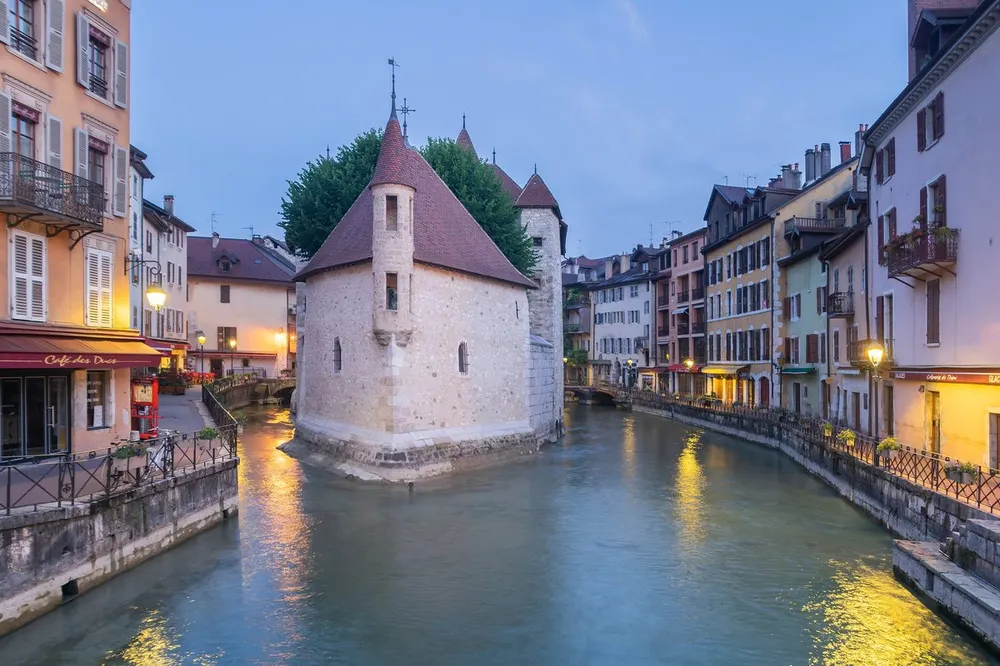
Lac d'Annecy lies 447 metres above sea level and is around 14 kilometres long. It was formed some 18,000 years ago, when the great Alpine glaciers melted, and is fed by small rivers from the mountains and by an underwater spring at a depth of 82 metres. Excluding the French part of Lake Geneva, it is France's third largest lake.
The lake is known for swimming and watersports, and around it lie villages such as Talloires, Menthon-Saint-Bernard and Veyrier-du-Lac. A cycle path follows parts of the shore. Around the lake there are also some of the Alps' finest restaurants, with Le Clos des Sens and its three Michelin stars in Annecy – read our perfect summer day in Annecy. Property prices by the lake can be found on VERA PI's page about Talloires-Montmin.
02Lac du Bourget – France's deepest
Lac du Bourget in Savoie is the deepest lake lying entirely within France: 145 metres at its deepest point, 85 metres on average. It is 18 kilometres long and covers 44.5 square kilometres, and depending on the season, it is either the country's largest or second-largest natural lake. The lake is a Ramsar site and was designated a biosphere reserve in 2025.
The largest settlement by the lake is the spa town of Aix-les-Bains. Lac du Bourget was made famous by Alphonse de Lamartine, whose poem Le Lac is set here, and was described by Balzac and Dumas. It is a calmer lake than Annecy, with steep mountains on the western side and vineyards nearby.
03Lake Geneva at Évian
On the French side of Lake Geneva lies Évian-les-Bains, the spa town that gave its name to the mineral water. The town changed its name to Évian-les-Bains in 1865 to highlight its role as a spa resort, and in 1909 the Hôtel Royal was inaugurated, today one of France's palace hotels. In June 2026, the hotel hosted the G7 summit, the second in Évian after the G8 meeting in 2003.
Évian is a good base for those who want to combine the lake with the mountains: the Chablais Alps lie just south of the town, and the boats across the lake take you to Lausanne on the Swiss side. More about the town can be found on VERA PI's page about Évian-les-Bains.
04Mountain lakes in Switzerland
Lake Oeschinen above Kandersteg in the Bernese Oberland lies at 1,578 metres and is 56 metres deep at its deepest point. It was formed by prehistoric landslides and has been part of the Swiss Alps Jungfrau–Aletsch World Heritage Site since 2007. A chairlift from the village has existed since 1948. Parts of the southern shore have periodically been closed due to the risk of rockfall from the mountain above, so check which trails are open.
In Zermatt, the 5-Seenweg passes five mountain lakes from Sunnegga, several with the Matterhorn reflected in them, and at Gornergrat lies Riffelsee. In Gstaad there is Lauenensee, a small lake at the end of the valley above Lauenen. More about the resorts: 48 hours in Zermatt and Gstaad, the discreet village in the Bernese Oberland.
05Tour du Mont Blanc – three countries in a week or two
The Tour du Mont Blanc is one of Europe's most famous hiking trails. It circles the entire Mont Blanc massif, roughly 165 kilometres with around 10,000 metres of ascent and descent, passing through France, Italy and Switzerland. It is most often walked anticlockwise over 9 to 14 days, starting in Les Houches or Les Contamines in France, Courmayeur in Italy or Champex in Switzerland.
The trail passes seven valleys around the massif, and you sleep in mountain huts or small hotels along the way. The same route is run every August in the ultra-marathon UTMB, with a time limit of 46 hours and 30 minutes. Those who don't have two weeks can walk sections of the trail, for example the stretch from Brévent across the Chamonix valley.
More destinations can be found among metromode.co's destinations.