From 11 to 22 May 2027 the Festival de Cannes celebrates its 80th edition. Here is how the world's most famous film festival works – the Palais, the steps, the sections and the Palme d'Or – and how a visitor without a badge can still see a film.
In this story · 4 sections
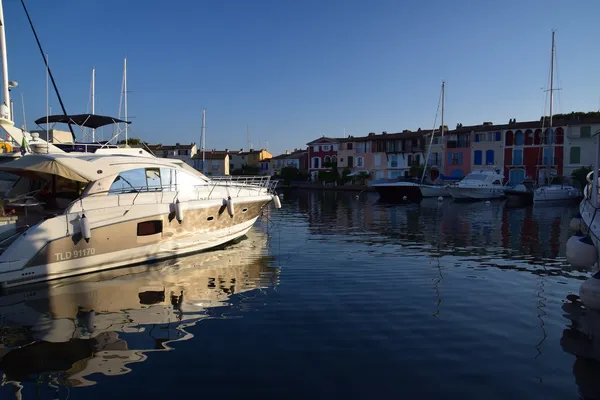
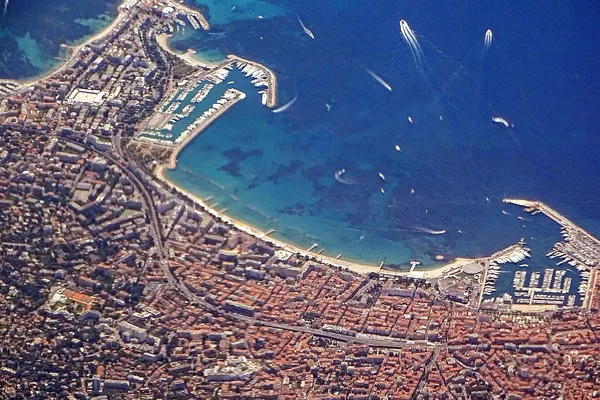
For twelve days every May, a resort town on the Riviera becomes the capital of world cinema. Yachts crowd the bay, photographers line the Croisette, and every evening a new film climbs the red-carpeted steps of the Palais des Festivals. The Festival de Cannes is widely regarded as the most prestigious film festival in the world.
It is also, for the most part, a closed event: a gathering of the film industry for which tickets are not sold. Here is how it works ahead of its 80th edition, and what a visitor can still see.
Palais des Festivals et des Congrès
Festival venue · La Croisette, Cannes
© OpenStreetMap contributors · OpenFreeMap
- Address
- 1 boulevard de la Croisette, 06400 Cannes
- 80th edition
- 11–22 May 2027
- Founded
- 1939; first held in 1946
- Palme d'Or
- Awarded since 1955
- Marché du Film
- Since 1959
- Present Palais
- In use since 1983; red carpet since 1987
- President
- Iris Knobloch, since 2022
- General delegate
- Thierry Frémaux, since 2007
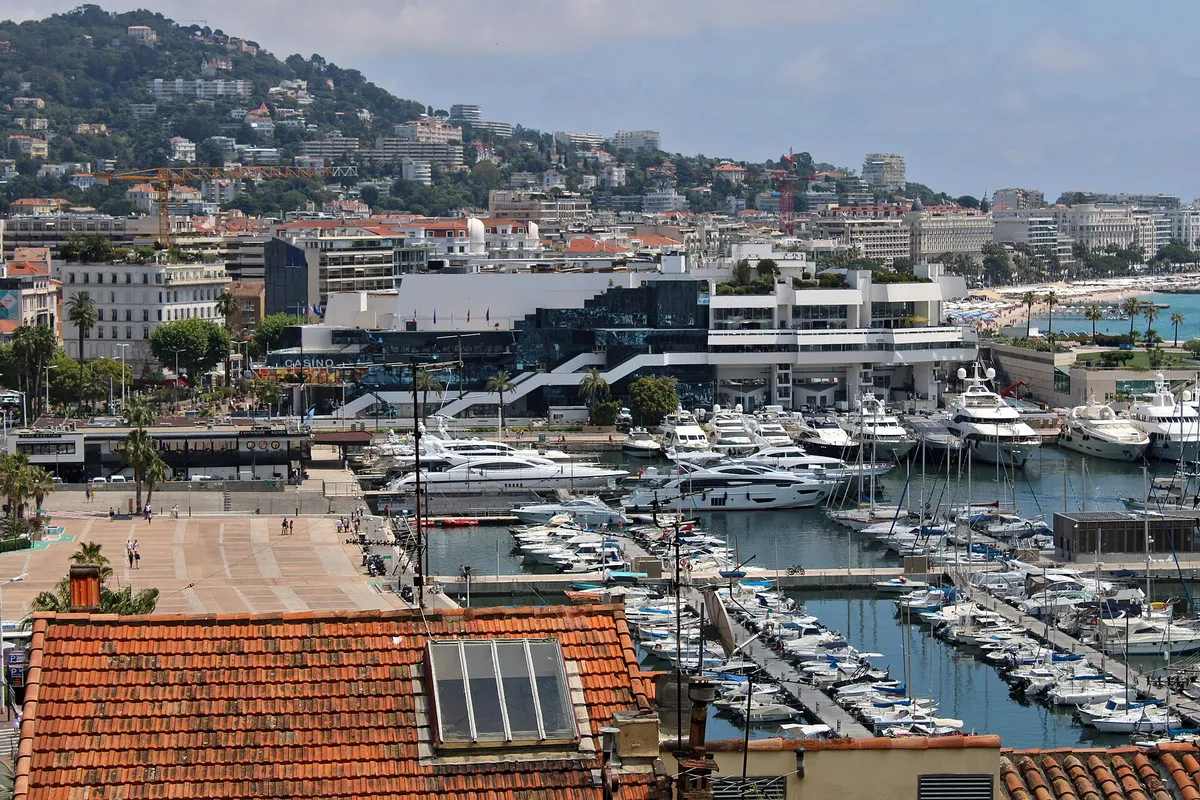
The festival palace at the western end of the Croisette, in use since 1983: the Grand Théâtre Lumière, the red-carpeted steps and the rooms of the Festival de Cannes and the Marché du Film.
01Born of a quarrel with Venice
The festival began as a political act. In the late 1930s Venice was the only international film festival, and in 1938 its prizes were bent to suit Mussolini and Hitler. The French, British and American jurors walked out, and France decided to found a festival of its own. In 1939 Cannes was chosen over Biarritz, for its appeal as a resort and because the town offered to contribute more money and build a venue.
The first edition opened on 31 August 1939 with a private screening of The Hunchback of Notre Dame. The next day Germany invaded Poland, and the festival was cancelled. It was relaunched from 20 September to 5 October 1946 in the town's old casino, moved to spring in 1951 to avoid clashing with Venice, created the Palme d'Or in 1955 and founded the Marché du Film, its film market, in 1959.
It has rarely stopped. On 19 May 1968 it was halted after Louis Malle and other directors took over the great hall in solidarity with the strikes sweeping France, and in 2020 the pandemic cancelled it altogether.
02The Palais and the steps
Everything revolves around the Palais des Festivals et des Congrès, at the western end of the Croisette beside the Vieux Port. The present building, nicknamed the Bunker, opened for the 1983 festival, and in 1987 a red carpet was laid at its entrance for the first time. Its great hall is the Grand Théâtre Lumière, where the gala screenings begin at around 7 pm and 10 pm; other films play in the Debussy, Buñuel, Bazin and Agnès Varda rooms and at the Cineum.
Insider tipWalk past the steps on a festival evening at around 7 pm to see the arrivals from the barriers.
The galas have a dress code. Evening wear is requested – a long gown or a dinner jacket – with a cocktail dress, a dark trouser suit or a black or navy suit with a dark tie or bow tie as acceptable alternatives. Trainers are not allowed, nor are backpacks or large bags, and staff may turn away anyone on the steps who does not comply.
03The sections and the prizes
The Official Selection is the heart of the festival: the Competition, whose jury awards the Palme d'Or, along with films Out of Competition, Special Screenings, Cannes Première, Un Certain Regard, Cannes Classics for restored films, and the Cinéma de la Plage. Around it run independent parallel sections – the Critics' Week, founded in 1962; the Directors' Fortnight, born in 1969 out of the events of the year before; and ACID – while the Marché du Film, with its own accreditation, is where rights are bought and sold.
Since 2022 the festival has been led by Iris Knobloch, its first woman president, with Thierry Frémaux as general delegate since 2007.
04How to see a film without a badge
Tickets cannot be bought: they are free, issued only to accredited guests, and reselling them is forbidden. But there are ways in. The Cinéma de la Plage holds free open-air screenings on the beach, open to everyone. Film lovers who are not professionals can apply for a Cannes Cinéphiles accreditation, which covers Official Selection films and the parallel sections in certain Cannes cinemas. And 18- to 28-year-olds can apply for Trois Jours à Cannes, a pass for the festival's last three days that opens Official Selection screenings and the Palais to them.
Even without a seat, the Croisette is a show of its own: the photographers' ladders at the barriers, the evening arrivals on the steps, the yachts lit up in the bay. Book a hotel and restaurants as early as you can – the town is full for the festival.
At a glance
Ways in for visitors
| Way in | Who | What it covers |
|---|---|---|
| Cinéma de la Plage | Everyone | Free open-air screenings on the beach |
| Cannes Cinéphiles | Non-professional film lovers, on application | Official Selection and parallel sections in certain cinemas |
| Trois Jours à Cannes | 18–28-year-olds, on application | Official Selection screenings and the Palais, last three days |
| Professional accreditation | Film industry and press | The Palais and screenings; the Marché has its own |