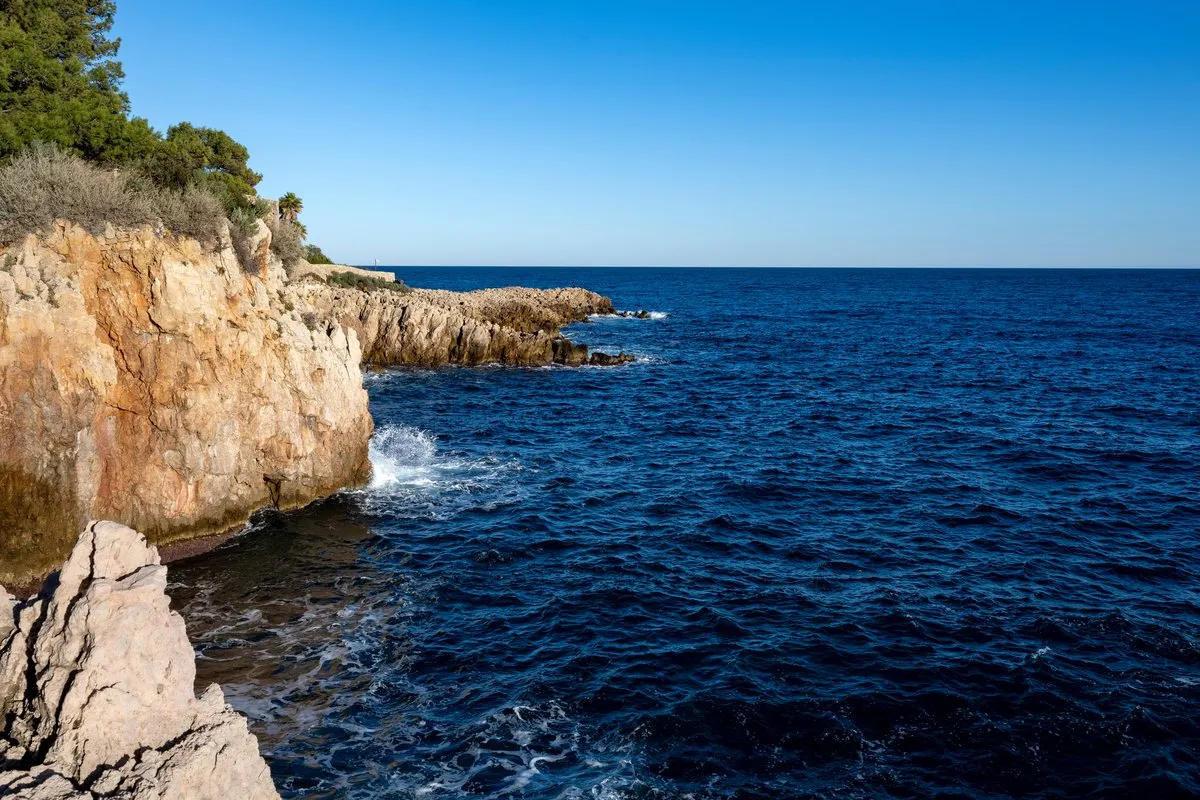
Five kilometres along the cliffs, past villas where the Duke of Windsor lived and a garden donated to the town. The Sentier de Tire-Poil on Cap d'Antibes is one of the Riviera's most beautiful walks – here we answer everything you might be wondering before you set off.
In this story · 8 sections
The wind comes first. It tugs at your hair the moment you leave the sandy beach at La Garoupe and step onto the first rocky outcrops, and according to local legend it is precisely this that gave the path its name: Tire-Poil, roughly "the one that pulls your hair". Then come the sound of the sea against the rocks, the scent of pine and salt, and a colour of water that screens rarely manage to capture. The sentier du littoral on Cap d'Antibes is not long, but it ranks among the most memorable things you can do on the Riviera – and it's free.
We have gathered the answers to the questions worth asking before you set off, with information from the Antibes Juan-les-Pins tourist office. Facts about the municipality can be found on VERA PI's page about Antibes.
5 places
© OpenStreetMap contributors · OpenFreeMap
- 01Plage de la GaroupeBeach · Cap d'Antibes
- 02Château de la CroëVilla (private) · Cap d'Antibes
- 03Villa EilenrocVilla and garden · Cap d'Antibes
- 04Baie des MilliardairesCove · Cap d'Antibes
- 05Phare de la GaroupeSight · Cap d'Antibes
- Length
- About 5 km
- Time
- About 2 hours
- Difficulty
- Medium, with steps
- Start
- Car park at Plage de la Garoupe
- Finish
- Avenue Mrs L. D. Beaumont / Avenue Tour Gandolphe
What is the Sentier de Tire-Poil?
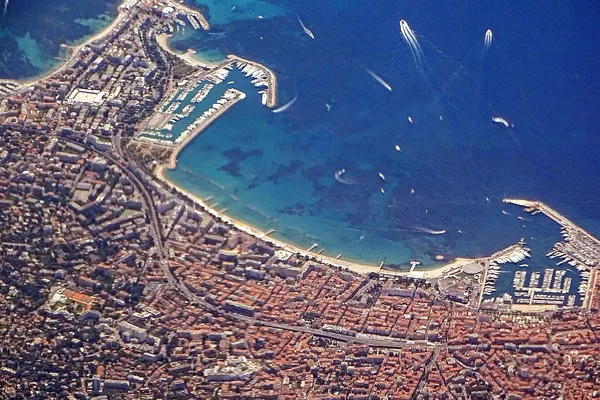
It is the public coastal path along the southern and south-western side of Cap d'Antibes, the headland that juts out into the sea between Antibes and Juan-les-Pins. The path follows the edge of the cliffs, with the sea on one side and the walls of some of the Riviera's most exclusive villas on the other. The area is part of the Natura 2000 site «Baie et Cap d'Antibes – îles de Lérins» and is managed by Espace Mer et Littoral and the Conservatoire du Littoral. It is protected nature, and should be treated accordingly.
Why is it public when the peninsula is so private?
From the middle of the 19th century, wealthy families began building luxury villas on the peninsula. By the early 1900s the villa owners had taken possession of large parts of the coast and partly closed it off to the public. It was not until the French coastal law, the loi Littoral, that the town was able to reclaim the stretch and open it to everyone. Today it is one of the few places where anyone can walk along the walls of the legendary estates of Cap d'Antibes.
Where does the path start and end?
The starting point is the car park at Plage de la Garoupe, one of the peninsula's few sandy beaches. The path ends at Avenue Mrs L. D. Beaumont and Avenue Tour Gandolphe, from where you can walk back through the peninsula's villa streets or turn round and retrace your steps. Many people walk there and back to see the sea from both directions – the light is completely different on the way home.
How long and how difficult is it?
The tourist office gives around 5 kilometres and about two hours, with a medium difficulty rating. The path consists of walkways, with steps on the steeper sections, and in places it crosses uneven, sharp limestone. Comfortable, sturdy shoes are a must – sandals are a poor choice. There is no shade to speak of along the cliffs, so bring water and sun protection.
What do you see along the way?
Shortly after the start you pass Château de la Garoupe, from 1907, hidden behind a high stone wall and pine trees. A little further on is a viewpoint where, according to the tourist office, you may be lucky enough to spot dolphins. Then comes Château de la Croë, built in 1927, which was for a time the home of the Duke of Windsor and Wallis Simpson after Edward VIII gave up the British throne.
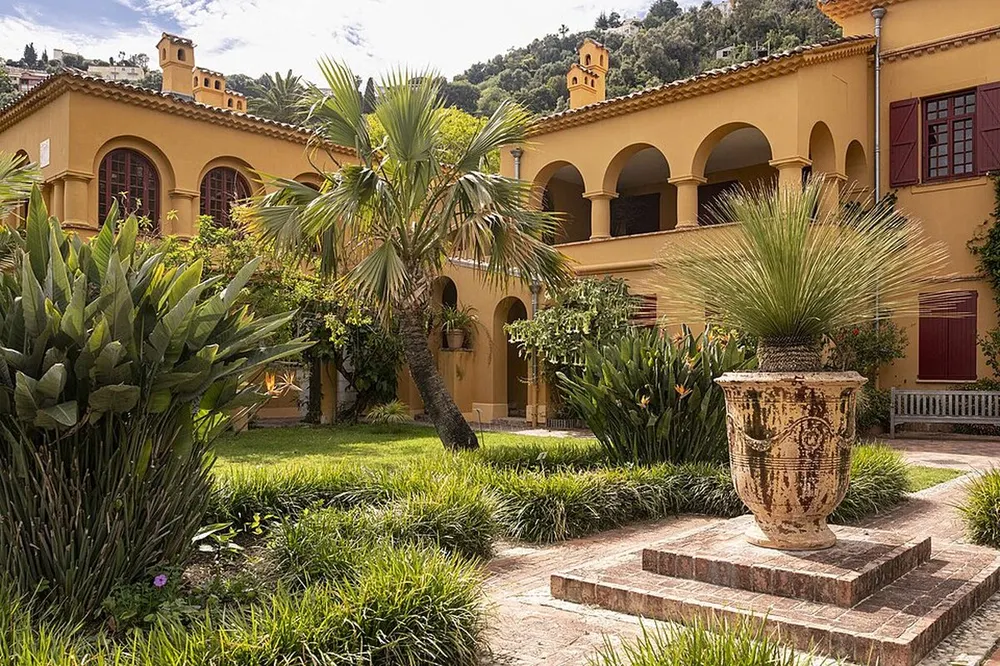
Towards the end you reach Villa Eilenroc, built between 1860 and 1867 to designs by Charles Garnier, the architect of the Paris Opera. Its last owner, Hélène Beaumont, donated the estate to the town of Antibes in 1982. The park with its rose garden is one of the most peaceful spots on the peninsula. Close by lies the Baie des Milliardaires, the Billionaires' Bay, with its crystal-clear water.
Is the path always open?
No. The path is closed when the weather is too rough, for example during a storm, as the waves then crash over the cliffs. Respect the barriers – they are there for good reason. Check the weather before you go and have a back-up plan, such as a visit to old Antibes.
When is the best time to go?
Early morning is best all year round: the light is soft, the heat isn't overpowering and you have the rocks almost to yourself. Autumn, winter and early spring are the quietest seasons, and on a clear winter's day you can see snow on the Alps behind old Antibes. In the middle of the day in July and August it gets both hot and crowded.
Can you go with a guide?
Yes, the tourist office runs guided walks along the path, in French. If you want to combine the walk with more history, head up to the Phare de la Garoupe and the chapel beside the lighthouse, at the peninsula's highest point. Every July, from the first Thursday, the festival of Notre-Dame de Bon Port is celebrated here: at sunrise a mass is held in the chapel, and fishermen in traditional sailors' dress carry the statue down the Chemin du Calvaire to the cathedral in the old town.
Also read our guide to old Antibes, from the Greek Antipolis to Picasso's castle and our story on Hôtel du Cap-Eden-Roc, the hotel that invented the Riviera summer. More destinations along the coast can be found under Destinations at metromode.co.
Plage de la Garoupe
Where the path begins
Sandy beach on the eastern side of the peninsula, with a car park – this is where the Sentier de Tire-Poil begins.
Château de la Croë
The Windsors' villa by the sea
Built in 1927, once the home of the Duke of Windsor and Wallis Simpson. Seen from the path.
Villa Eilenroc
Charles Garnier's villa and rose garden
Built 1860–1867 and donated to Antibes in 1982 by Hélène Beaumont.
Baie des Milliardaires
The Billionaires' Bay
Small cove with crystal-clear water just beyond Villa Eilenroc.
Phare de la Garoupe
The lighthouse at the peninsula's highest point
Lighthouse and chapel overlooking the whole coast; the starting point of the Notre-Dame de Bon Port festival in July.