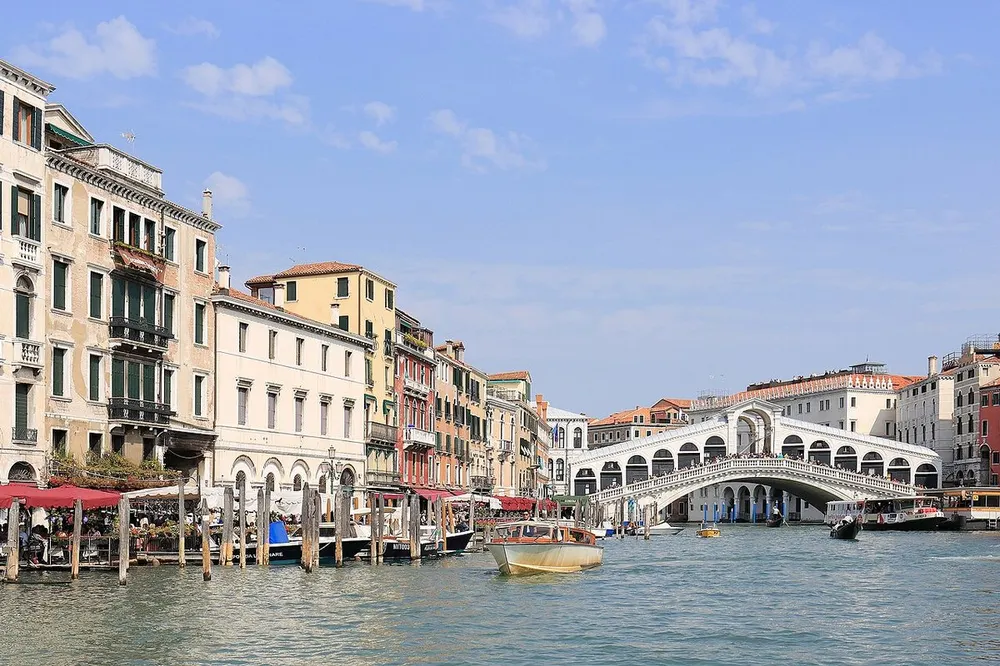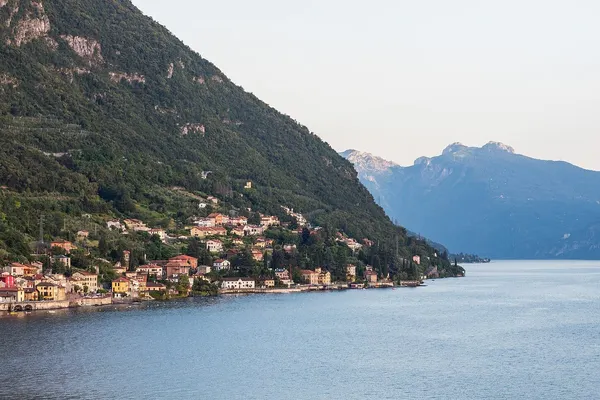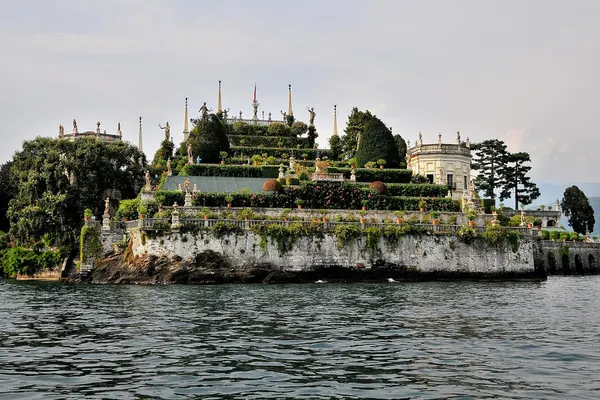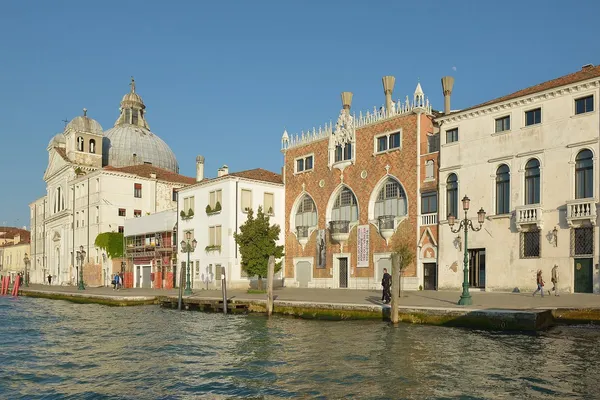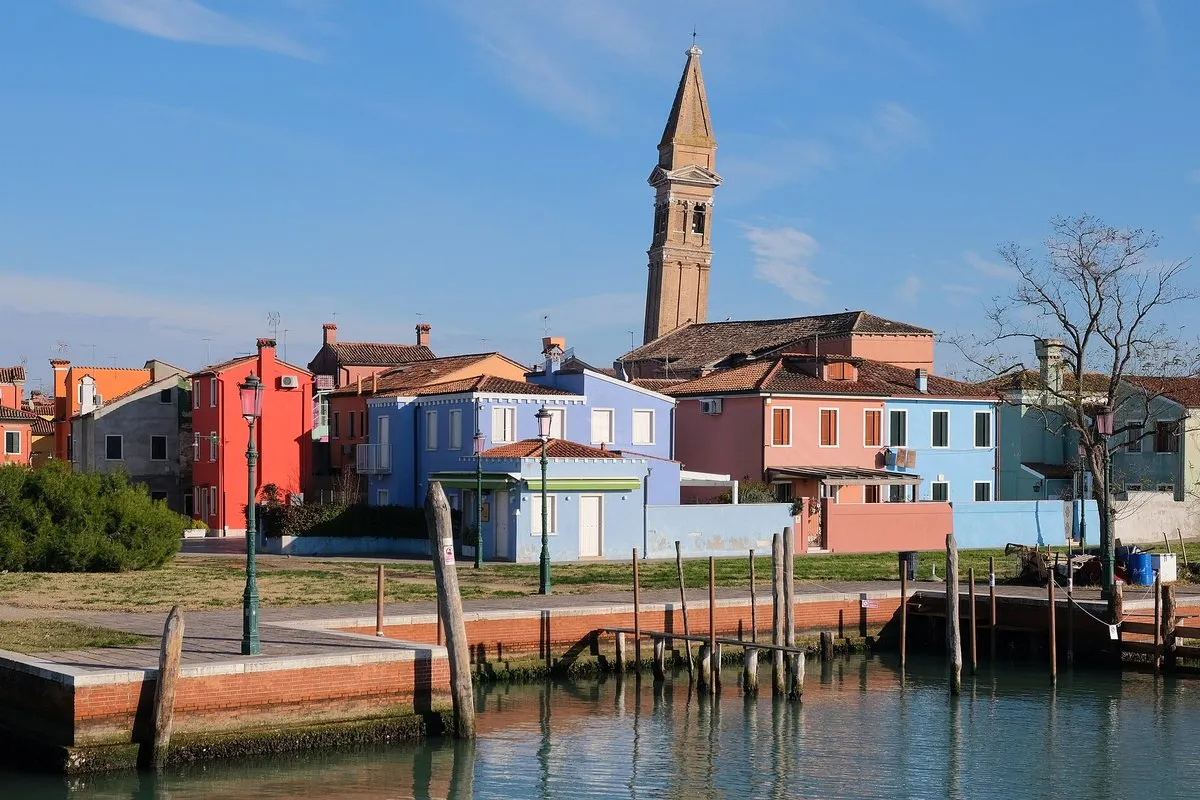
Venice didn't begin at Rialto but out in the lagoon. A day by water bus takes you to the glass island of Murano, the coloured houses of Burano and Torcello, the island where ten people still live alongside the lagoon's oldest mosaics.
In this story · 7 sections
The Venice Lagoon is a shallow, enclosed bay between the mouths of the Po and the Piave, protected from the Adriatic Sea by long barrier islands such as Lido and Pellestrina. It was here that refugees from Roman towns on the mainland sought shelter when the barbarians came, and it was on islands such as Torcello, not Rialto, that the city first took shape. A day in the northern lagoon is therefore a way of seeing Venice in reverse order: from the craftsmanship of Murano and Burano to the origins on Torcello.
The islands lie in a row to the north of the historic city and are connected by the water buses, vaporetti. Start early, and head to the furthest one first if you want to have Torcello in peace and quiet.
4 places
© OpenStreetMap contributors · OpenFreeMap
Murano: the island of glass
Murano is a group of islands connected by bridges, approximately one and a half kilometres north of Venice, with just over 5,000 inhabitants. The island was once its own municipality, with its own Grand Council like Venice's and its own coins – the only island in the lagoon to do so.
In 1291, all glassblowers in Venice were ordered to move here. During the following century, exports began, first of glass beads and mirrors. Aventurine glass was invented on Murano, and for a time the island was Europe's leading glass producer. Later it became known for its crystal chandeliers. The glass industry declined during the 18th century but is still the island's main industry, and old houses such as Venini, Barovier & Toso and Seguso have workshops here.
The history is collected in Museo del Vetro, the glass museum in Palazzo Giustinian, with objects from Egyptian times to the present day. Also visit the church of Santa Maria e San Donato, known for its Byzantine mosaic floor from the 12th century, and San Pietro Martire, which has works by Giovanni Bellini.
Burano: lace and colour
Burano is located around seven kilometres from Venice, a journey of approximately 45 minutes by water bus from St Mark's Square. The island has around 2,800 inhabitants and is almost entirely built up, with a population density of over 13,000 per square kilometre. It is connected to the neighbouring island of Mazzorbo by a bridge.
What makes Burano famous are the small, brightly painted houses. The colours follow a fixed system: anyone who wants to repaint their house must send an application to the authority, which replies with the colours permitted for that particular plot.
The lace arrived in the 1500s, when the women on the island began to sew needle lace, a technique that had reached them via Venetian Cyprus. The lace was exported throughout Europe, but trade declined in the 1700s and did not return until 1872, when a lace school was opened. Today, few people make lace in the traditional way, as it is extremely time-consuming. The lace museum is located at Piazza Baldassare Galuppi, the island's only square. Here also stands the church of San Martino with its leaning bell tower and a crucifixion by Giambattista Tiepolo from 1727. The square is named after the composer Baldassare Galuppi, who was born on the island in 1706.
Torcello: the island where Venice began
Just north of Burano lies Torcello, sparse and green. The island was populated in 452, after Attila had destroyed the city of Altinum on the mainland, and has been called the mother island from which Venice was populated. In 638, Torcello became the seat of the bishop of Altino, and in the 10th century the island was a political and commercial centre with a population often estimated at around 20,000, although some archaeologists today reckon with a maximum of 3,000. The salt works in the lagoon's marshes were the foundation of the economy.
When the marshes grew and the plague arrived, the inhabitants moved to Murano, Burano and Rialto. In 1689 the bishop's seat was moved to Murano, and in 1797 around 300 people lived here. Today the island has around ten permanent residents.
The cathedral and Attila's Throne
At the centre of the island stands Santa Maria Assunta, founded according to an old inscription by the Exarch Isaac of Ravenna in 639. It was rebuilt in 864 and 1008 but has kept its early form, and it is counted among the oldest church buildings in the Veneto. The highlight is the mosaics, the oldest surviving in the Venice area. In the main apse, the Virgin of the Hodegetria type stands alone against a vast gold background, the work of Byzantine mosaicists at the end of the 11th century. On the entrance wall is a mosaic of the Last Judgement. Next to the cathedral stands the martyrium of Santa Fosca, and the bell tower dates from the 11th century.
Outside stands an old stone chair known as Attila's Throne. It has nothing to do with the Hun king, but was probably the podestà's or the bishop's chair. On the island there is also Ponte del Diavolo, the Devil's Bridge.
Ernest Hemingway lived on Torcello for a time in 1948 and wrote parts of Across the River and Into the Trees here. The island also serves as the backdrop for Daphne du Maurier's short story Don't Look Now.
On the way back: San Giorgio Maggiore
If you have time left when you come back to the city, take the water bus across the basin to San Giorgio Maggiore, the island opposite St Mark's Square. The church was designed by Andrea Palladio and begun in 1566, and Claude Monet painted it in a whole series of works. The monastery is today home to the art foundation Fondazione Cini, known for its library.
At a glance
Islands in brief
| Island | Known for | Residents |
|---|---|---|
| Murano | Glass since 1291 | just over 5,000 |
| Burano | Lace and coloured houses | around 2,800 |
| Torcello | Cathedral from 639 | around 10 |
| San Giorgio Maggiore | Palladio's church from 1566 | – |
More to read
Back in the city, follow our 48 hours in Venice, from Tintoretto to Harry's Bar, and find more destinations at metromode.co.
Places
Museo del Vetro
The history of glass from Egyptian times to the present day, at Palazzo Giustinian.
Piazza Baldassare Galuppi
Burano's only square, with the lace museum and the church of San Martino with its leaning tower.
Insider tipThe Lace Museum is on the square
Santa Maria Assunta, Torcello
The cathedral from 639 with the oldest mosaics in the Venice area.
Insider tipAttila's Throne stands outside
San Giorgio Maggiore
The Palladian church opposite St Mark's Square, today also the Fondazione Cini.