In this story · 4 sections
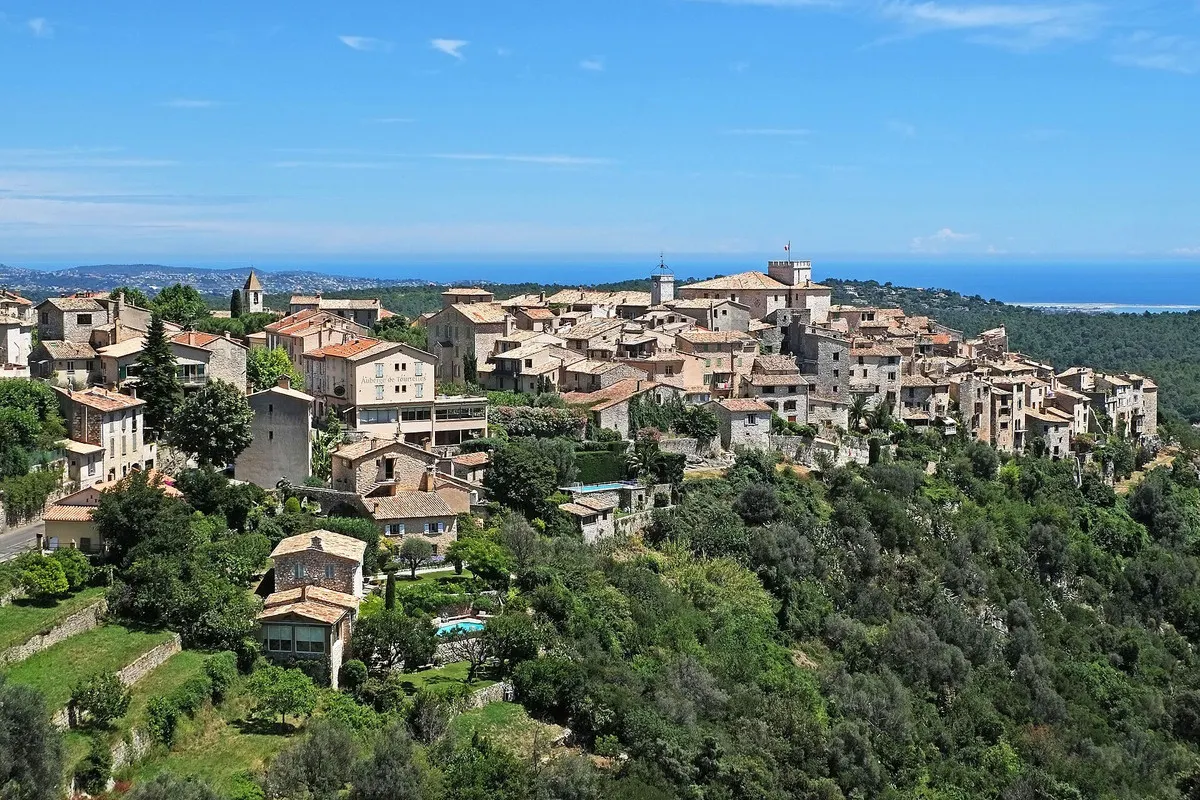
Tourrettes-sur-Loup stands on a rocky spur that drops sheer on every side, 5 kilometres west of Vence, 15 from the coast and 25 from Nice. The outermost houses were built right to the edge of the ravines, so that together they form the village's rampart. At 524 metres it looks down over wooded valleys to the Mediterranean, while to the north the limestone puys of the Pre-Alps of Grasse rise to over 1,200 metres.
It is known for two things: its medieval village and the violet, which became its main crop in 1880 and has outlived the jasmine, roses and orange blossom once grown here for the perfumers of Grasse.
4 places
© OpenStreetMap contributors · OpenFreeMap
- 01Église Saint-Grégoiresee · Vieux village
- 02La Bastide aux Violettessee · Tourrettes-sur-Loup
- 03Chapelle Saint-Jeansee · Tourrettes-sur-Loup
- 04Place de la Libérationsee · Vieux village
- Église Saint-Grégoire
- Triptych, gilded altarpieces, Roman altar to Mercury
- Bastide aux Violettes
- Museum of the violet, opened 2010
- Chapelle Saint-Jean
- Frescoes by Ralph Soupault
- Pont-du-Loup
- Piers of the 1892 viaduct, blown up in 1944
A castrum of little towers
The site is recorded in 1024 as Castrum de Torretis, and the village grew around its castle. In 1387, when Nice gave itself to Savoy, Tourrettes was a possession of the Grimaldis, who had sided with Savoy. The Count of Provence confiscated it and gave it to Guichard de Villeneuve, known as the Bastard of Vence, whose descendants held the lordship until 1789. The villagers later took over the 15th-century Villeneuve castle for their own use.
Below the village, César de Villeneuve built the Château du Caire in 1646, its two square towers added in 1754 and 1765. Further out stand the ruins of the Templar commandery of Saint-Martin-de-la-Pelote.
The village of violets
From the 1950s tourism and crafts replaced the perfume crops, and only olives and violets survived. The violet is now the village's emblem. La Bastide aux Violettes, a museum devoted to the flower, opened on 6 March 2010, and local confectioners make crystallised flowers alongside candied fruit.
On the second or third Sunday of March, the Fête des Violettes fills the village with parades of flower-decked floats, a tradition started by Victor Linton. It is the liveliest day to come, provided you do not mind company.
Artisans and frescoes
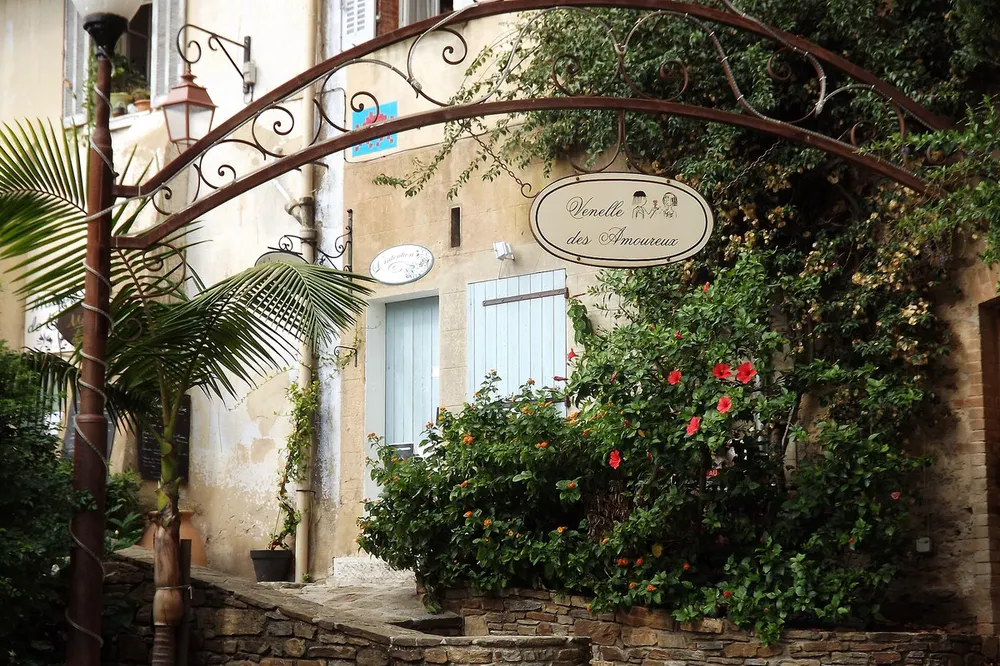
Around forty craftspeople have their workshops in the medieval village, which makes a slow wander through its lanes a pleasure. Take your time with the church of Saint-Grégoire, from the 15th century. It holds a triptych once attributed to the Bréa family, carved and gilded altarpieces, 17th-century statues and, behind the high altar, a pagan altar of the first century dedicated to Mercury.
The Chapelle Saint-Jean, restored in 2005, is decorated with religious frescoes by Ralph Soupault, a far-right press cartoonist who lived here from 1951 to 1962 after being convicted of collaboration, an uncomfortable story told plainly. The architect Antti Lovag, creator of Cardin's Palais Bulles, also lived in Tourrettes, in one of his bubble houses.
The train that stopped in 1944
From 1889 the village was served by the Central-Var railway, the Train des Pignes. In 1944 the German army blew up the viaducts of the Loup at Pont-du-Loup and of Pascaressa below the village, and the line closed for good in 1950. The Loup viaduct, finished in 1892, had been 310 metres long and 55 metres high; the piers judged safe were left standing at the mouth of the Gorges du Loup.
Église Saint-Grégoire
15th-century church with a Roman altar
A triptych once attributed to the Bréa, gilded altarpieces and a first-century altar to Mercury.
15 place de la Libération, 06140 Tourrettes-sur-Loup
Insider tipLook behind the high altar.
La Bastide aux Violettes
The museum of the violet
Opened in 2010 to tell the story of the village's signature flower.
Chemin de la Ferrage, 06140 Tourrettes-sur-Loup
Insider tipPair it with the March violet festival.
Chapelle Saint-Jean
Chapel with frescoes by Ralph Soupault
Restored in 2005, with religious frescoes from the 1950s.
Route de Saint-Jean, 06140 Tourrettes-sur-Loup
Insider tipCheck opening times locally.
Place de la Libération
The square at the village gate
The starting point for a loop through the medieval lanes.
Place de la Libération, 06140 Tourrettes-sur-Loup
Insider tipThe church of Saint-Grégoire stands on the square.
Neighbourhood and property data for Tourrettes-sur-Loup is on VERA PI, and more perched villages are on metromode.co.