A walled Maya port on a cliff facing the sunrise, thousands of water-filled sinkholes in the limestone behind it and a UNESCO reserve where the jungle meets the reef. Tulum is far more than its beach clubs.
In this story · 5 sections
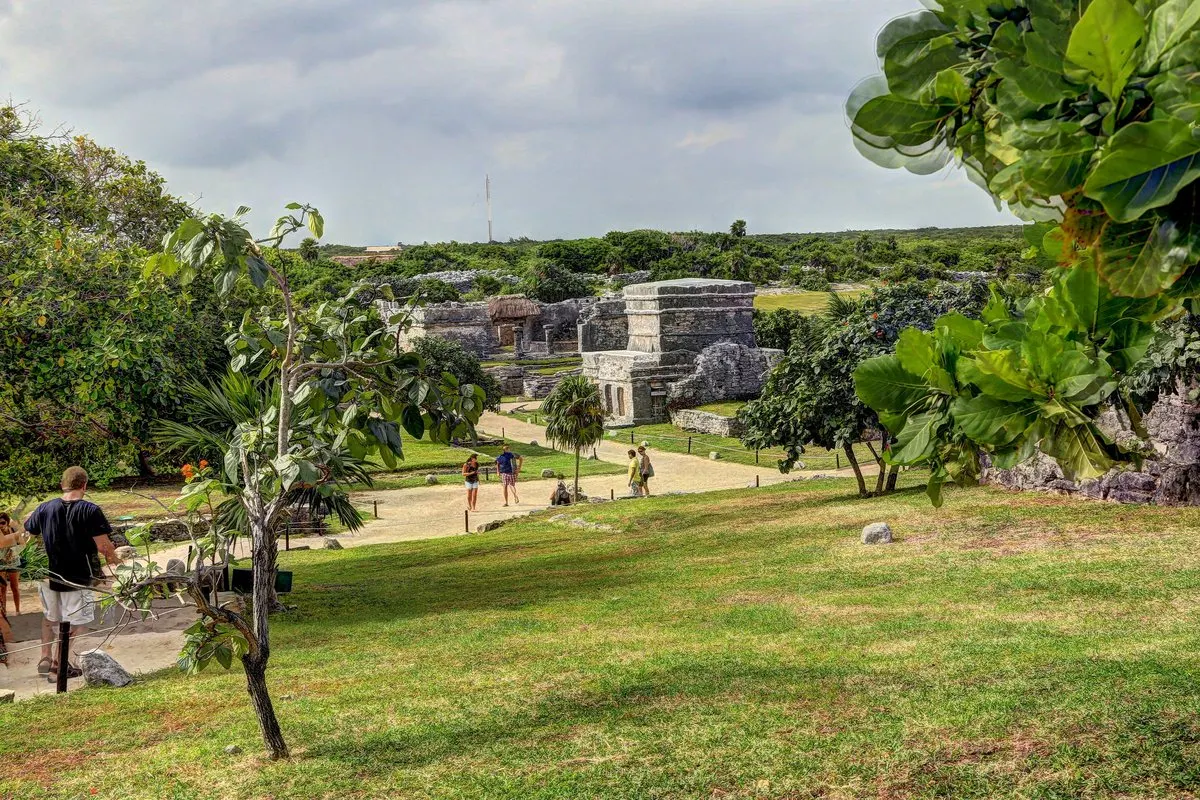
Tulum, on the east coast of the Yucatán Peninsula in the Mexican state of Quintana Roo, is the site of a walled Maya city on cliffs above the Caribbean. It served as a major port for the inland city of Cobá, was one of the last cities built and inhabited by the Maya, and is one of the best-preserved coastal Maya sites. Today the name also stands for a stretch of hotels, restaurants and beaches – but the ruins, the cenotes and the reserve to the south are the reasons to come.
01The city of dawn
The site may once have been called Zama, the City of Dawn, because it faces the sunrise from its bluff. Tulúm is the Yucatec Maya word for a wall or fence, and the walls that surround the city on its landward sides made it defensible. With access to both land and sea routes, Tulum was an important trading hub, especially for obsidian, and murals across the site suggest it was a centre for the worship of the Diving, or Descending, god.
Archaeologists date its main occupation to the late Postclassic period, from around AD 1200; the city reached its greatest prominence between the thirteenth and fifteenth centuries. The Maya continued to live here for some 70 years after the Spanish arrived in Mexico, and the city was abandoned by the end of the sixteenth century.
02El Castillo and the explorers
Members of Juan de Grijalva's Spanish expedition were the first Europeans to see Tulum, in 1518. The first detailed description came from John Lloyd Stephens and Frederick Catherwood, whose Incidents of Travel in Yucatan appeared in 1843. Arriving from the sea, they were struck first by a tall building – almost certainly El Castillo, the great temple on the cliff edge – and Catherwood's lithographs made the site famous. They also recorded a stele inscribed with the date AD 564, now in the British Museum, probably carried here from elsewhere and reused.
Arrive when the site opens: it is compact, exposed and busy, and the morning light from the east is the reason it was built here. Below the cliffs lies a small beach.
03The cenotes
Behind the coast, the limestone of the Yucatán is riddled with cenotes – natural pits formed where the bedrock has collapsed to expose groundwater. The word comes from the Yucatec Maya term for any place with accessible water, and the Maya relied on them for drinking water and, occasionally, for offerings. The peninsula has an estimated 10,000 of them, from great open pools to small sheltered caves. Some are at risk from the construction of the new Maya Train, so choose operators that treat them with care. In 2016 divers exploring the cave system near Tulum found the skeleton of a woman of about thirty, one of the region's remarkable prehistoric finds.
04Sian Ka'an: where heaven begins
South of town lies the Sian Ka'an Biosphere Reserve, established in 1986 and a UNESCO World Heritage Site since 1987. Its name in Yucatec Maya means the gate of heaven, or the place where heaven begins. Part of it is on land and part in the Caribbean, including a stretch of coral reef. It holds some 23 known Maya archaeological sites, among them Muyil, and its species list reads like a field guide to the region: jaguar, puma, ocelot, Baird's tapir, spider and howler monkeys, American flamingo, roseate spoonbill and two species of crocodile. Remains of an old narrow-gauge railway, which ran from 1905 to 1932, lie scattered through the forest.
05Planning
Visit the ruins early, go to the cenotes in the heat of the day and give Sian Ka'an a full day with a licensed guide. For more destinations, see our destinations page, the Metro Mode home page and our list of hotels worth a single night.