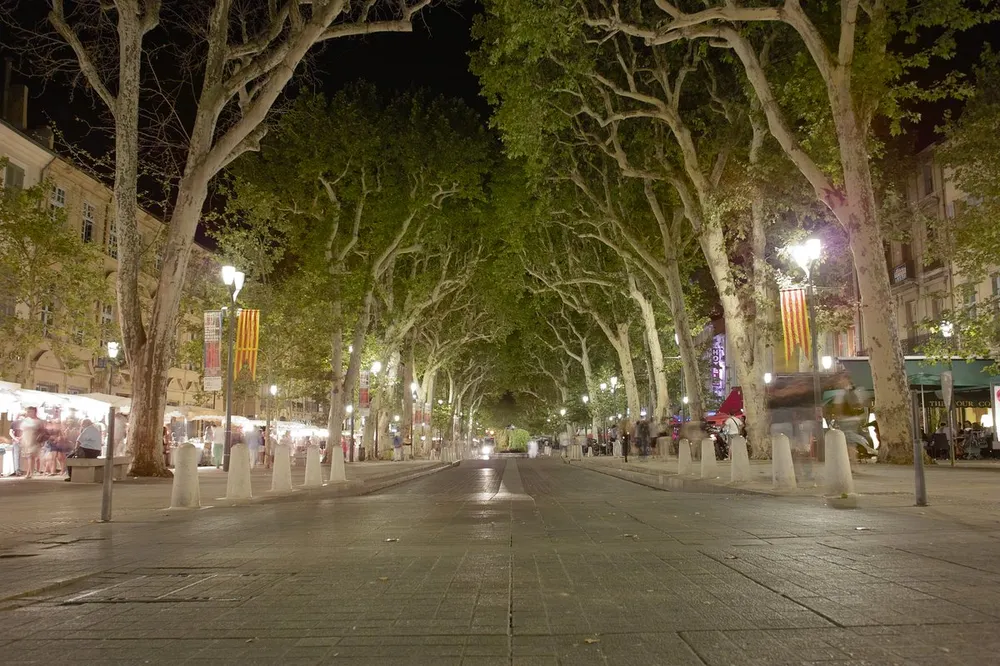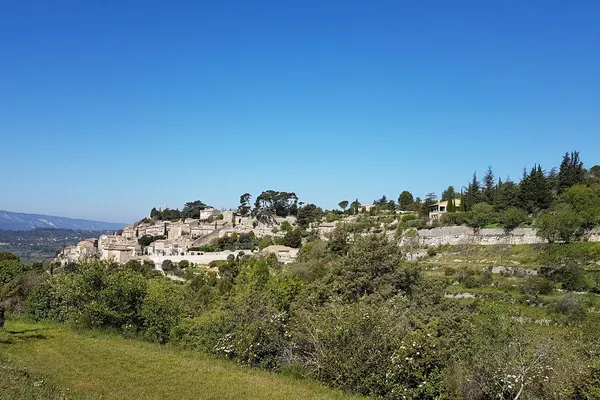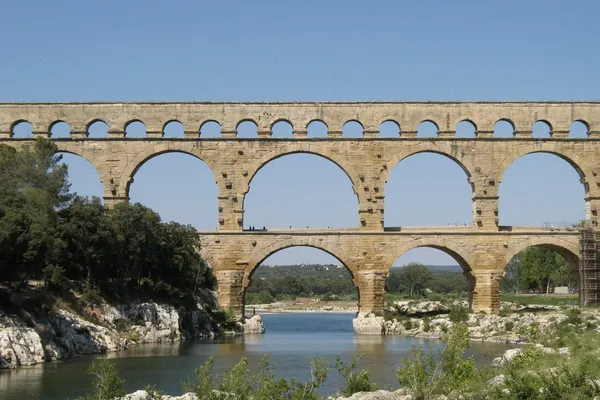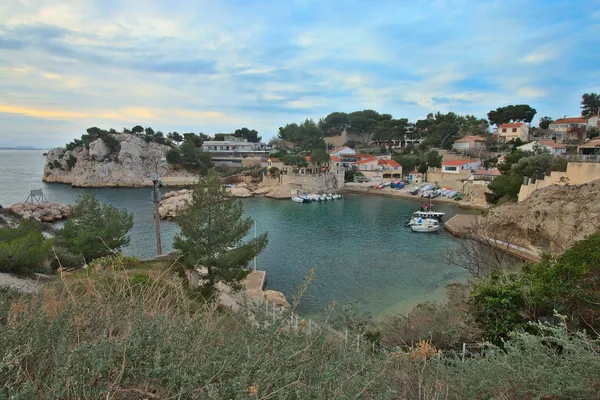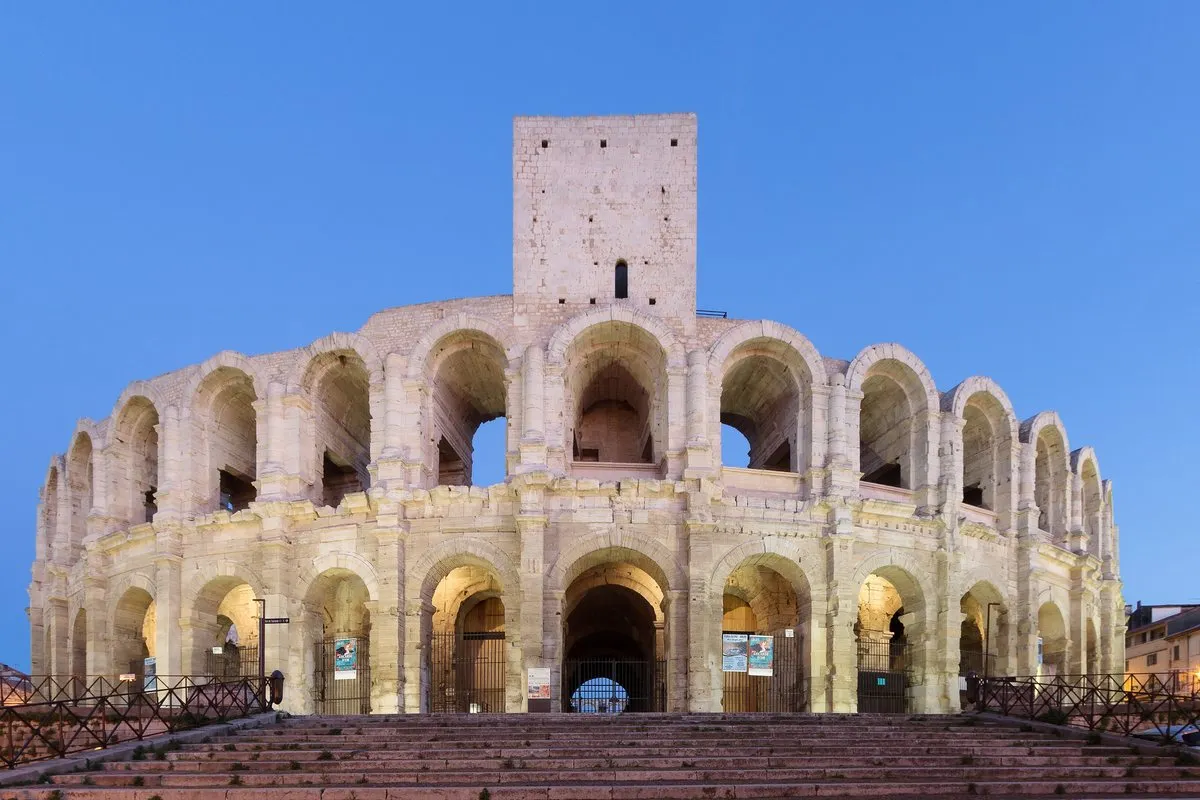
In Arles, a Roman arena from the year 90 stands a few blocks from a steel tower by Frank Gehry. The town on the Rhône is Provence's most surprising – and one of its cheapest to live in.
In this story · 5 sections
Arles in Bouches-du-Rhône is situated where the Rhône divides before reaching the Mediterranean, at the gateway to the Camargue. The town was one of the most important in the Roman province, and its Roman and Romanesque monuments became a World Heritage Site in 1981. It was also the place where Vincent van Gogh painted his most famous canvases, and since 1970 it has been the world's meeting place for photography. Today it also boasts one of Europe's most talked-about new buildings.
Arles is a working town with around 51,000 inhabitants, and it shows: it is less polished than Aix or Saint-Rémy, and more vibrant. The housing market can be found on VERA PI's page about Arles.
Arles through the years
- around 90
- The arena is built
- 1888–1889
- Van Gogh in Arles
- 1970
- Rencontres d'Arles founded
- 1981
- World Heritage Site
- 2021
- LUMA Tower opens
01The arena and Roman Arles
The arena was built around the year 90, a few years after the Colosseum in Rome which inspired it, and held over 20,000 spectators. During the Middle Ages, it became a fortress with watchtowers and a small town inside, with over 200 houses and two chapels. The houses were demolished from 1826, and in 1830 the first event was held at the arena again. Today it is used for bullfighting festivals during the Feria d'Arles, for concerts and for theatre in the summer.
Next to the arena lies the Roman theatre, and the town contains the remains of a forum, baths and a circus. A few kilometres outside the town, in Fontvieille, lies Barbegal, a Roman mill complex with 16 waterwheels in two rows – one of the largest known mill complexes of antiquity.
02Van Gogh's Arles
Vincent van Gogh arrived in Arles in February 1888 and stayed until May 1889. During that time, he made over 300 paintings and drawings of the town, the fields and the people. It was here that he painted the yellow house, the café on Place du Forum and the sunflowers, and it was here that the collaboration with Paul Gauguin came to an end in the crisis that eventually took him to the asylum in Saint-Rémy.
The yellow house no longer exists, but several of the places he painted can still be found, and in the town the Fondation Vincent van Gogh puts on exhibitions that link his work to contemporary art. He also painted the arena – Les Arènes from 1888 shows the audience at a bullfighting festival.
03Rencontres d'Arles – the summer of photography
In 1970, the photographer Lucien Clergue, who was from Arles, the author Michel Tournier and the historian Jean-Maurice Rouquette founded a photography festival. In the first year, 200 visitors came. Today, Rencontres d'Arles is one of the world's largest photography festivals, with exhibitions in churches, monasteries, workshops and old industrial premises across the whole town from the beginning of July and into the autumn.
04LUMA Arles and the silver tower
The new Arles can be seen from far away. The LUMA Tower, designed by Frank Gehry and commissioned by art patron Maja Hoffmann and her foundation LUMA, opened in the summer of 2021. It is 56 metres high and clad in 11,000 angled stainless steel panels that reflect the light over Provence. The tower stands in Parc des Ateliers, a former railway site that has been transformed into a cultural centre with exhibitions, studios and a park.
It is one of the buildings that has changed the image of Arles the most since Van Gogh's time, and it has made the town a destination for architecture and contemporary art.
05Arles according to VERA PI
Arles is one of the most affordable historic towns in Provence. According to VERA PI, 3,671 properties were sold from January 2021 to June 2026, with a median price of 2,426 euros per square metre for flats and 2,929 euros for villas and houses. Only 7 per cent of properties are holiday homes. This can be compared with Saint-Rémy, 25 kilometres away, where villas cost 5,714 euros per square metre – see VERA PI's page on Saint-Rémy-de-Provence.
More destinations can be found among metromode.co's destinations, and with Metro Mode Camera you get the story behind every monument you stand in front of.