In the Luberon, three hill villages keep close company. Bonnieux has a 12th-century church and a cedar forest, Lacoste the ruined castle of the Marquis de Sade, and Ménerbes the memory of a five-year siege – and a 45-minute path links the first two.
In this story · 3 sections
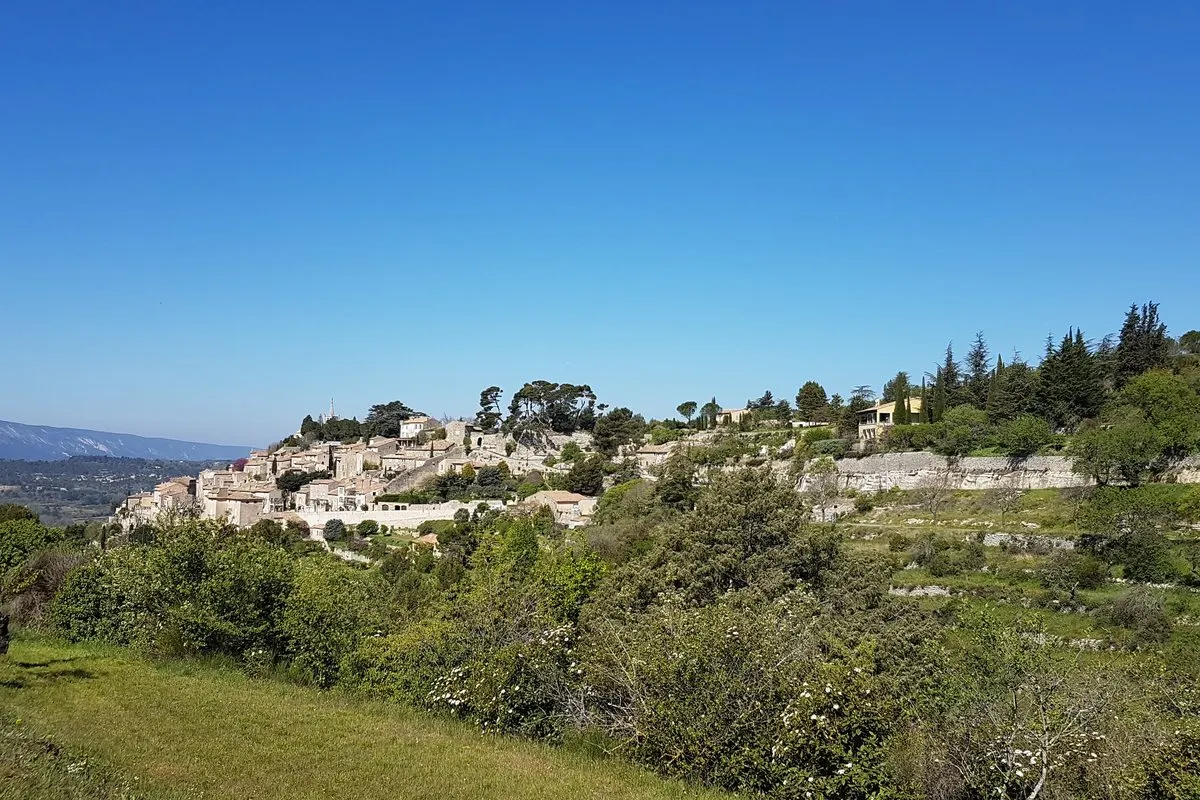
Bonnieux, Lacoste and Ménerbes are among the historic hill villages of the northern Luberon, alongside Gordes and Roussillon. The Calavon river runs through the valley below them, and from their terraces the view reaches to Mont Ventoux. Tourism is their main business, but each has its own character – and its own story. For property in the area, see VERA PI's Bonnieux guide.
2 places
Bonnieux
Recorded in 1103 as Castrum Bonils, Bonnieux is crowned by its Vieille Église, the high church of the 12th century, which mixes Romanesque and Gothic work and has been a listed monument since 1980; a new church followed in 1870. Remains of 12th-century towers and ramparts survive, and the village has a bakery museum. Ridley Scott filmed A Good Year (2006) at the nearby Château La Canorgue.
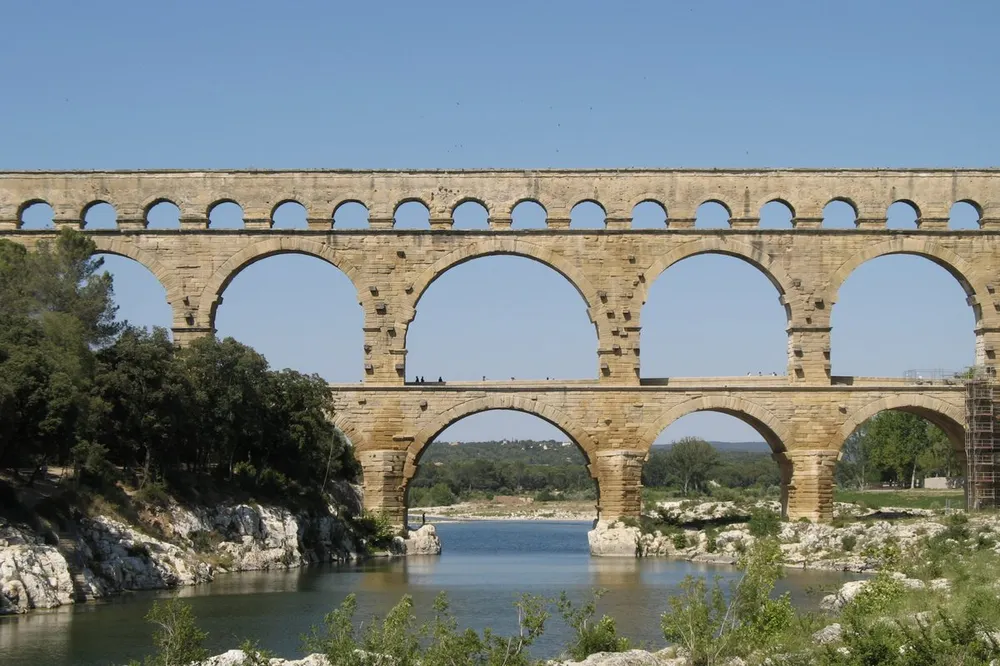
Five kilometres north, in the plain, the Pont Julien carried the Via Domitia across the Calavon from 3 BC. Its span is more than 40 metres, and it carried road traffic on the D149 until 2005. South of the village, on the road towards Lourmarin, the Luberon cedar forest covers some 250 hectares across Bonnieux, Lacoste and Ménerbes. The trees came from the Moroccan Atlas and were planted under Napoleon III in 1862; their shade makes for summer walks, though in winter the mistral turns it icy.
Lacoste and the Marquis
Lacoste looks across at Bonnieux from its own hill, and a path through the valley links the two in about 45 minutes. Its cobbled lanes climb to the Château de Lacoste, whose origins go back to the 11th century. It passed to the Sade family in the 18th century, and the Marquis de Sade stayed here between scandals, from 1769 to 1772 and again until his imprisonment in 1777; in 1772 he built a theatre for 120 spectators inside. He described the castle in The 120 Days of Sodom. The Revolution left it vandalised and largely destroyed. A teacher, André Bouer, began restoring it in 1952; Pierre Cardin bought it in 2001 and, until his death, held a music festival each summer in the quarries west of the castle.
The village also has a contrarian streak: it was Protestant among Catholic neighbours, and during the Second World War the Resistance used the steep Luberon slopes around it.
Ménerbes
Ménerbes is a walled village on a hilltop, one of Les Plus Beaux Villages de France. In 1573 Protestants seized its citadel to defy the Pope; the Catholic siege lasted five years, two months and eight days, with more than 900 cannonballs fired, before a “glorious capitulation” on 9 December 1578. After the war the half-empty village drew artists: Dora Maar, Picasso's muse, lived here, as did the widow of Nicolas de Staël. The farms around it grow lavender, truffles and grapes.
For more of the Luberon, see VERA PI's Lacoste guide, its Ménerbes page and our destination guides.
Pont Julien
Roman bridge, 3 BC
A Via Domitia bridge over the Calavon, open to traffic until 2005.
Château de Lacoste
The Marquis de Sade's castle
An 11th-century castle, ruined in the Revolution and later restored.