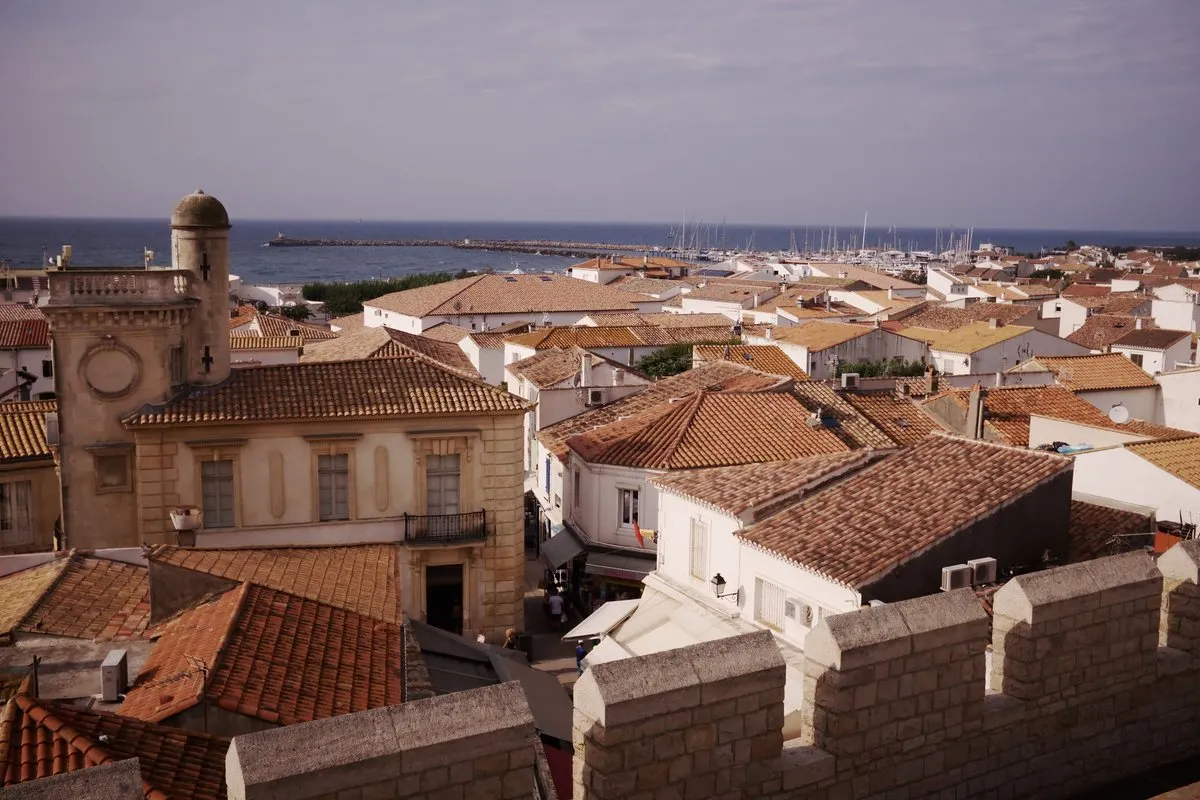
At the edge of the Rhône delta, a Romanesque church built as a fortress still rises over a town of narrow lanes. Twice a year pilgrims come for the Marys of the legend; every 24 May thousands come for Sara. And in June 1888 Van Gogh came for the boats on the beach.
In this story · 4 sections
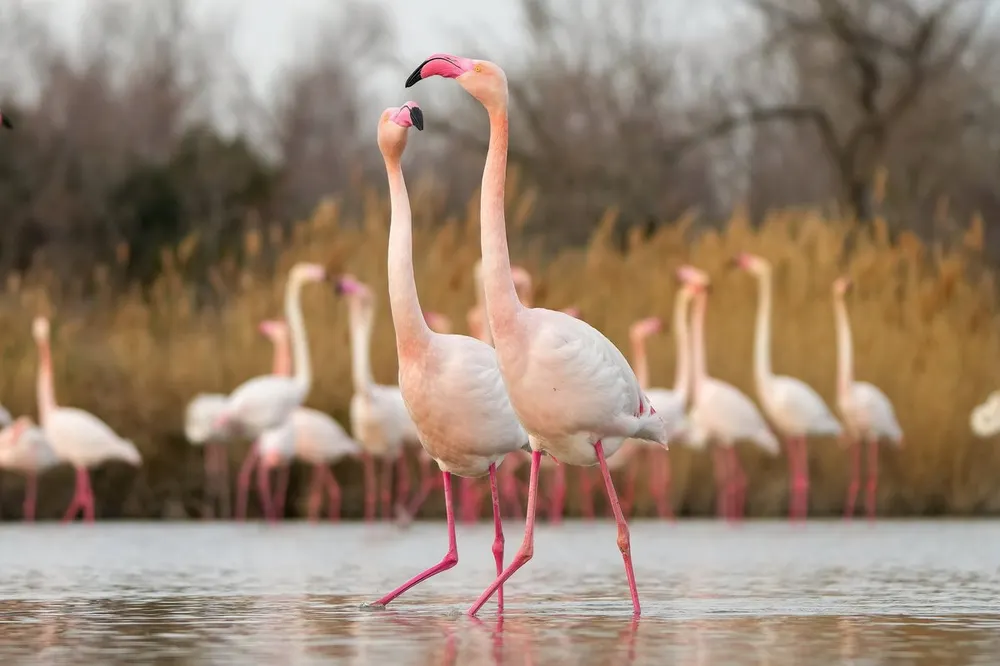
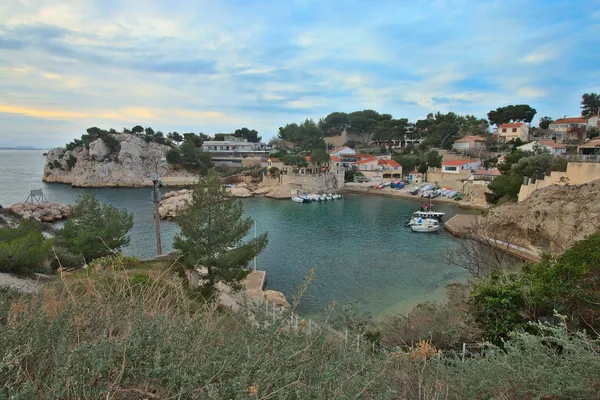
Saintes-Maries-de-la-Mer – Les Saintes to locals – is the capital of the Camargue, built on the Rhône delta about a kilometre east of the mouth of the Petit Rhône. Its commune is the second largest in metropolitan France after neighbouring Arles, 38 kilometres away, and takes in marshes, rice fields and the Étang de Vaccères lagoon, where a nature reserve protects flamingos and egrets. The town itself grew up around its church and was long enclosed by walls, which explains its narrow lanes. Our VERA PI guide to Saintes-Maries-de-la-Mer has the local property picture.
Église des Saintes-Maries-de-la-Mer
Church · Saintes-Maries-de-la-Mer
The keep-like church of the Marys, with a sentry walk and crenellated roof platform.
01A church built as a fortress
The church was built in the 11th and 12th centuries to protect the relics of the saints – and the townspeople – against raids from the sea. Its upper chapel forms a true keep, ringed at the base by a sentry walk and crowned by a crenellated platform; inside, a freshwater well allowed villagers to shelter through a siege. The battlements were pulled down during the Revolution and their stones sold, then restored in 1873, and the bell tower in its present form dates from 1901. The church can be seen from 10 kilometres away.
The town's name comes from a medieval tradition that, after the Resurrection, the Marys – among them Mary Jacobé and Mary Salome – escaped persecution by boat and landed on this shore. In 1448, encouraged by King René, relics attributed to them were discovered in the church. The village took its present name in 1838.
02The pilgrimages
Two pilgrimages honour the saints: on 24–25 May and at the end of October. The May pilgrimage is also the great gathering for Sara, the black saint revered by travelling communities. Each 24 May more than 10,000 Roma, Manouche, Gitan, Sinti and Yenish travellers arrive from across Europe to venerate Sara la Kali and to have their children baptised. The guitarist Manitas de Plata always came for it.
03Van Gogh's week
In June 1888, newly arrived in Provence, Vincent van Gogh made a short stay here, from 10 to 16 June. He painted three pictures and made eleven drawings: boats at sea and drawn up on the beach, the village seen from the dunes and the reed-roofed cabins of the marsh. The narrow-gauge “petit train” to Arles followed in 1892 and ran until 1953.
04Horses, bulls and gardians
The Camargue's white horses and its cattle are raised by manadiers and herded by mounted gardians. In 1899 the Marquis Folco de Baroncelli settled near the town to restore the purity of both breeds, helped to codify the bloodless course camarguaise and in 1909 founded the Nacioun gardiano to defend the traditions; he is buried near the mouth of the Petit Rhône. The arena, built in the early 1930s, stages the course camarguaise. Around 14 July the town holds a three-day Feria du Cheval, and on 11 November the Festival d'Abrivado brings more than 200 gardians and 1,000 horses onto beaches opened to riders for the day.
West of town, about thirty reed-thatched cabanes de gardian stand in a row facing the sea, a zone created in the 1950s for traditional building. For Arles and the rest of the delta, see VERA PI's Arles guide, our destination guides and Metro Mode Travel.