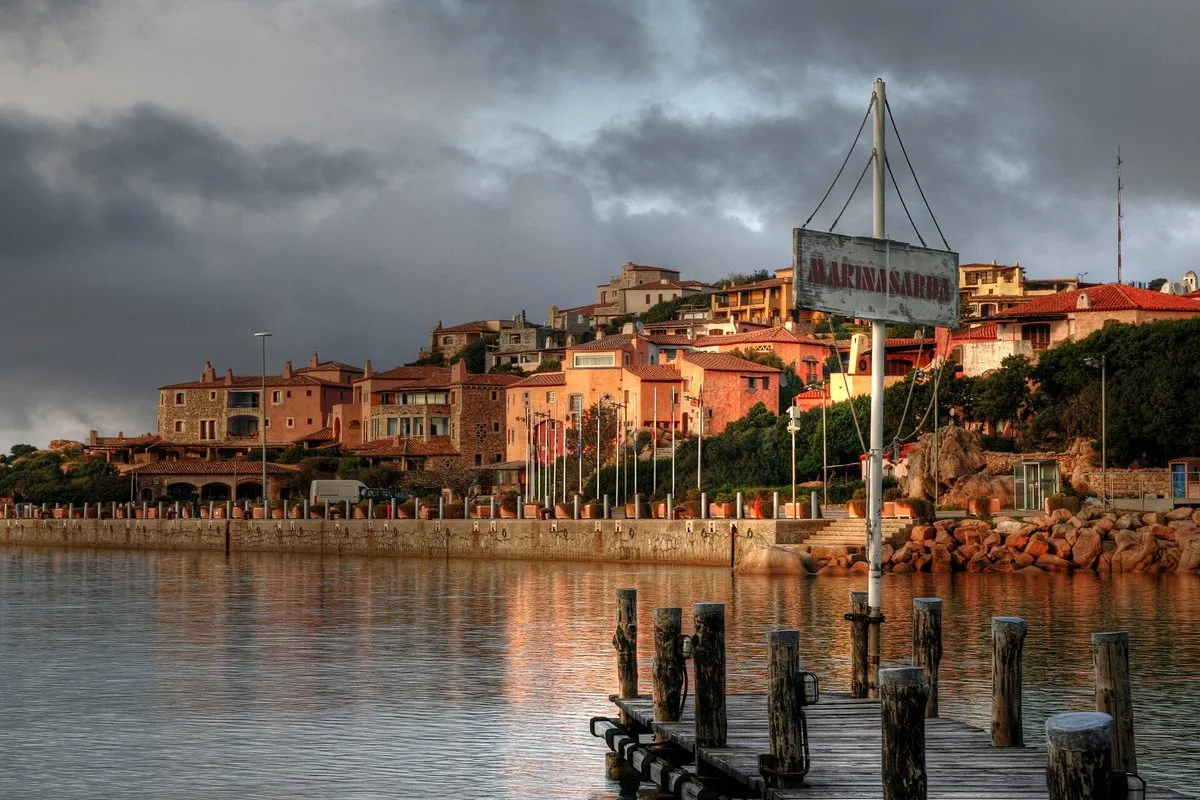
Sixty years ago, Monti di Mola in northern Sardinia was almost uninhabited. Then came Karim Aga Khan, a consortium and three architects, and the Costa Smeralda became one of Europe's most expensive coastlines. This is how it fits together – from Porto Cervo to the Maddalena Islands.
In this story · 7 sections
Costa Smeralda, the Emerald Coast, is a coastal area in northern Sardinia, in the municipality of Arzachena in Gallura. The name was originally given to only a short stretch. The area was called Monti di Mola and was largely uninhabited – until 14 March 1962, when Consorzio Costa Smeralda was formed on the initiative of Prince Karim Aga Khan IV, Imam of the Ismailis, together with Paolo Riccardi and the lawyer André Ardoin, who owned the land.
What sets Costa Smeralda apart from other seaside resorts is that it was built according to a detailed plan, with its own rules for architecture and landscape. The result was one of Europe's most expensive coastlines, with white sandy beaches, golf courses, private jets and helicopter traffic. But the area also has an older history – and just offshore lies one of the Mediterranean's most protected archipelagos.
5 places
© OpenStreetMap contributors · OpenFreeMap
- 01Porto CervoHarbour town · Arzachena
- 02Cala di VolpeBay and hotel · Capriccioli
- 03Spiaggia del PrincipeBeach · Romazzino
- 04CapreraIsland and national park · La Maddalena
- 05Budelli and Spiaggia RosaIsland and beach · La Maddalena
- 1854–1882
- Garibaldi lives on Caprera
- 14 March 1962
- Consorzio Costa Smeralda is formed
- 1966
- Stella Maris church in Porto Cervo
- 1967
- Yacht Club Costa Smeralda is founded
- 1977
- Cala di Volpe in The Spy Who Loved Me
- 1983
- Azzurra third in the America's Cup
- 2012
- New owner for the consortium
The architects who created a style
The consortium hired three architects for the first buildings: Jacques Couëlle, Michele Busiri Vici and Luigi Vietti. Later came, among others, Couëlle's son Savin, Antonio Simon Mossa and Raymond Martin. Their buildings became stylistic models for later construction in Sardinia and elsewhere in the Mediterranean.
Couëlle designed Hotel Cala di Volpe, Vietti designed Hotel Cervo and Hotel Pitrizza among others, and Busiri Vici designed Hotel Romazzino and the church of Stella Maris. The Aga Khan himself chose the villa Le Cerbiatte near Romazzino, designed by Vietti, as his residence.
Porto Cervo: the heart of the coast
Porto Cervo, Deer Harbour, is the main town of Costa Smeralda, with only around 400 permanent residents. It lies 17 kilometres from Arzachena and 28 kilometres from Olbia. The village is situated on the southern and eastern shores of the natural harbour, with shops, bars and restaurants, while on the other shores lie the two harbours: Porto Vecchio, built as a fishing harbour in the 1960s, and the modern marina with around 700 berths, 100 of which are for superyachts. At the end of the new marina there is a shipyard for large luxury yachts.
Above the village stands Stella Maris, the church that Michele Busiri Vici designed in 1966.
A home port for sailing
In 1967 the Aga Khan founded the Yacht Club Costa Smeralda, whose clubhouse is located at the new marina, and he was its chairman for several decades. The club challenged for the America's Cup in 1983 with Azzurra and came third, hosted the 12-Metre World Championship in 1984, and challenged again in 1987 with Azzurra '87 off Fremantle. Every September the Sardinia Cup is sailed off the coast, and between April and October polo is played at Gershan near Arzachena.
The hotels and the beaches
The three classic hotels – Cala di Volpe, Pitrizza and Romazzino – have long been counted among the world's most expensive. Cala di Volpe appears in the James Bond film The Spy Who Loved Me from 1977. Between them lie the beaches in small coves, and one of them, Spiaggia del Principe, has been named after the Aga Khan. Outside the consortium's area, but often counted as part of the Emerald Coast, lie Baja Sardinia, Poltu Quatu, Cannigione and Porto Rotondo.
The area is also ancient. Near Arzachena lies the Li Muri necropolis, one of the archaeological sites that shows that Gallura was inhabited long before Costa Smeralda got its name.
The Maddalena Islands and Caprera
North of the coast, in the Strait of Bonifacio between Sardinia and Corsica, lie the Maddalena Islands: seven larger islands and many small ones, today the national park Parco Nazionale Arcipelago di La Maddalena. Only La Maddalena, Caprera and Santo Stefano are inhabited. Car ferries run frequently from Palau, 32 kilometres from Porto Cervo, and roads exist only on La Maddalena and Caprera.
Caprera, connected to La Maddalena by a 600-metre-long causeway, is the archipelago's second-largest island, at 15.7 square kilometres. Giuseppe Garibaldi, one of the fathers of united Italy, withdrew here in 1854, and he lived here until his death in 1882. On the island of Budelli lies Spiaggia Rosa, the pink beach, coloured by fragments of corals and single-celled organisms. It appears in Michelangelo Antonioni's Red Desert from 1964. Since the 1990s, visitors have not been allowed to walk on the beach or swim there, but boat trips and a path behind the beach are permitted.
More to read
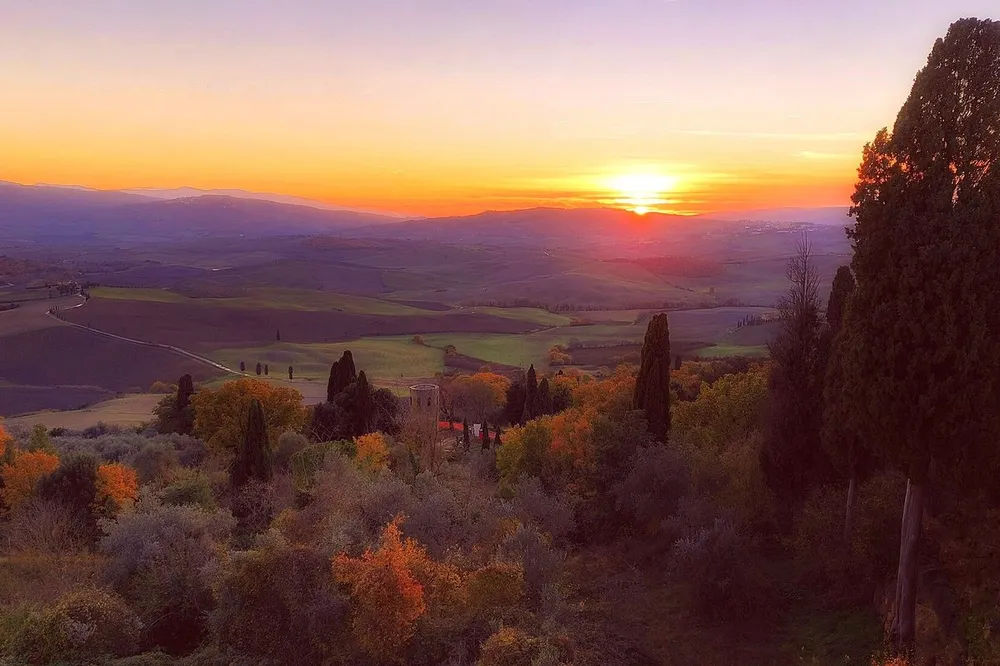
More of Italy: Tuscany's great estates, 48 hours in Bellagio and a perfect day in Sanremo. All our city guides and destinations can be found at metromode.co.
Places
Porto Cervo
Costa Smeralda's main town with Porto Vecchio, the modern marina and the church of Stella Maris.
Insider tip28 kilometres from Olbia
Cala di Volpe
Jacques Couëlle's hotel from the consortium's early years, known from The Spy Who Loved Me.
Caprera
Garibaldi's island 1854–1882, connected to La Maddalena by a causeway.
Insider tipFerry from Palau to La Maddalena
Budelli and Spiaggia Rosa
The pink beach from Antonioni's Red Desert.
Insider tipSeen from a boat or the path behind the beach – swimming is prohibited