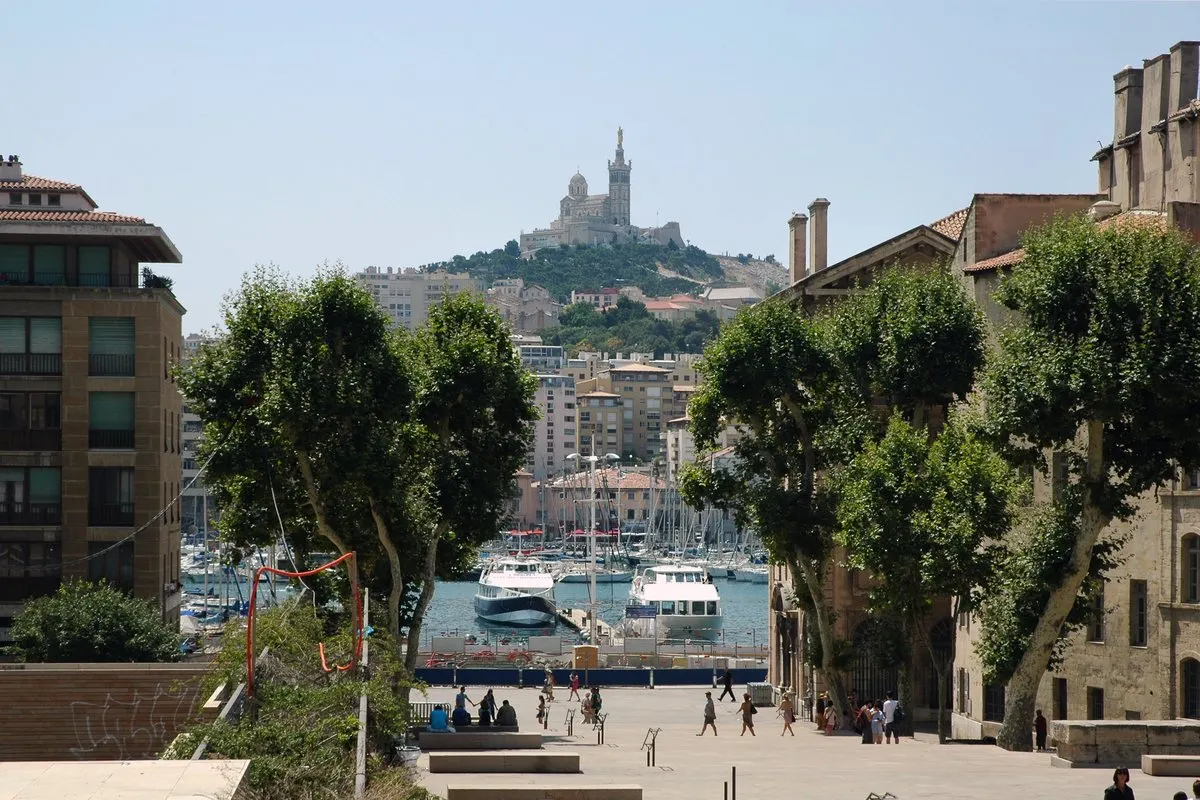
Greek sailors landed in this cove around 600 BC; a gilded Virgin has watched over it from the city's highest rock since the 1860s. A morning's walk from the quays to the Bonne Mère covers 2,600 years of Marseille.
In this story · 3 sections
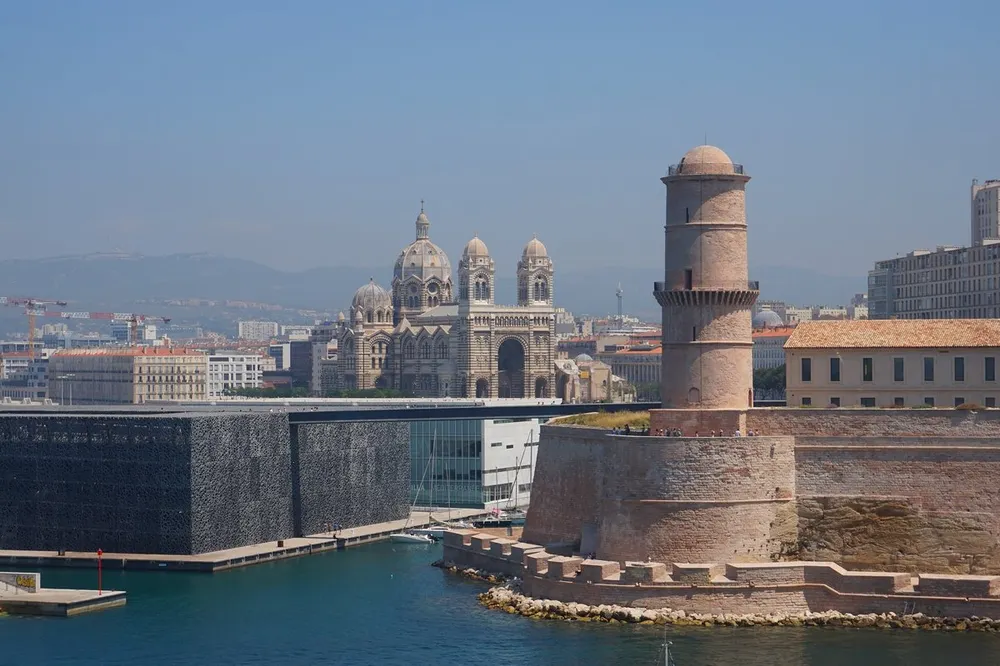
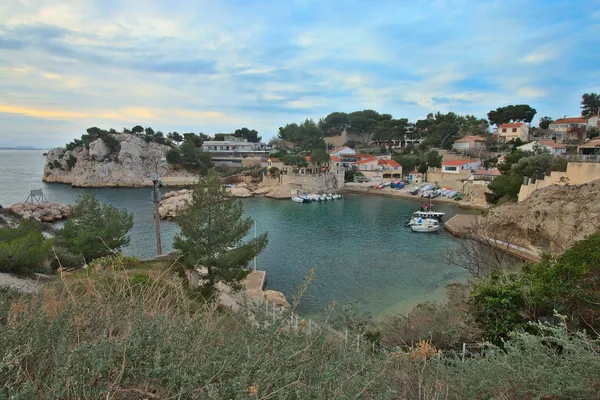
The Vieux-Port has been Marseille's natural harbour since antiquity. Around 600 BC Greek settlers from Phocaea sailed into a rocky cove they called the Lacydon and founded a trading post on the hills to the north. Today the basin is a marina at the foot of the Canebière, framed by the 1st, 2nd and 7th arrondissements, and the city's favourite meeting place. High above its southern side, on the highest natural point in Marseille, stands Notre-Dame de la Garde. For property in the area, see VERA PI's guide to the 7th arrondissement.
2 places
The Vieux-Port
The street name Canebière comes from the hemp grown at the end of the port in the Middle Ages for ships' rope. Louis XIV guarded the harbour mouth with the forts of Saint-Jean and Saint-Nicolas, and kept his galley fleet here; convicts sent to the galleys were branded with the letters GAL. In January 1943 the occupying Germans, with the help of the French police, dynamited much of the old quarter and destroyed the great transporter bridge.
For the European Capital of Culture year in 2013, a team led by Norman Foster with the landscape architect Michel Desvigne remade the quays. Car lanes were halved, the pedestrian space was greatly extended, and the Ombrière – a vast reflective steel canopy – became a central meeting place for gatherings and events. On the south side, the fish hall of 1909 is now the Théâtre de la Criée. This is also Marcel Pagnol country: his Marseille trilogy of César, Marius and Fanny is set around the Bar de la Marine.
Up to the Bonne Mère
Notre-Dame de la Garde – la Bonne Mère, the Good Mother, to the Marseillais – is the city's best-known symbol and its most visited site. Its story begins in 1214, when a priest named Pierre received permission from the Abbey of Saint-Victor to build a chapel on the hill of La Garde. In 1536 Francis I built a fort on the summit to resist the siege of Charles V; it is the only known example of a military fort sharing its space with a sanctuary open to the public, and its royal spur, west of the basilica, now carries a viewing table.
The present basilica was begun in 1853 to designs by Henri-Jacques Espérandieu and consecrated, still unfinished, on 5 June 1864. Below lies a Romanesque crypt cut into the rock; above, a Neo-Byzantine upper church decorated with mosaics, restored between 2001 and 2008 with tiles from the Venetian workshop that made the originals. A 41-metre bell tower and a 12.5-metre belfry carry the monumental statue of the Virgin and Child: 11.2 metres of copper gilded with gold leaf. Since the late 16th century sailors who survived shipwrecks have brought ex-votos here, and a museum opened in 2013 tells eight centuries of the sanctuary's history through them.
From the terrace the whole basin of Marseille opens out to the west and the sea, ringed by the Estaque and Étoile hills, the Garlaban and Marseilleveyre; on very clear days you can see Mont Ventoux.
Making the walk
Start on the Quai des Belges, the transport hub at the head of the port with its metro station, buses and ferry. Follow the south side of the port towards the Abbey of Saint-Victor, then climb through the Roucas-Blanc and Vauban districts to the summit. The climb is steep: wear good shoes and bring water in summer. For more of the city, see VERA PI's Marseille guide, our destination guides and Metro Mode Travel.
Basilique Notre-Dame de la Garde
The Bonne Mère, 1864
Neo-Byzantine basilica with a gilded 11.2-metre Virgin and panoramic terrace.
Ombrière du Vieux-Port
Norman Foster, 2013
The reflective canopy on the quays of the Old Port.