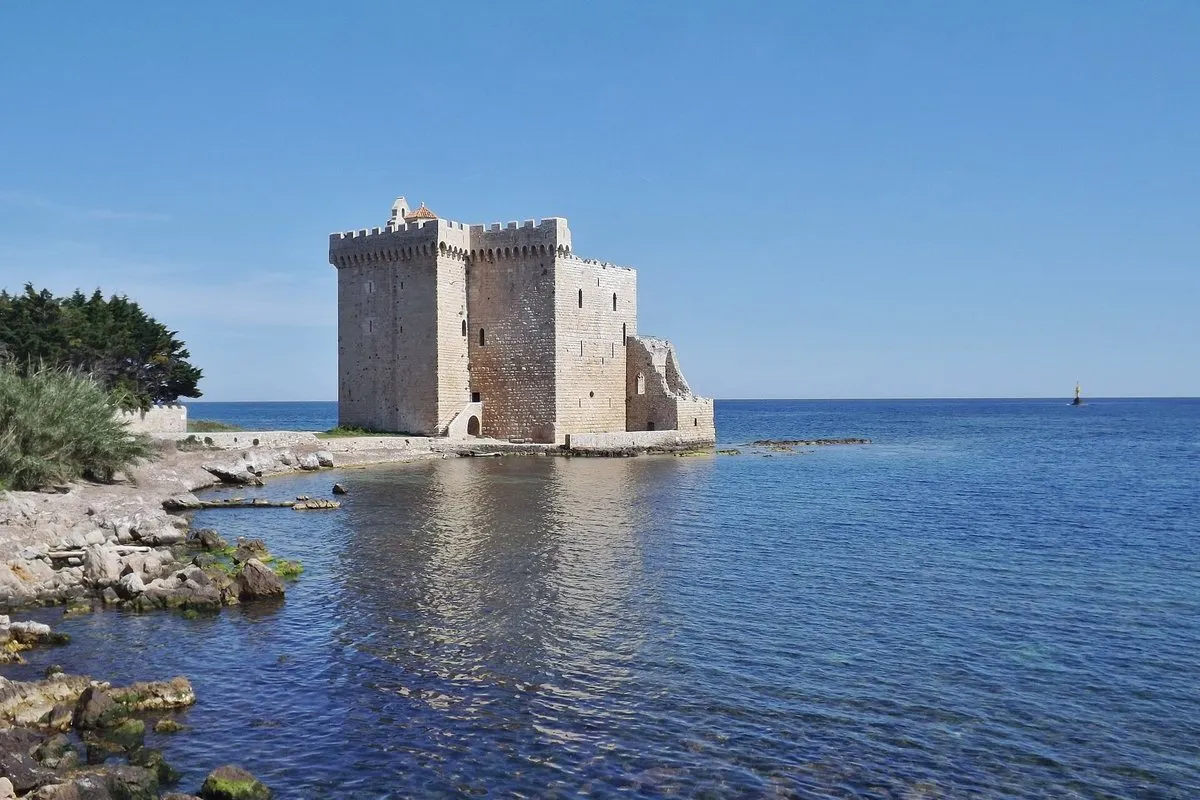
A quarter of an hour's boat ride from Cannes lie two islands where monks have lived since the year 410, and where the Man in the Iron Mask was imprisoned for eleven years. A day on the Lérins Islands – with pine forest, monastery wine and the fortress on Sainte-Marguerite.
In this story · 6 sections
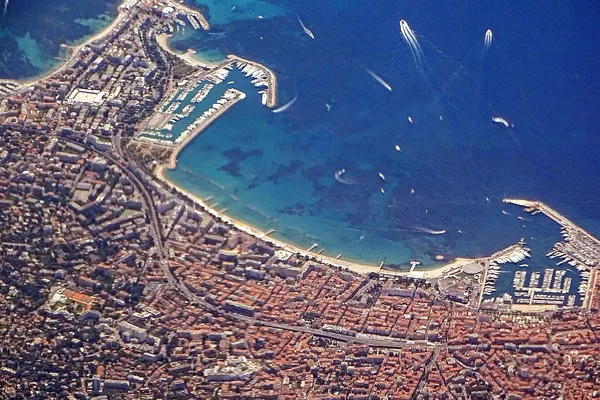
From La Croisette in Cannes, you can see them as two dark green rows in the bay. The Lérins Islands number five, but only the two largest are inhabited: Île Sainte-Marguerite, with pine forest and a fortress, and Île Saint-Honorat, where monks grow wine. Administratively, the islands belong to Cannes, and the boat to Sainte-Marguerite takes about a quarter of an hour from the harbour.
2 places
© OpenStreetMap contributors · OpenFreeMap
Île Sainte-Marguerite – the island with pine trees and eucalyptus
Sainte-Marguerite is the largest of the islands, approximately 3.2 kilometres long and 950 metres wide, and only 700 metres from the headland of Palm Beach on the mainland. The island is low-lying and covered with pine and eucalyptus trees, and is managed, like Saint-Honorat, by the French forestry authority, the Office national des forêts. Among the things to see are the eucalyptus avenue, the Batéguier pond with migratory birds, and the flora at Pointe de la Convention.
The island was inhabited as early as Roman times, when it was called Lero. It got its current name from the martyr Saint Margaret of Antioch. In 1635, the island was conquered by the Spanish, who built a system to collect rainwater for the 800 soldiers stationed here. Two years later, the French took it back.
Fort Royal and the Man in the Iron Mask
On the northern side of the island, on a cliff opposite Pointe Croisette, lies Fort Royal. The fortress was built in 1624–1627, extended by the Spanish and then reinforced by the French. At the end of the 17th century, Vauban inspected it personally and gave instructions that gave the fortress its current form.
From 1685 it was used primarily as a state prison. In 1687 the governor Saint-Mars had a prison building with cells constructed within the walls on the orders of Louis XIV. Here the mysterious Man in the Iron Mask was held for eleven years, from 1687 to 1698, out of his 34 years in prison altogether. After the Edict of Nantes was revoked in 1685, Protestant pastors were also imprisoned here for life. A memorial room for six of them was established in one of the cells in 1950.
In the 19th century, the fortress held prisoners from Algeria, among others. From 1843 to 1856, it served as a prison for political prisoners and prisoners of war from the French conquest of Algeria, including prisoners taken at the Smala in 1843. In 1859, 600 Austrian prisoners of war were held here.
Musée du Masque de fer et du Fort Royal
Today the fortress houses the Musée du Masque de fer et du Fort Royal, which until 2020 was called the Musée de la Mer. Visitors can see the cell where the Man in the Iron Mask was held, several other cells and the Roman cisterns. On the upper floor, items from Roman and Saracen shipwrecks and Roman frescoes are displayed, and in summer, temporary exhibitions are held on the terrace facing the sea.
Île Saint-Honorat – monks since 410 AD
Saint-Honorat is smaller, about 1.5 kilometres long and 400 metres wide. Around the year 410, Saint Honoratus founded a monastery on the uninhabited island, and according to tradition Ireland's patron saint, Saint Patrick, studied here in the 5th century. At the height of its power, the monastery owned Cannes, Mougins and Vallauris. Around 732, Abbot Porcarius and many of the monks died in a raid, and between the 11th and 14th centuries a fortified monastery was built by the water to defend the island.
The monastery was closed in 1787, and during the Revolution the island was sold to the actress Mademoiselle de Sainval, who lived here for twenty years. In 1859 the Bishop of Fréjus bought the island, and ten years later the Cistercian community that remains today was founded. Around 30 monks live here.
Monastery wine, Lérina and silence
The monks divide their time between prayer and work. They make red and white wine, honey, lavender oil and the herbal liqueur Lérina, and the monastery shop sells wine and olive oil from the island. The monastery church and the fortified medieval monastery are open to visitors, as are several old chapels around the island. The modern monastery is closed to the public but welcomes guests for retreats. The annual harvest festival in early September is one of the highlights of the year.
How to get there
A commercial ferry line runs between Vieux-Port in Cannes and the islands every day, all year round. To Saint-Honorat, it is the monks themselves who run the boats, departing from the Albert-Édouard quay. In summer, many boats anchor in the sheltered strait between the islands. Before or after, walk La Croisette or climb to Le Suquet. More destinations can be found among our Riviera guides at metromode.co, and La Croisette can also be found in VERA PI's guide to Cannes.
Fort Royal, Île Sainte-Marguerite
The Man in the Iron Mask's prison
17th-century fortress with the Musée du Masque de fer et du Fort Royal.
Abbaye de Lérins
Cistercian monastery on Saint-Honorat
Monks since around the year 410, monastery wine and Lérina.