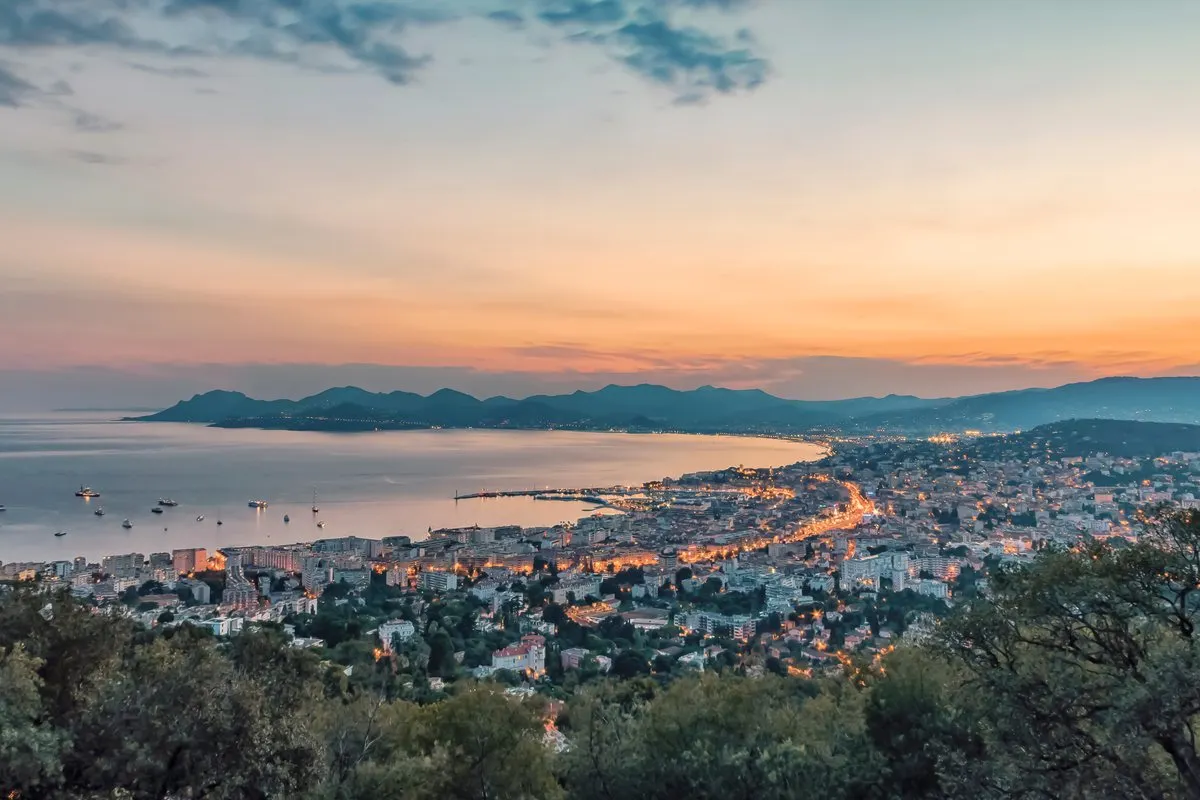
La Croisette is Cannes's seafront promenade, around two kilometres long, with the world's most photographed red carpet at one end. But the street is older than the film festival – it began with a British lord who stopped in a fishing village in the 1830s. A walk along the Croisette, with the facts.
In this story · 5 sections
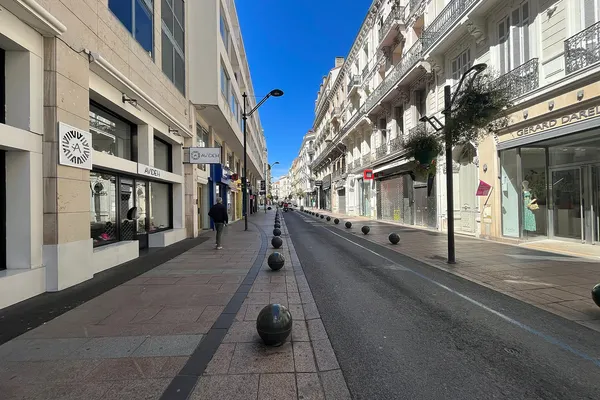
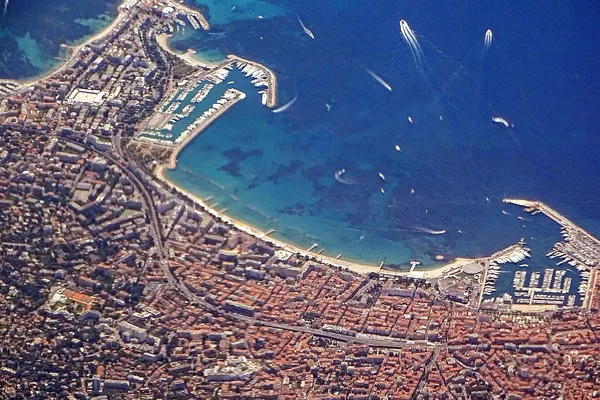
La Croisette – Promenade or Boulevard de la Croisette – runs along the Mediterranean shore in Cannes for around two kilometres, all the way along the town's seafront. On the land side are expensive shops, restaurants and the hotels Carlton, Majestic, JW Marriott and Martinez; on the sea side, palm trees, private beaches and views towards the Lérins Islands. The street is included in France's general heritage inventory. Cannes plays host to the film festival, the advertising festival Cannes Lions and the property fair MIPIM – and they all go to the same building at the western end of the Croisette.
01Lord Brougham and the fishing village
Around 1838, the British politician Henry Brougham, 1st Baron Brougham and Vaux, bought land at Croix des Gardes, when Cannes was little more than a fishing village, and built Villa Eleonore-Louise. His efforts to improve living conditions attracted the English aristocracy, who built their own winter residences. By the end of the 1860s, casinos, villas, hotels, roads and a railway had arrived, and travel time from Paris was shortened to 23 hours. The town hall was completed in 1876.
02Palais des Festivals – the steps
Begin at the western end of the Croisette, east of the harbour, at the Palais des Festivals et des Congrès. The first festival palace was built in 1949 for the film festival, further along the Croisette where the JW Marriott stands today; it also hosted the Eurovision Song Contest in 1959 and 1961. As the festival and the first major trade fairs grew, the town decided in 1979 to build anew. Today's six-storey building in modernist style, designed by Sir Hubert Bennett and François Druet, was built on the site of the municipal casino and opened in December 1982. It was extended in 1999 and now has 35,000 square metres of floor space and eighteen halls, the largest seating 2,300 people.
03Majestic and Carlton – Belle Époque by the water
Walk eastward along the palms. Past the Majestic Barrière you reach the Carlton at 58 La Croisette, built in 1909–1910 by the Swiss hotelier Henry Ruhl to designs by Charles Dalmas and Marcellin Mayère and opened on 30 January 1911. The success was such that the neighbouring hotel was demolished for a new wing as early as 1912–1913, which doubled the size of the hotel. The two domes on the sea corners are said, according to legend, to have been shaped after the courtesan La Belle Otero. After a lengthy renovation, the hotel reopened in March 2023 under the name Carlton Cannes, a Regent Hotel.
04Martinez – Art Deco in the east
Further east lies Hôtel Martinez, the Croisette's Art Deco hotel, overlooking the bay and the Lérins Islands. Emmanuel Michele Martinez, who had run hotels in London and Paris, bought Villa Marie-Thérèse in 1927 and opened the hotel on 20 February 1929. During the Second World War it was used by French, Italian and German troops, and after the war by the American air force. After a period as Grand Hyatt, it regained its original name in 2018.
05The Croisette through the year
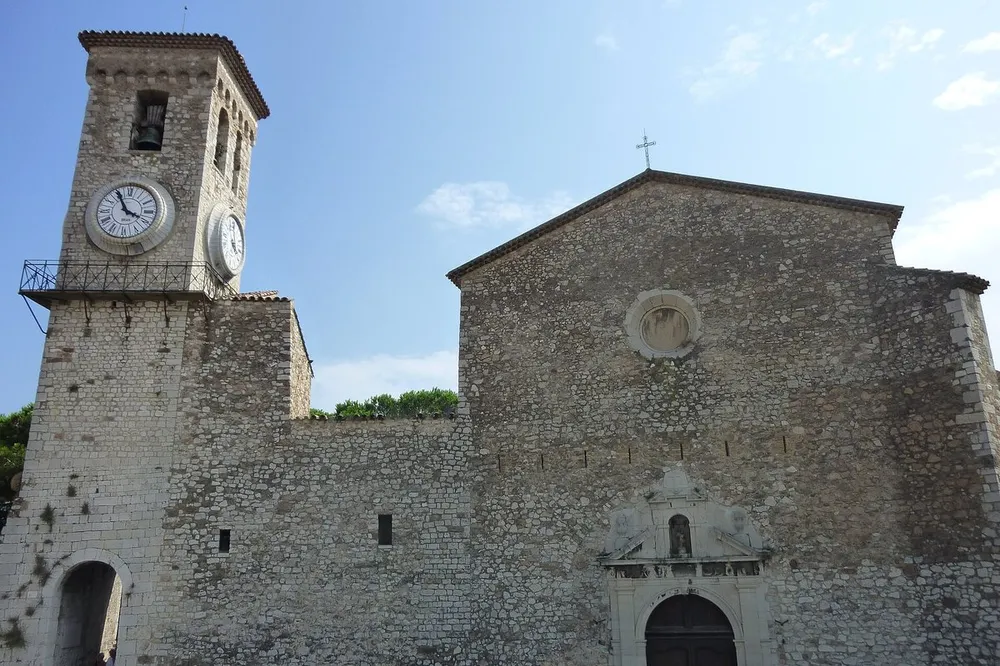
During the festival in May, the Croisette fills with photographers and crowds; the rest of the year, it's an ordinary seaside promenade in a town with a mild climate. That's when you can really see the buildings properly – the Belle Époque façades, the Art Deco details and the palm trees against the sea. From the western end of the Croisette, it's a few minutes' walk past the harbour to the old town, Le Suquet.
More destinations on the Riviera can be found among Metro Mode's destinations, in Metro Mode's Monaco guide and in our walk through Old Antibes. Property data for the coast can be found at VERA PI.