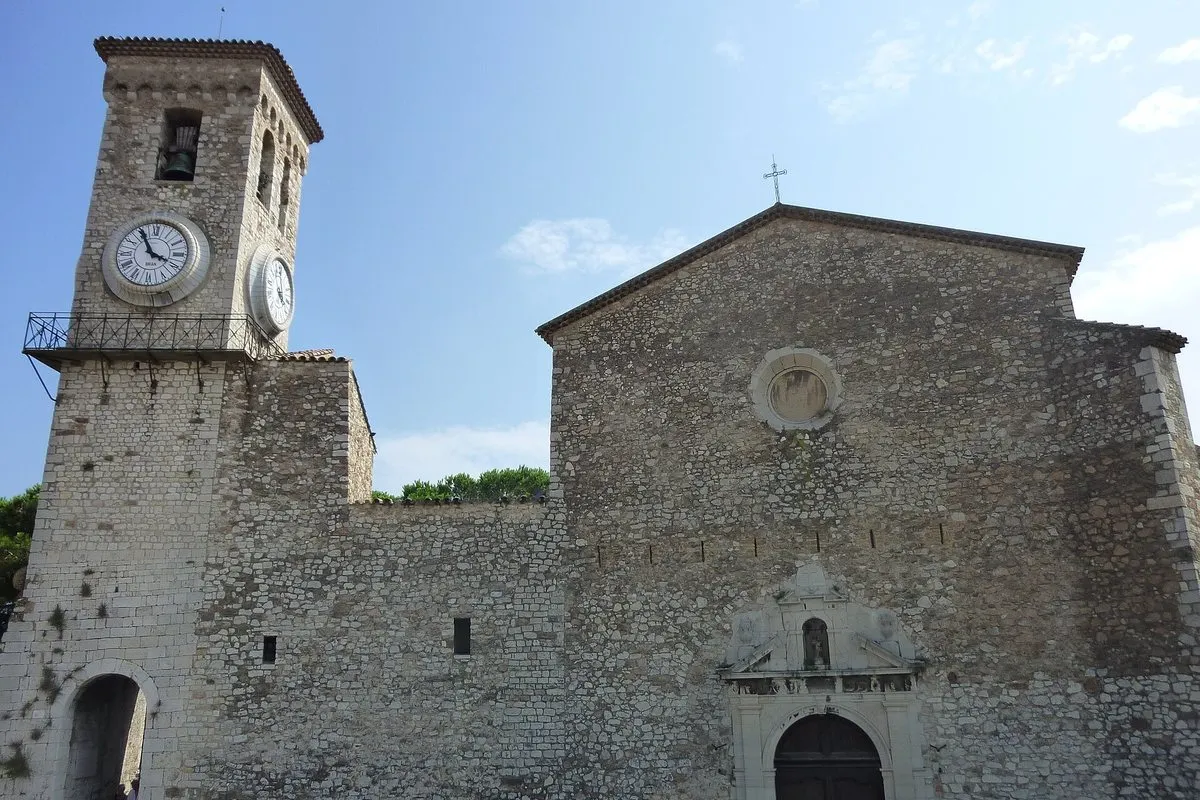
Before the film festival, the Croisette and the palace hotels, there was Le Suquet: the hill where Cannes began, with the fishermen's houses, the monks' fortress and a bell tower overlooking the bay. A walk up through the old town of Cannes – from the market hall at the foot of the hill to the museum at the top.
In this story · 5 sections
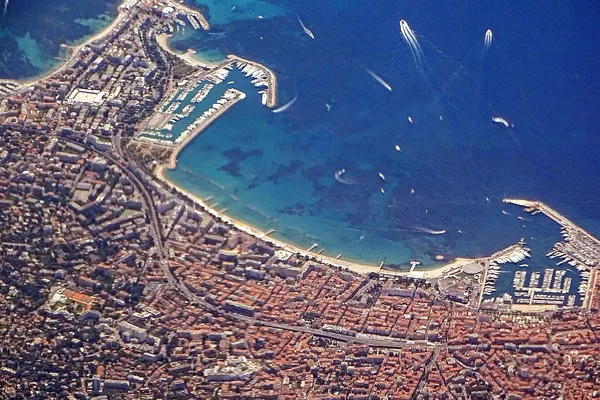
Le Suquet is the old town of Cannes, a hill west of the harbour where the town once began. As early as the 3rd century BC, the Ligurian Oxybii tribe had a settlement here, Aegitna, and in the 10th century the place was called Canua – perhaps after canna, reed. Roman graves have been found on the hill. When the Saracens attacked the coast in 891 and the Lérins Islands became unsafe, the monks from the monastery there moved to the mainland, up on to the Suquet, and in 1035 the town was fortified with a castle. Around 1530, Cannes freed itself from the monks' rule.
The quarter belonged to the fishermen, and the houses are old; the streets were laid out at least 400 years ago. Today, large parts are car-free, and it takes five minutes to walk here from the beach – but the feeling is of a different town from the one on the Croisette.
01Marché Forville – the market hall at the foot of the hill
Start at the foot of the hill, on Rue du Marché-Forville, where the market is held in the mornings and early afternoons. Today's market hall was designed by the architect Henri Bret following an architectural competition in 1929 and replaced a wooden hall from 1884; construction took three years and the hall was inaugurated in 1932. It is built of reinforced concrete but has façades with Provençal features – balconies, false dovecotes, pergolas and ochre-coloured render – and a bright, white-painted hall inside. There are around fifty traders here, and the building holds the French distinction Patrimoine du XXe siècle.
02Rue Saint-Antoine and Rue du Suquet
From Forville, Rue Saint-Antoine climbs up the hill, a winding cobbled street lined with restaurants – the street most visitors associate with Le Suquet. Running parallel is Rue du Suquet, which was the original entrance to Cannes and was laid out below the castle walls for defensive reasons. Both are pedestrian streets today. Take your time: the view between the houses opens onto the harbour and the bay when you least expect it.
03Notre-Dame-de-l'Espérance and the bell tower
At the very top, facing east with a view over the bay and the town, stands the church of Notre-Dame-de-l'Espérance and its bell tower, the neighbourhood's landmark. The tower, the Sainte-Anne chapel and the church are together protected as a historic monument. The square in front, Place de la Castre, is Cannes's finest vantage point over the harbour, the Croisette and, to the west, the Estérel hills.
04The museum in the monks' castle
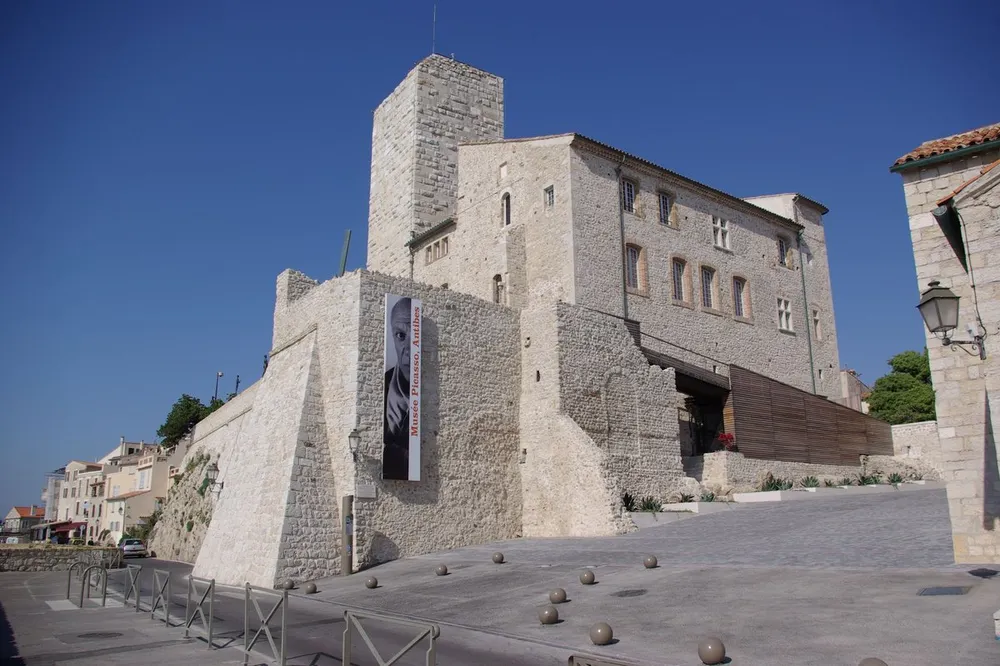
Next to the church lies the Musée des Explorations du monde, formerly the Musée de la Castre, in the remains of the medieval castle that the monks from Lérins built on the hill. The castle was built as a monastery with a square layout, surrounded by defensive walls, with a residential building, a chapel and a square lookout tower in the middle of the courtyard. It was damaged early on and partly demolished; during the Revolution it was sold as national property, was a residence and then a ceramics workshop before the town bought the buildings in 1919 for its museum.
The museum holds the status of Musée de France and displays the town's collections: art and objects from the Himalayas and Tibet, the Arctic, pre-Columbian America and Oceania, Mediterranean antiquities, and Provençal landscape painting from the 19th century. A garden with pine trees leads to the entrance, and the tower in the courtyard offers the highest view in the old town.
05Out to the Lérins Islands
From the Suquet, you can see the Lérins Islands in the bay, where the town’s history began. On Île Saint-Honorat, Saint Honoratus founded a monastery around the year 410, and Cistercian monks still live on the island, praying and making wine, honey, lavender oil and the liqueur Lérina. They also run the only boats there, from the Albert-Édouard quay. On Île Sainte-Marguerite, about a quarter of an hour’s boat ride from the harbour, you can see the cell where the Man in the Iron Mask was imprisoned, in the fort that is now the Musée de la Mer.
More destinations on the Riviera can be found among Metro Mode's destinations and in Metro Mode's Monaco guide. Also read our walk through Old Antibes and find property data for the coast at VERA PI.