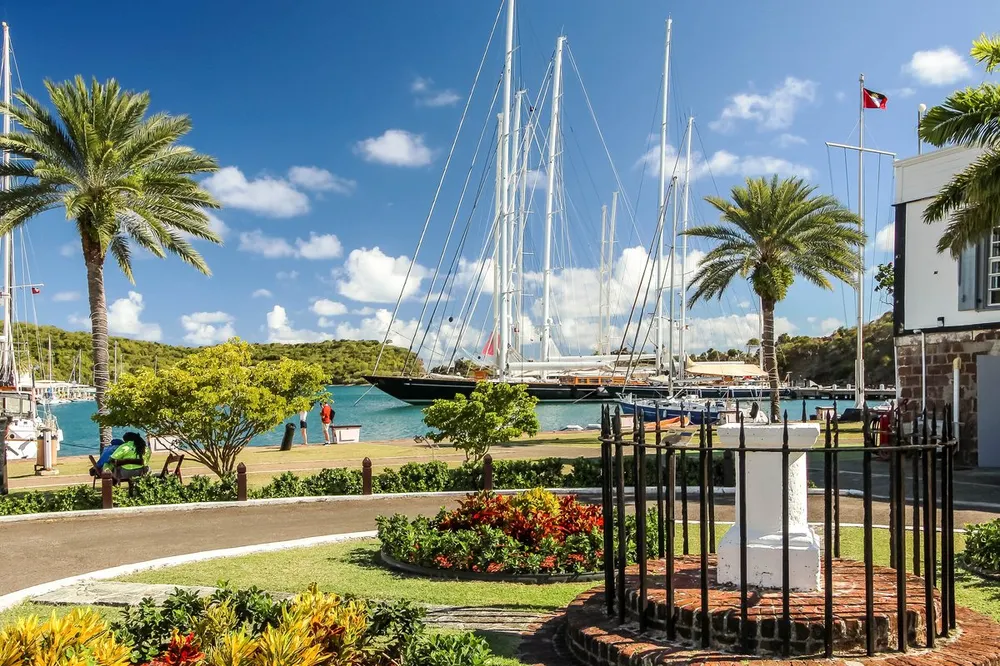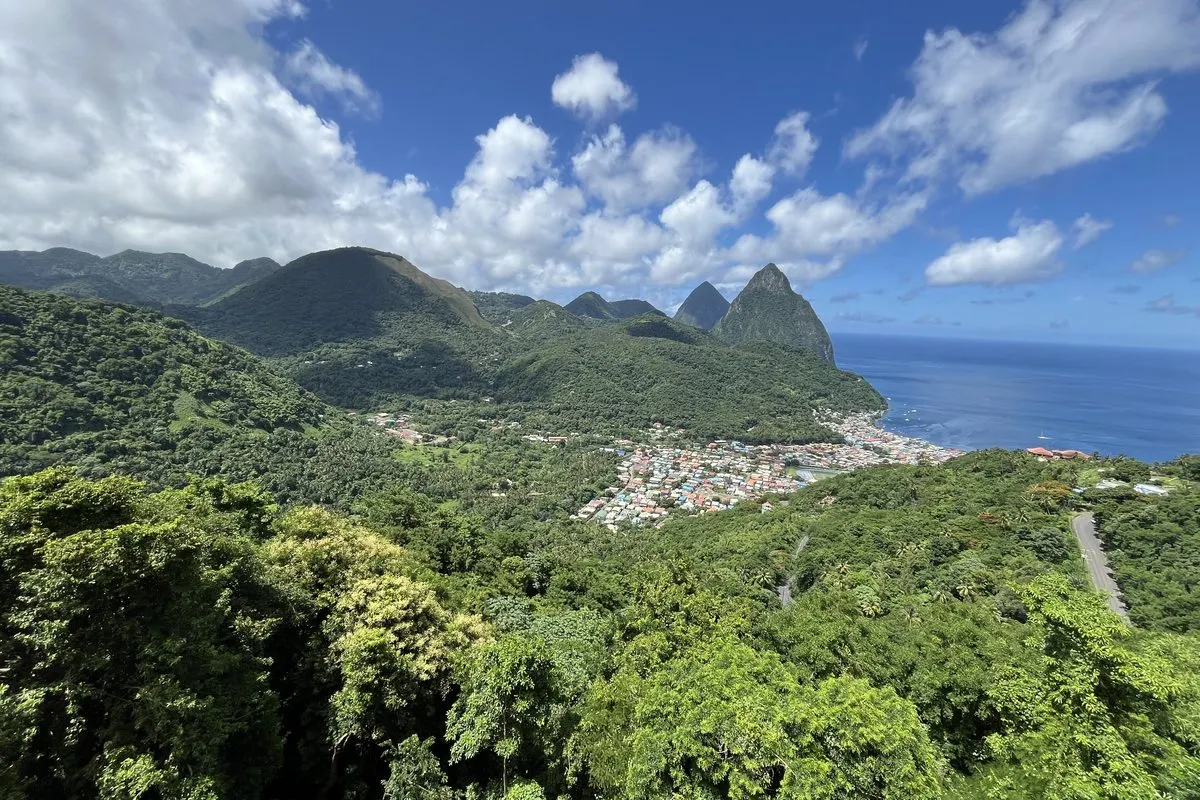
Two volcanic spires rise from the sea on St Lucia's south-west coast, and the old French capital sits inside a dormant caldera beside them. Three days around Soufrière: a mountain to climb, a volcano to drive into and estates where cacao is still processed.
In this story · 5 sections
Saint Lucia is an island nation in the Windward Islands, south of Martinique and north of Saint Vincent, with some 184,000 inhabitants and its capital at Castries. It is named after Saint Lucy of Syracuse; its Arawak name meant island of the iguanas. England and France fought fourteen times for it – so often that it was nicknamed the Helen of the West – before Britain took complete control in 1814. It has been independent since 22 February 1979.
Its most dramatic corner is the south-west coast around Soufrière, where the Pitons rise straight out of the sea. This plan gives it three days.
01Soufrière, the old French capital
Soufrière, a town of about 7,900 people with its district, was colonised by the French and was the island's first capital. French families built large estates here, and their descendants still live in the area. During the Revolution enslaved people were freed, only for Napoleon to reintroduce slavery; when the British invaded, the formerly enslaved and French deserters fought a guerrilla campaign until 1803. The future Empress Joséphine spent much of her childhood in the area, and when Queen Elizabeth II visited in 1966 she landed at Soufrière rather than Castries. Hurricanes, a great fire in 1955 and an earthquake in 1991 have all forced parts of the town to be rebuilt.
02Day one: Gros Piton
The Pitons are two volcanic plugs linked by the Piton Mitan ridge: Petit Piton, in the middle of Soufrière Bay, and Gros Piton, at the southern end of Pitons Bay and the island's second-highest peak after Mount Gimie. Together they form a World Heritage Site. Gros Piton is the one to climb: no ropes or mountaineering experience are needed, and you can reach the summit and return to sea level in several hours. Guides from the National Park, trained in first aid and in visitors' languages, are included in the entry fee, and tours are also run by the Soufrière Foundation, which helps protect the area.
Petit Piton, first climbed in 1878 by Abdome Deligny, is the harder ascent; from its summit you can see Dominica, Martinique, Barbados and Saint Vincent. In Arawak tradition the Pitons are a family: Gros Piton the father, Petit Piton the mother and the small spur on Petit Piton's flank their child. The slopes hold tropical forest and elfin woodland, at least 148 plant species on Gros Piton alone, and some 27 bird species, five of them endemic.
03Day two: the volcano and Diamond Falls
Soufrière sits inside the caldera of the dormant Qualibou volcano, and the area is geothermally active. At Sulphur Springs, marketed as a drive-through volcano, hot springs and fumaroles steam out of the ground. Nearby, the Soufrière Estate, also known as Diamond Estate, is an old colonial estate with a botanical garden, sulphur baths and Diamond Falls.
04Day three: cacao and rainforest
Spend the last day among the old estates. Fond Doux Estate is a working plantation where cacao is still processed; Rabot Estate is another of the historic properties around the town. In the hills, rainforest trails lead to viewpoints and waterfalls such as Enbas Saut, and the Volga Nature Trail brings you close to both Pitons with views over Sugar Beach. Anse Chastanet, north of town, has a beach and coastal trails.
05Planning
Start the Gros Piton climb early, before the heat, and bring plenty of water. For more Caribbean islands and city guides, see our destinations, the Metro Mode home page and our list of hotels worth a single night.