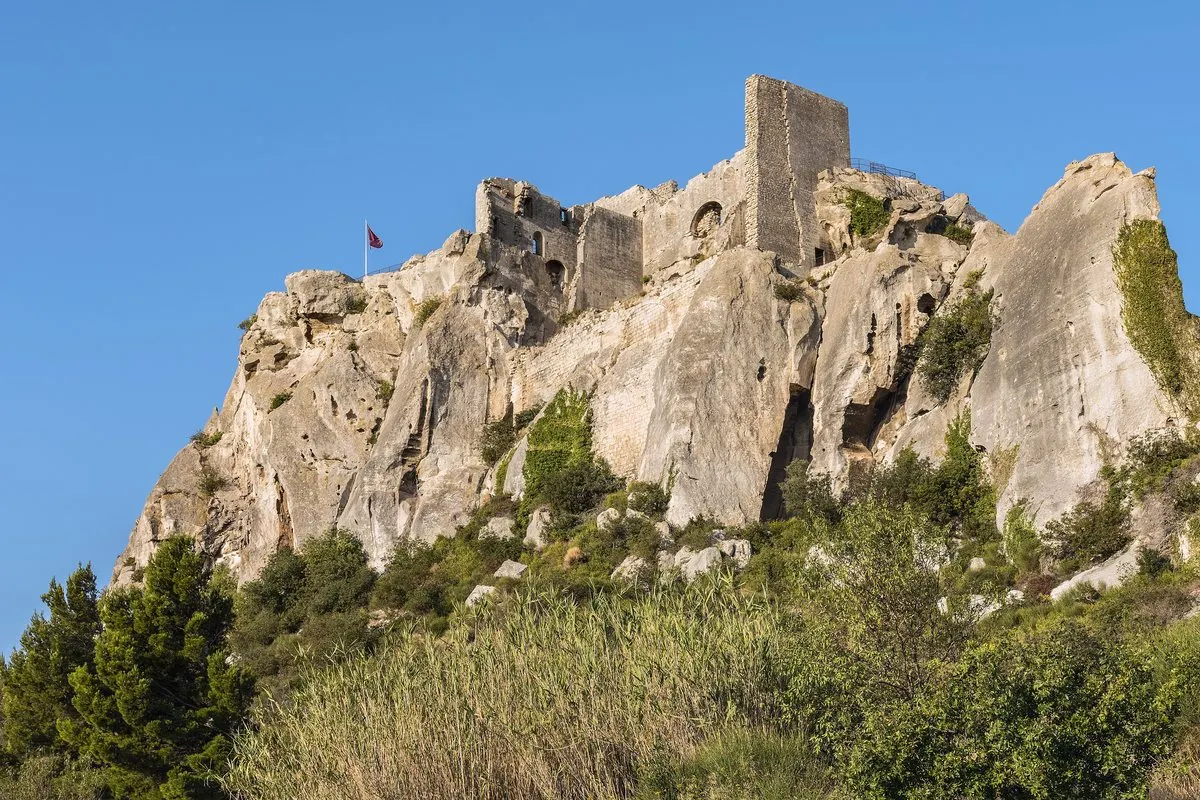
Les Baux has 264 inhabitants and 1.5 million visitors a year. The village on the cliff in Alpilles gave its name to an ore, lent its quarries to Jean Cocteau, and has one of France's three-starred restaurants at its foot.
In this story · 6 sections
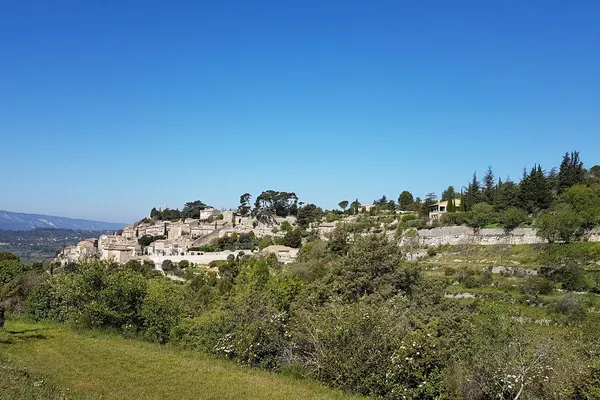
Les Baux-de-Provence sits on a limestone outcrop in the heart of the Alpilles, between Saint-Rémy and Arles in Bouches-du-Rhône. At the top of the outcrop, around the ruins of a medieval castle, only around twenty people live, and in the whole commune there are 264. Yet the village welcomes over 1.5 million visitors a year. It belongs to the association Les Plus Beaux Villages de France, and until 1958 it was simply called Les Baux.
It's a village that rewards those who arrive early or late, once the day-trippers have left. Here's what's worth seeing, where to eat and what VERA PI's figures say about the village. The full market can be found on VERA PI's page about Les Baux-de-Provence.
Les Baux in figures
- Inhabitants of the commune
- 264 (2023)
- Visitors per year
- Over 1.5 million
- Bauxite named
- 1821, Pierre Berthier
- Quarries closed
- 1935
- Carrières des Lumières
- Since 2012
01The castle and the cliff
The cliff has been inhabited since prehistoric times, and during the Middle Ages, the Lords of Baux were one of Provence's most powerful families. The castle was partly demolished in the 17th century: in 1631, the inhabitants negotiated with the king for the right to tear down the fortifications, which they described as a refuge for rebels. In 1642, Les Baux was granted as a marquisate to the princely Grimaldi family of Monaco.
Today you walk through the village's narrow streets up to the castle ruins at the top of the cliff. The view stretches across the olive groves and vineyards of the Alpilles and, on a clear day, all the way down to the Camargue and the sea.
02Bauxite
In 1821, geologist Pierre Berthier found an ore in the area that turned out to contain aluminium. It was named bauxite after the village, and today bauxite is the world's most important raw material for aluminium. Few places in the world have given their name to an ore used everywhere.
03Carrières des Lumières – art in the quarry
Just north of the village, in the valley of Val d'Enfer, lie the old limestone quarries where the stone for the castle and the village was once quarried. The quarries closed in 1935, when modern materials took over. In 1959, Jean Cocteau filmed scenes for his film Le Testament d'Orphée here, and in 1977 the journalist Albert Plécy created the Cathédrale d'Images, where large images were projected onto the smooth walls.
Since 2012, the site has been run by Culturespaces under the name Carrières des Lumières. Each year, new digital exhibitions are shown, often about a single painter, projected onto the walls, pillars and floor of the enormous quarry. It's cool in there even on a hot summer's day – bring a jumper.
04Baumanière – three stars at the foot of the cliff
Below the village, in Val d'Enfer, lies L'Oustau de Baumanière, one of France's most famous country restaurants and a hotel housed in old stone buildings with a garden. The restaurant holds three stars in the Guide Michelin 2026, according to the guide's own listing. It is one of four three-star restaurants in Bouches-du-Rhône, alongside three on the coast in Marseille and Cassis.
05Oil and wine
The valley around Les Baux is renowned for its olive oil, which has held its own protected designation of origin since 1997, huile d'olive de la Vallée des Baux-de-Provence. The wines were granted their AOC in 1995 for red and rosé, with vineyards around the Alpilles. Many estates in the area welcome visitors for tastings – it's advisable to book in advance.
06Les Baux according to VERA PI
Les Baux is one of Provence's smallest property markets. According to VERA PI, 58 homes were sold from January 2021 to June 2026, and the commune has 267 homes, of which 45 per cent are second homes. The median house price of 7,182 euros per square metre for the entire period is based on few transactions and should be read with caution. Compare with neighbouring Maussane-les-Alpilles and Saint-Rémy-de-Provence.
More of Provence: Arles and Avignon. More destinations can be found among metromode.co's destinations.